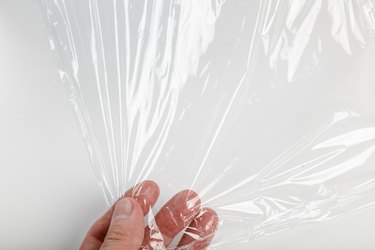
Sustainable weight loss takes time and consistent effort, so using a stomach wrap to lose weight quickly may pique your interest.
There are countless weight-loss products on the market, but some people turn to secret-ingredients body wraps to lose weight. The manufacturers of these wraps claim that users will lose inches around their waist and flush out toxins.
Video of the Day
Video of the Day
Tip
Using stomach wraps may result in short-term weight loss. Users are more likely to lose water weight rather than fat, so the effects aren’t sustainable.
Stomach Wraps to Lose Weight
There are several types of body wraps that claim to help users achieve a flatter stomach. You can make homemade stomach wraps with plastic, but some people purchase neoprene belts or wraps with secret ingredients to lose weight. The so-called secret ingredients often include herbs, essential oils and various types of clay.
Though the construction may differ, all body wraps work in a similar manner: To use a stomach wrap to lose weight, place the wrap securely around your midsection. Users typically wear the wrap for a short period of time, usually between 20 and 60 minutes. During this time, it's strongly recommended to exercise to induce sweat.
Does increased sweating lead to weight loss? Many researchers have turned to saunas for the answer, which is likely that sweating leads to insignificant water weight loss. For example, in a December 2014 study published in the Scientific World Journal, researchers found a correlation between body mass loss and sauna-induced thermal stress.
Subjects at a normal weight lost the most body mass, while subjects with a higher body mass indes, or BMI, were more prone to dehydration. Researchers acknowledge that other factors may have contributed to weight loss.
Read more: The 3 Secrets to Losing Belly Fat
Does It Work?
Much of the evidence surrounding the effectiveness of stomach wraps for weight loss is anecdotal. Sellers and buyers claim that users will lose water weight through increased body temperature and sweating. However, it's debatable whether stomach wraps actually work.
Stomach wraps likely won't help you lose weight sustainably. They may help you lose water weight temporarily, but it's likely you'll regain it. Losing water weight through sweating isn't the same as losing fat.
Very little scientific evidence exists on whether stomach wraps actually work. An October 2013 study published in the journal Integrative Medicine Research involving 19 female participants found that the combination of body wrapping and aerobic exercise can reduce stomach fat. However, the researchers acknowledge that other factors, such as diet and exercise, may also contribute to the fat loss.
Stomach wraps are not the only sweat-inducing weight loss products on the market. Sauna suits also promise that users will lose body fat through increased sweating during exercise while wearing waterproof fabric.
In 2014, the American Council on Exercise sponsored a study on the effects of training while wearing a sauna suit. Researchers found that participants wearing a sauna suit lost more weight around their waistlines compared to participants who did not wear sweat-inducing garments. The study notes that the results may have been due to heat stress, which is a dangerous form of overheating.
Though people who use sweat-inducing products like stomach wraps or sauna suits may lose weight, the risks may outweigh the benefits.
Read more: Long-Term Effects of Aerobic Exercise
Dangers of Stomach Wrapping
Using body wraps with or without secret ingredients to lose weight may have some side effects. For example, binding your stomach can cause improper form during exercise, which could lead to injury.
The risks of body wraps are also related to excessive sweating. Users may become overheated, dehydrated and lightheaded.
The theory that using stomach wraps to lose weight is effective due to increased sweating is probably too good to be true. It's more likely that any weight loss while wearing body wraps is related to the exercise more than the stomach wrap itself.
Was this article helpful?
150 Characters Max
0/150
Thank you for sharing!
Thank you for your feedback!