L-carnitine is a compound made from the essential amino acid lysine, and it plays a vital role in your body's energy production by helping turn fat into fuel.
Although most people don't need to go out of their way to eat foods high in carnitine, some genetic or medical conditions can lead to the body not making enough of the nutrient on its own, leading to a deficiency, according to the National Institutes of Health (NIH). Because L-carnitine isn't considered an essential nutrient for most people, the Food and Nutrition Board of the National Academies hasn't established a recommended dietary allowance for the nutrient.
Video of the Day
Video of the Day
Our standard diets typically provide enough L-carnitine. Omnivores generally eat between 23 and 135 milligrams of L-carnitine per day. But because L-carnitine comes from animal products, those on a strict vegetarian diet may get as little as 1 milligram per day, per the Linus Pauling Institute.
A carnitine deficiency comes with some drawbacks: It was found to play a role in the risk of developing depression. A February-March 2018 meta-analysis in Psychosomatic Medicine observed that L-carnitine supplementation decreased some symptoms of depression, but more studies need to be conducted.
Here are the top foods with L-carnitine, per the Linus Pauling Institute.
Tip
There's no upper limit in terms of how much L-carnitine you can safely get from food, according to the Linus Pauling Institute. But taking too much in supplement form can cause mild stomach problems, as well as nausea, vomiting and diarrhea. Taking more than 3 grams of L-carnitine from supplements per day may cause fishy body odor.
1. Beef: 81 mg per 3 oz
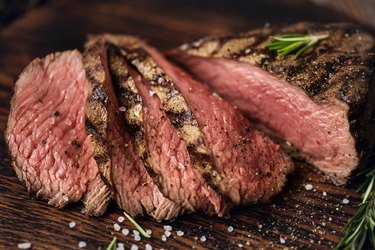
When it comes to L-carnitine, red meat is top-notch — each 3-ounce serving of cooked steak and ground beef contains 81 milligrams of the nutrient.
If you're concerned about the saturated fat or calories in beef, look for lean cuts: Good options include eye of round, sirloin tip side, top round, bottom round and top sirloin.
2. Pork: 24 mg per 3 oz
Thanks to a clever marketing campaign in the 1980s, pork is often thought to be white meat — but it's actually red meat, according to the Cleveland Clinic, meaning it's higher in L-carnitine. Each 3-ounce serving of cooked pork contains 24 milligrams of carnitine.
Like with beef, the healthiest choice for pork is a lean cut, such as pork tenderloin or pork sirloin roast. Both of these cuts contain 5 grams or less of fat, 2 grams or less of saturated fat and 480 milligrams or less of sodium, according to the Illinois Agricultural Association.
3. Whole Milk: 8 mg per 8 oz
If you're looking for a non-meat source of L-carnitine, whole milk is your best bet with its 8 milligrams per 8 ounces. If you're concerned about the fat content of whole milk, a February 2020 review in the American Journal of Clinical Nutrition found that higher-fat cow's milk is associated with lower amounts of body fat in children.
And all types of milk are rich in other nutrients. Milk is a complete protein, meaning it contains all nine essential amino acids. It's also a good source of calcium, magnesium, phosphorus and vitamins A and D, per the University of Wyoming.
4. Cod: 5 mg per 3 oz
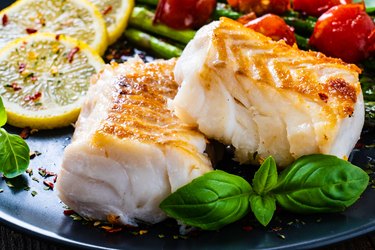
Pescatarians can get L-carnitine from codfish, which contains 5 milligrams per every 3-ounce cooked serving. Cod is a white-fleshed fish that's actually lower in fat than any other type of animal protein, according to the Environmental Defense Fund.
Eating too much seafood can lead to concerns around mercury, a toxic compound that builds up in fish flesh. Luckily, cod is lower in mercury than many other types of fish. Those who are at risk of mercury contamination — pregnant people and children — can safely eat two servings of cod per week, according to the University of Minnesota Extension.
5. Chicken Breast: 3 mg per 3 oz
Although chicken breast isn't considered one of the foods high in carnitine, it does have 3 milligrams per 3-ounce cooked serving — and small amounts can add up over time.
As a bonus, chicken breasts are a good source of lean protein, and if you choose boneless, skinless breasts, a 3-ounce serving only has about 140 calories, 3 grams of total fat and 1 gram of saturated fat, per the Academy of Nutrition and Dietetics.
6. Avocado: 2 mg per whole fruit
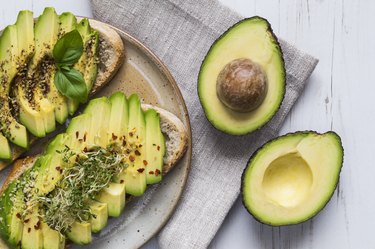
There aren't many top L-carnitine fruits and vegetables, but avocado does contain a bit of the compound. One medium avocado contains 2 milligrams of L-carnitine. The fruit is also rich in vitamin E and fiber.
If you're looking for other vegan L-carnitine foods, whole-wheat bread has 0.2 milligrams per two slices, and asparagus has 0.2 milligrams per six spears.
- Office of Dietary Supplements: "Carnitine"
- Linus Pauling Institute: "L-Carnitine"
- Journal of the Endocrine Society: "Blood Pressure and Metabolic Effects of Acetyl-l-Carnitine in Type 2 Diabetes: DIABASI Randomized Controlled Trial"
- Psychosomatic Medicine: "Acetyl-L-Carnitine Supplementation and the Treatment of Depressive Symptoms: A Systematic Review and Meta-Analysis"
- Mayo Clinic: "Cuts of Beef: A Guide to the Leanest Selections"
- Cleveland Clinic: "Is Pork Considered a Red or White Meat?"
- Illinois Agricultural Association: "Why Pork Should Be Your Next Healthy Protein Pick"
- American Journal of Clinical Nutrition: "Whole Milk compared with Reduced-Fat Milk and Childhood Overweight: A Systematic Review and Meta-Analysis
- University of Wyoming: "Got Milk? The Benefits Of Milk"
- Environmental Defense Fund: "The Benefits of Eating Fish"
- University of Minnesota Extension: "Safety Concerns with Consuming Fish"
- Academy of Nutrition and Dietetics: "Breasts vs Thighs Which Is More Nutritious"