Unlike the pedestal on which omega-3s have been placed, omega-6 fatty acids raise some eyebrows.
Omega-6 fatty acids are a type of unsaturated fat, like omega-3s. But they've gotten a semi-bad rap because the body can convert linolenic acid — a type of omega-6 — into arachidonic acid, which could contribute to inflammation, blood clotting and blood vessel constriction, per Harvard Health Publishing. That said, the body can also convert arachidonic acid into molecules that fight inflammation and blood clots.
Video of the Day
Video of the Day
So, what to do? As with all things nutrition, balance is key.
Health experts recommend eating more omega-3s instead of cutting back on omega-6s — so you don't have to worry about omega-6 foods that cause inflammation.
According to a February 2019 study in the American Heart Association's journal Circulation, two types of omega 6s called linoleic acid and arachidonic acid have been linked to health perks. Omega-6 benefits include:
- Lower risks of heart disease
- Lower risk of cardiovascular mortality
- Lower risk of ischemic stroke
How Much Omega-6 Do You Need Per Day?
The Adequate Intake (AI) is the recommended average daily nutrient intake level, per the National Institutes of Health (NIH). People assigned female at birth need 12,000 milligrams of omega-6 per day and people assigned male at birth need 17,000 milligrams, according to the National Academies Press.
Read on for a list of foods high in omega-6 fatty acids, ranked by their AI percentages.
1. Tofu: 10,934 mg, 64% AI
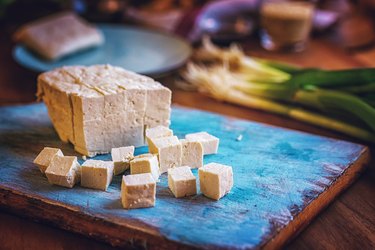
It's hard to go wrong with tofu. The soy-based food is a favorite among vegetarians, vegans and those looking for more plant-based protein options.
Tofu is an example of a healthy food that contains omega-6 fatty acids — 64 percent of the AI per 1-cup serving. Tofu is also an excellent source of fiber, with nearly 6 grams per cup. Try it in these anything-but-bland tofu recipes.
2. Walnuts: 10,818 mg, 64% AI
Walnuts might be one of the best brain foods, thanks to their high levels of omega-3s. In fact, making walnuts a part of your daily diet has been linked with a decreased risk and progression of brain disorders, as well as heart disease and type 2 diabetes, according to a February 2020 study in Nutrients
Walnuts are high in healthy fats, but they're also one of the top nuts high in omega-6. A 1-ounce serving contains 64 percent of the AI for omega-6 (and 161 percent of the AI for omega-3).
3. Safflower Oil: 10,149 mg, 60% AI
Oils are a common source of omega-6 fatty acids and safflower oil is no exception: It has 60 percent of the AI per 1-tablespoon serving. In order to mix up where your sources of fat come from, it's important to use a variety of oils in your cooking and dressings.
Tip
Both canola oil and olive oil are good sources of omega-3 fatty acids, and they contain low levels of omega-6s.
4. Sunflower Seeds: 9,310 mg, 55% AI
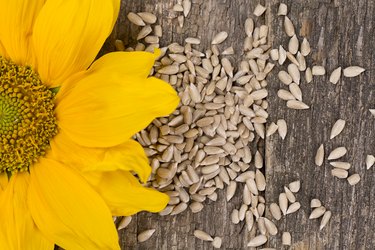
Not only are sunflower seeds a top choice when it comes to vitamin E, a powerful antioxidant, but they also provide 55 percent of the AI per 1-ounce serving for omega-6s.
The fat and fiber content in sunflower seeds, like all seeds and nuts, will help you feel fuller for longer, making them the perfect snack or yogurt topper.
5. Walnut Oil: 7,194 mg, 42% AI
Like its source, walnuts, walnut oil is a good source of heart-healthy fat, including omega-6s, with 42 percent of the AI per 1-tablespoon serving. Walnut oil also tastes great, especially chilled. Drizzle a tablespoon on toast for a tasty snack or light breakfast.
6. Brazil Nuts: 6,294 mg, 41% AI
Just a few Brazil nuts provide an incredible amount of nutrition. In a 1-ounce serving (four to six nuts), you'll get 41 percent of the AI for omega-6s, 2 grams of fiber and 4 grams of plant-based protein.
Brazil nuts are also extremely high in selenium, a nutrient needed for reproductive and thyroid health. But it's easy to get too much selenium from Brazil nuts, which can lead to illness, according to the NIH. Just one Brazil nut contains 68 to 91 micrograms of selenium and 1 ounce has 544 micrograms. The Upper Limit (the highest amount considered to be safe) for adults is just 400 micrograms.
7. Pumpkin Seeds: 5,886 mg, 35% AI
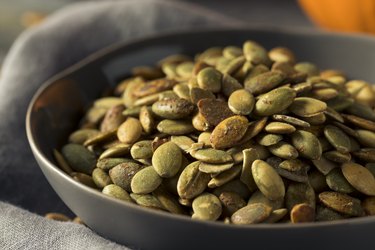
Snack on nuts and seeds and you'll be doing your body a favor. Pumpkin seeds, for example, contain 35 percent of the AI for omega-6 per 1-ounce serving. They're a low-carb, high-protein snack that goes great with your favorite yogurt, oatmeal and salad.
Pumpkin seeds also provide zinc, magnesium and non-heme (plant-based) iron.
8. Peanut Butter: 3,931 mg, 23% AI
Is there anything peanut butter can't do? The beloved spread is high in plant-based protein and good-for-you unsaturated fats. A 2-tablespoon serving contains 23 percent of the AI for omega-6.
While oatmeal isn't high in omega-6, peanut butter is a perfect mix-in to get more of the healthy fat. Try the spread in these delicious peanut butter recipes.
9. Chicken Thighs: 3,792 mg, 22% AI
Dark meat chicken (like the thigh) is fattier than white meat (the breast), and it's also higher in omega-6s. You'll get 22 percent of your AI in one chicken thigh with the skin on as well as 22 percent of your daily recommended amount of zinc, an important mineral for immune system support.
Try the poultry in these easy, low-calorie chicken recipes.
10. Avocado: 3,395mg, 20% AI
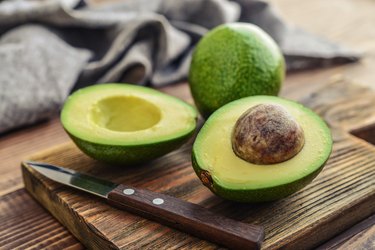
Yes, avocado is high in omega-6 — one fruit (yes, it's a fruit!) will give you 20 percent of your AI. You'll also get 14 percent of your AI for omega-3. Try avo in these tasty recipes that aren't toast or guac.

- Canadian Medical Association Journal: "Omega-6 Polyunsaturated Fatty Acids: Is a Broad Cholesterol-lowering Health Claim Appropriate?"
- Harvard Health Publishing: "No Need to Avoid Healthy Omega-6 Fats"
- Biomedicine and Pharmacotherapy: "The Importance of the Ratio of Omega-6/Omega-3 Essential Fatty Acids"
- Circulation: "Biomarkers of Dietary Omega-6 Fatty Acids and Incident Cardiovascular Disease and Mortality"
- National Institutes of Health: "Daily Values"
- Nutrients: "Beneficial Effects of Walnuts on Cognition and Brain Health"
- National Institutes of Health: "Selenium"
- World Cancer Research Fund: "Limit Red and Processed Meats"
- National Academies Press: "Dietary Reference Intakes for Energy, Carbohydrate, Fiber, Fat, Fatty Acids, Cholesterol, Protein, and Amino Acids (2005)"