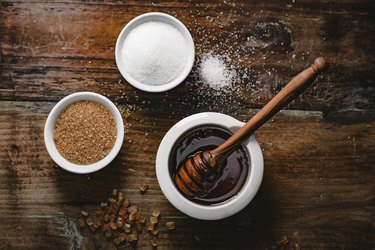
Humans are hardwired to love sweets, whether they're in the form of pastries or fresh fruit. And it's no ground-breaking news that extra sugar can cause weight gain and other health problems, which has led to an explosion of sugar alternatives hitting the market. But are any of these sugar substitutes any good?
Calories are usually how we judge sweeteners: Most sugars contain few nutrients but a lot of calories. In recent years, dietitians have also been addressing sugars' glycemic index (GI), a measure of how fast a food releases glucose into the bloodstream and causes blood sugar to spike. Higher GI foods, like sugars, break down rapidly during digestion and can send blood sugar levels skyrocketing. That can be harmful, particularly for people with diabetes.
Here's a deep look at all types of sweet compounds, from plant-based sugars to artificial sweeteners, and whether or not they deserve a place in your eating plan.
What's the deal with white sugar?
The most familiar of all sugars, granulated white sugar (table sugar) is a simple carbohydrate called sucrose. It's often used as a benchmark for comparing the sweetness and calories of other sweeteners. It's usually produced from sugar cane or sugar beets.
Sucrose is made up of equal amounts of two sugar molecules, glucose and fructose. White sugar is 100 percent carbohydrates and contains no vitamins, minerals or other nutrients, so it's often referred to as "empty calories." White sugar has a glycemic index of 65, which is considered high.
Natural Sweeteners
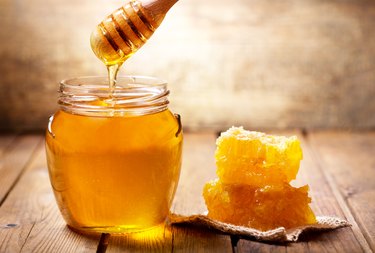
Sugar is just that — sugar. No matter the source. "It's important to remember that liquid sugars like honey and maple syrup are still just sugar, with very little nutritional benefit for the sugary calories they provide," says Molly Kimball, RD, sports dietitian at Ochsner Fitness Center and founder of Ochsner Eat Fit in New Orleans.
1. Honey
Honey is the extremely sweet, thick fluid that honeybees produce from flower nectar. The flavor and color vary depending on which blossoms the bees visited while foraging. But while it's "natural" and less heavily refined than white sugar, it's not as much of a healthy swap for regular sugar as most people would like to believe.
Nearly 100 percent of the calories you get from honey hails from the simple sugars glucose and fructose — and it's even higher in sugar calories per tablespoon serving than regular sugar. And an October 2015 report in the Journal of Nutrition suggests that regularly eating honey can have same effect as table sugar on things like blood pressure, body weight, blood sugar control and C-reactive protein — an indicator of inflammation in the body.
It isn't entirely empty calories since raw and unpasteurized varieties especially contain some anti-inflammatory properties and antioxidants, including phenolic acids, along with trace amounts of minerals like iron, manganese and potassium. But Kimball stresses that it's still better to get your antioxidants and micronutrients from whole foods such as vegetables and fruits.
Since honey has a higher fructose content than regular sugar and our taste buds perceive fructose as being sweeter, many people can use less honey to get the same sweet fix. So if you're baking with it, use only about half to two thirds the amount of honey as white sugar, depending on an individual honey's sweetness.
- Glycemic Index: 58
2. Maple Syrup
Maple syrup comes from boiling down the sap from maple trees. It's one of the priciest sweeteners on the market since it takes a whopping 40 quarts of maple sap to produce a quart of maple syrup.
Although maple syrup does contain more antioxidants than other sweeteners, it's still nearly pure sugar in the form of sucrose. So it's still wise to get your antioxidants from fruits, vegetables and whole grains instead of pouring extra maple syrup on your pancakes.
The color of the syrup depends on when the sap was tapped in the season: Early season maple sap produces lighter syrup ("golden" or "amber") that is milder in flavor while late-season maple syrup is darker and has a richer flavor. Watch out for impostors that are made with corn syrup, added colors and no actual maple syrup.
- Glycemic Index: 54
3. Molasses
If a certain sugar was ever to be considered "healthy," molasses would be it. This viscous bittersweet substance is the concentrated by-product of the process that turns sugar cane into refined granulated white sugar.
Not only does it contain more antioxidants than other sweeteners, it also provides a handful of micronutrients including magnesium, vitamin B6, manganese and iron. In fact, a March 2016 study in the International Journal of Food Sciences and Nutrition found that using molasses to sweeten gluten-free cookies boosts their nutritional value.
Since molasses is less sweet than other sweeteners, it's often combined with another sugar when used in baking. Because of its robust flavor, a little goes a long way.
There are a few different types of molasses: Light molasses is the syrup that remains after the first processing of the sugar and is the lightest in color and sweetest in flavor. The second processing of the sugar yields medium (or dark) molasses, which is stronger in flavor, thicker and darker in color. The third and final processing produces blackstrap molasses, which is very dark and strongest in flavor.
- Glycemic Index: 55
4. Coconut Sugar
This tropical sweetener is enjoying a boom in popularity. It's made from the sap of coconut palm flowers, which is boiled into a thick syrup, then dried and finally ground to produce a granulated sugar with caramel flavor notes.
Coconut sugar contains fewer grams of sucrose per tablespoon than regular white granulated sugar. Like molasses, it has a lower glycemic index than table sugar, and so may not lead to such dramatic spikes in blood sugar levels.
While some believe coconut sugar contains nutrients including B vitamins and potassium found in its flower source, that hasn't been verified. Chances are, Kimball warns, that coconut sugar is only marginally more healthy than regular sugar. Coconut sugar's "natural" allure can sometimes fool people, Kimball says. "For example, vegan cookies sweetened with raw coconut sugar somehow seem like a better option when they usually aren't."
However, coconut sugar is one of the more sustainable sweetener options on store shelves, since palms produce more sugar per acre than sugar cane does, per a Food and Agriculture Organization (FAO) report. You can use coconut sugar measure for measure as a replacement for brown sugar in almost any recipe.
- Glycemic Index: 54
5. Date Sugar
This sweetener is simply finely ground dehydrated dates, which are fruit from date palm trees. As with maple syrup and other less refined sweeteners, date sugar contains higher levels of simple carbohydrates (each date has about 4.5 grams of sugar and roughly 90 percent of its calories come from sugar, per the USDA), so it's not an important source of nutrients.
You're better off using whole dates, which include fiber and other healthy nutrients like iron and potassium.
- Glycemic Index: 35
6. Agave Syrup
The recently popular agave syrup, made from the succulent plant agave, is indigenous to Mexico and is also used to make tequila. Agave juice is extracted, filtered, heated and then hydrolyzed into syrup, a process similar to how high-fructose corn syrup is manufactured.
Agave is appealing to those looking for a more "natural" sweetener and as a vegan alternative to honey. It's most notable for having a very sweet taste — about 40 percent sweeter than sugar — so you can use less to sweeten drinks like tea and smoothies. Agave syrup has more calories, but has a much lower GI than many sweeteners. That's because it's mostly made up of fructose.
That has some unexpected negative properties: unlike other simple carbs, fructose is metabolized almost entirely in the liver. When the liver receives an overload of fructose, it transforms it into triglycerides, a fat that can increase the risk for numerous health problems, including fatty liver disease and weight gain, per Harvard Health Publishing. Agave is also mostly empty calories since it doesn't contribute useful amounts of micronutrients or antioxidants to the diet.
- Glycemic Index: 11
7. Brown Rice Syrup
A favorite among the anti-fructose crowd, brown rice syrup is a thick liquid derived from brown rice treated with enzymes to break down the starches. While not as sweet as white sugar, it has butterscotch flavor notes, lending well to flavoring some types of foods.
It's often thought that brown rice syrup has higher amounts of complex carbohydrates than other sweeteners like honey, which would imply it has a lower glycemic index. But you should know that brown rice syrup is primarily made up of three types of sugar: maltotriose, maltose and glucose.
Maltotriose is basically just three glucose molecules while maltose is made up of two glucose molecules. These should not be considered as so-called "complex carbs" the same way as the carbs in items like whole brown rice are which are made up of multiple sugar molecules linked together and take much longer for the digestive system to break down.
Its lack of fructose, however, means less stress placed on the liver. The syrup likely retains very low amounts of the B vitamins and minerals found in its brown rice source.
Also, keep in mind that brown rice syrup may contain arsenic. This is because the brown rice plant seems to be especially effective at absorbing arsenic from the surrounding environment (specifically, the hull, which is present in brown rice but not white rice, retains the absorbed arsenic). But it's not yet determined how much brown rice syrup one would need to eat to pose a health risk.
- Glycemic index: 98
8. High Fructose Corn Syrup (HFCS)
You've probably heard of high fructose corn syrup (HFCS), the sweetener that's so cheap for food manufacturers that it's pumped into nearly everything from ketchup to peanut butter.
HFCS is made by converting the starches in corn to liquid sugar. In the production of HFCS, some of the glucose in corn syrup is converted to fructose to make it sweeter, allowing less of it be used.
Its name is a bit misleading since HFCS doesn't often contain much more fructose than regular white sugar — about 55 percent compared to 50 percent in granulated white sugar. (However, some food companies will use HFCS with 90 percent fructose, an unhealthy high level.)
Kimball points out that the health concerns about HFCS largely come from the sheer amount people are eating rather than it being much worse for you than regular sugar. Consuming too much fructose from any sweetener, be it HFCS or agave, can lead to health woes like insulin resistance, heart disease and increased abdominal fat. Some people are also concerned that the corn that HFCS comes from is almost always genetically modified.
- Glycemic Index: 31 to 68
9. Evaporated Cane Juice
To produce this sweetener, the juice from the sugar cane plant is filtered and then the water is evaporated off, leaving behind sugar granules with a darker caramel color thanks to some remaining flecks of molasses.
Evaporated cane juice can be found in everything from energy bars to yogurt to granola. And let's be honest, food companies like to use it to sweeten up their grub since it sounds much healthier than sugar or high fructose corn syrup.
But while it's less processed than refined white sugar, evaporated cane juice should be considered just another euphemism for sugar and contains very little nutritional merit. The new nutrition facts label will include evaporated cane juice in the "added sugars" total.
- Glycemic Index: 55
10. Stevia
Since winning FDA approval for use as a sweetener in foods and drinks in 2008, stevia has become a much more common calorie-free alternative to sugar and other less natural sugar substitutes. It is extracted from the Stevia rebaudiana plant, native to South America where it has been used for centuries.
In stores, you can find it in granulated and liquid form, both of which are about 200 to 400 times sweeter than table sugar, per the FDA. With that said, stevia does taste distinctly different than regular table sugar and has a slight metallic aftertaste, which can take some getting used to.
There isn't much in the way of long-term studies on humans out there. But the food watchdog group The Center for Science in the Public Interest (CSPI) rates stevia as "safe" based on the research that is currently available. However, a July 2019 meta-analysis in Current Opinions in Clinical Nutrition and Metabolic Care concluded that more research needs to be done before we know whether non-nutritive sweeteners such as stevia affect blood sugar.
It's important to follow the manufacturer's directions when using stevia as a sugar replacement. A little goes a long way. You can also use stevia in combination with other sweeteners such as table sugar to boost sweetness while allowing you to use less of the other sweetener to reduce calories.
- Glycemic Index: 0
11. Monk Fruit Extract
This up-and-coming zero-cal sweetener is derived from a vine-ripened sweet melon grown in Southeast Asia. Also known as Luo Han Guo, it has a long tradition as a herbal remedy in China.
The latest darling of the alternative sweetener world is often marketed as being a zero-calorie sweetener; however, each teaspoon serving does contain one to two calories, which is an amount that the FDA considers low enough to allow companies to state as zero on food labels.
Some people find that monk fruit lacks the bitter aftertaste associated with stevia. Since it's roughly 200 times sweeter than sugar derived from sugar cane or sugar beets, you need just a little to sweeten things up. It's best to follow conversion charts supplied by manufacturers.
Though long-term human studies are needed, it's generally believed that consuming reasonable amounts of monk fruit extract possess little health risk.
- Glycemic Index: 0
Sugar Alcohols
Diet foods and drinks are often sweetened with sugar alcohols, aka polyols, including with xylitol, sorbitol, maltitol or erythritol. Neither sugars nor alcohols, sugar alcohols are carbohydrates naturally present in certain fruits and vegetables with a chemical structure that partially resembles sugar and partially resembles alcohol.
On top of boasting a sweet taste, sugar alcohols perform a variety of useful functions for food manufacturers, including adding bulk and texture. They also have a cooling taste, which is why they are used in items such as gums and mints. And because the bacteria in your mouth cannot digest sugar alcohols, they won't cause cavities making them useful for "sugar-free" candies and gum.
Since sugar alcohols are incompletely absorbed and metabolized by the body, they contribute fewer calories than most sugars — zero to three calories per gram compared to four calories in a gram of sucrose. While most sugar alcohols are less sweet than sucrose, maltitol and xylitol are nearly as sweet. Manufacturers frequently use sugar alcohols in combination with other sweeteners to make foods taste good, so don't assume that a product made with these sweeteners is automatically sugar-free.
So far, there is no indication of serious health risks associated with frequent sugar alcohol consumption, but you still don't want to go overboard. "Many sugar alcohols are incompletely digested, essentially fermenting in our bellies, which can lead to gas, bloating and diarrhea," cautions Kimball. "Erythritol is one of the lower-impact sweeteners when it comes to GI issues and people can often handle it much better than other sugar alcohols including sorbitol, maltitol and mannitol."
- Glycemic Index: 0 (except for maltitol, which has a GI of 36)
Read more: 12 Ways to Beat Belly Bloat for Good
Artificial Sweeteners
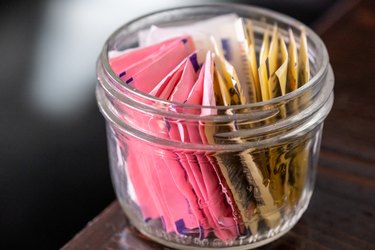
While artificial sweeteners may tempt you with their zero calorie count, research suggests they spell bad news for your health.
An October 2014 study published in Nature found saccharin, aspartame and sucralose consumption in both mice and humans may increase the risk of glucose intolerance (a risk factor for diabetes) by altering our gut microbiome in favor of harmful bacteria.
And an April 2019 study in the _Journal of Clinical Nutrition _found that sweetening your diet with calorie-free artificial sweeteners like saccharine is not a weight-loss magic bullet. "In my experience with clients, I've found that some [people] appear to be very sensitive to artificial sweeteners, and their intake of these seems to trigger more cravings for carbs and sweets," says Kimball.
- Glycemic Index: 0
1. Sucralose
Sucralose, which you probably know as Splenda, is a nonnutritive sweetener that is able to withstand high temperatures, making it attractive for baking. It's used in a wide range of manufactured food products, perhaps because it has a taste similar to table sugar and lacks the unpleasant aftertaste that plagues several other non-nutritive sweeteners.
Sucralose is 600 times sweeter than table sugar and can be marketed as a "no-calorie" sweetener since it meets the FDA standards for no-calorie foods, which is less than five calories per serving. Sucralose is considered an "artificial" sweetener since it's a chemically modified form of sugar manufactured in a lab.
While the FDA has determined that sucralose is "generally recognized as safe," some animal studies have linked it with cancer. However, an October 2019 meta-analysis in Food and Chemical Toxicology concludes that there's no evidence that sucralose is carcinogenic.
2. Saccharin
Saccharin is a synthetic sweetener commonly known as Sweet 'N Low and is about 300 to 500 times sweeter than table sugar.
Lore has it that saccharin was discovered accidentally when a scientist working in a lab had some residue left on his hands when making bread rolls that turned out to be extra sweet. It's used in several processed foods, although one of the drawbacks of saccharin for some is its aftertaste.
Saccharin gained notoriety in the 1970s when the FDA proposed that it be taken off the market, citing studies that linked the consumption of the sweetener with cancer in lab animals. The proposal failed and an April 2015 meta-analysis in Advances in Food Sciences proclaims that the evidence around whether it causes cancer in humans is still up in the air.
3. Aspartame
Another one of the FDA-approved artificial sweeteners, aspartame — known as NutraSweet or Equal — is one of the most popular sweeteners. Aspartame is composed of two amino acids, phenylalanine and aspartate, and is 200 times sweeter than table sugar, per the U.S. National Library of Medicine.
It doesn't have much of an aftertaste and people use it to slash the sugar calories in their diet in hopes of losing weight and better controlling their blood sugar. Unlike other artificial sweeteners, aspartame contributes calories in the form of amino acids, about four calories per gram. But since it's so sweet, you don't need to add very much to your coffee.
According to the FDA, high-intensity sweeteners, including aspartame, are safe to consume in the amounts that people typically eat or drink. (The FDA approved aspartame in 1981.) However, watchdog groups like the CSPI aren't convinced and expressed concern that animal studies have linked the sweetener with cancer.
People who have phenylketonuria (PKU), a rare genetic disorder that keeps them from being able to metabolize a component of aspartame known as phenylalanine, must avoid aspartame.