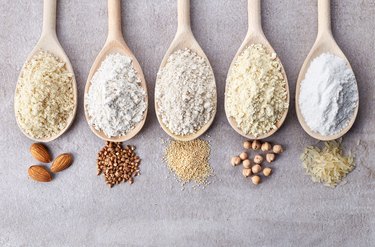
Going low-carb is hard enough — add gluten free to the mix, and you can find yourself with a dietary dilemma. Actually, it's not that hard to follow a low-carb, gluten-free diet since most sources of gluten are high in carbs and automatically off the menu. The most important thing is to make sure the diet is right for you.
Research Behind Low-Carb, Gluten-Free Diets
Video of the Day
People decide to kick carbs to the curb and go gluten free for many reasons, some reasonable, some not. The gluten-free diet has grown exponentially in the last decade, but mostly for the wrong reasons. People with gluten sensitivity and celiac disease do need to avoid gluten; it can cause severe digestive problems, damage the intestines and lead to malabsorption of nutrients, according to a May 2017 article in Diabetes Spectrum.
Video of the Day
But many people without gluten sensitivity or celiac disease have adopted the diet because they think it's healthier and will promote weight loss. In fact, neither of those benefits have been scientifically proven. If you are not intolerant of or allergic to gluten, there is no reason to cut it out of your diet.
However, according to University of Rochester Medicine Center nutrition expert Dr. Thomas Campbell, avoiding gluten can have an indirect effect on weight loss, because many gluten-containing foods are refined and processed and contribute to weight gain. This includes refined grains found in white breads, desserts, pizza and pasta, to name just a few. When people cut out these foods, they often naturally start to eat more nutritious foods, and they see their health and weight improve.
That's the same reason most people see results with a low-carb diet. Refined and processed grain products, snack foods, fast foods, sweets and sugary beverages are high in carbs and low in nutrients. They aren't filling or satisfying, which can make it hard to control calorie intake. On a low-carb diet, these foods are off the table, and people automatically have to eat healthier. Of course, there are exceptions to the rule, but this is generally the result.
Very low-carb diets, such as the ketogenic diet, may encourage weight loss through more complex metabolic adaptations. The idea is that, by getting most of your calories from fat and very few from carbohydrates, you cut off the immediate energy supply that carbs provide, causing the body to use fat for energy. The keto diet is trendy, but there is limited scientific evidence that it actually works for long-term weight loss, although it may have benefits for medical conditions such as epilepsy and type 2 diabetes.
Low-Carb Diet Foods
Proper planning is the key to success for any diet. Not knowing what you can and can't eat and not having a plan for your weekly meals can cause you to reach for easy and unhealthy foods that won't aid your weight-loss effort. And, if you have gluten sensitivity or celiac disease, not knowing which low-carb foods contain gluten can lead to some uncomfortable side effects.
First, identify your low-carb food options. This depends on what kind of low-carb diet you're following. Technically, a low-carb diet is anything below the recommended minimum amount of carbs you need to maintain good health as set by the Institute of Medicine, which is 130 grams.
A low-carbohydrate diet containing 100 grams per day is going to offer a lot more choices than a lower carb diet like Atkins or the ketogenic diet. But here are some general categories of foods that are naturally low in carbs, and many are carb-free foods:
- Meat
- Fish and shellfish
- Poultry
- Eggs
- Nuts and seeds
- Cheese
- Nonstarchy vegetables (leafy greens, zucchini, cucumber, broccoli, bell peppers)
- Low-sugar fruits (raspberries, strawberries, blackberries, lemons)
You'll notice that grains aren't on that list — not even healthy whole grains. That's because they're high in carbs. One-half cup of cooked brown rice has 25 grams of carbs, according to the USDA. That's more than the daily amount allowed on the Atkins 20 diet.
If you're on a more generous low-carb diet, you may be able to fit in a serving of grains here and there. For example, 1/2 cup of oatmeal provides 14 grams of carbs, according to the USDA and won't break the bank. But for the most part, low-carbers avoid all grains.
Read more: 10 Convenient Low-Carb Snacks
Foods Containing Gluten
Being gluten free on a low-carb diet is fairly easy, since gluten is found only in grains. Specifically, it is found in the following grains:
- Wheat and wheat varieties (wheat berries, durum, emmer semolina, spelt, farina, farro, graham, kamut, einkorn)
- Rye
- Barley
- Triticale
- Malt (malted barley flour, malted milk or milkshakes, malt extract, malt syrup, malt flavoring, malt vinegar)
- Brewer's yeast (grown on wheat)
- Wheat starch
Gluten is found in processed foods that are usually not part of a low-carb diet:
- Pasta
- Noodles
- Breads and pastries
- Crackers
- Baked goods
- Cereal and granola
- Breakfast foods (pancakes, waffles, french toast)
- Bread crumbs
- Croutons
- Sauces and gravies
- Flour tortillas
- Beer
Gluten can also appear in a host of other foods, including those that are typically low-carb or carb-free foods, such as eggs cooked in restaurants, self-basting poultry, processed meats, soup, low-carb snacks and energy bars, according to the Celiac Disease Foundation. So, just because you're not eating grains doesn't mean you should consider your exposure to gluten nonexistent.
Read more: 15 Unexpected Foods That Contain Gluten
Potential Diet Pitfalls
It's possible to eat a gluten-free, low-carb diet that is nutritious and aids weight loss. However, both types of diets come with risks when they're not carefully planned. For example, a prospective cohort study published in the BMJ in May 2017 found that long-term avoidance of gluten could affect cardiovascular risk due to deficiencies in nutrients found in whole grains that provide heart-health benefits.
Another cohort study published in the British Journal of Nutrition in August 2015 found that a higher intake of whole grains and whole-grain products was associated with a lower risk of mortality. A study in Alimentary Pharmacology and Therapeutics in January 2015 reported that one year after starting a gluten-free diet, people with celiac had a high risk of metabolic syndrome 1, which can lead to weight gain, high blood pressure and high cholesterol.
Because of these findings, the Harvard T.H. Chan School of Public Health says there is no reason for anyone without a gluten sensitivity or celiac disease to follow a gluten-free diet.
Another potential pitfall of a gluten-free diet is that people often mistake all gluten-free products as health foods, says Harvard. These foods' designation as gluten-free, and thus healthy, often causes people to eat more of them. Many of these foods are highly processed and low in nutrients.
Low-carb dieters encounter the same pitfalls: potential nutrient deficiencies due to cutting out entire food groups, and falling prey to the idea that low-carb foods are automatically healthy. If you are sensitive or allergic to gluten and decide you want to try a low-carb diet, be sure to work with your doctor to develop a dietary plan that ensures you get all of the necessary nutrients you need for good health.
- Diabetes Spectrum: "The Gluten-Free Diet: Fad or Necessity?"
- University of Rochester Medicine Center: "Grains of Truth: Getting the Goods on Gluten"
- Harvard Health Publishing: "Ketogenic Diet: Is the Ultimate Low-Carb Diet Good for You?"
- National Academy of Medicine: "Dietary Reference Intakes: Macronutrients"
- Atkins: "List of Low Carb Foods for Atkins 20, Phase 1"
- Celiac Disease Foundation: "Sources of Gluten"
- The BMJ: "Long Term Gluten Consumption in Adults Without Celiac Disease and Risk of Coronary Heart Disease: Prospective Cohort Study"
- British Journal of Nutrition: "Whole-Grain Products and Whole-Grain Types Are Associated With Lower All-Cause and Cause-Specific Mortality in the Scandinavian Helga Cohort"
- Alimentary Pharmacology and Therapeutics: "Metabolic Syndrome in Patients With Coeliac Disease on a Gluten‐Free Diet"
- MyFoodData.com: "Nutrition Facts for Cooked Oatmeal"
- Harvard T.H. Chan School of Public health: "Diet Review: Gluten-Free for Weight Loss"
Is this an emergency? If you are experiencing serious medical symptoms, please see the National Library of Medicine’s list of signs you need emergency medical attention or call 911.