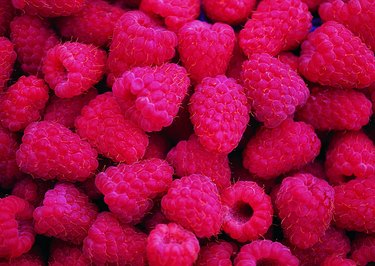
It may be somewhat annoying when raspberry seeds get stuck in your teeth, but this doesn't necessarily mean you should avoid eating them. Raspberry seeds are a source of dietary fiber, essential fatty acids and antioxidants, so they may have some health benefits, although research is still in the preliminary stages.
Source of Fiber
Video of the Day
Raspberry seeds are a good source of fiber. A 1-cup serving of raspberries has 8 grams of fiber, which is 32 percent of the daily value for this nutrient. Some of this fiber comes from the seeds. Most Americans don't get enough fiber to meet the recommended intake level of 25 to 35 grams per day. Fiber may help limit your risk for constipation, cancer, high blood sugar, high cholesterol and heart disease. It also helps you feel full for longer, making it easier to maintain a healthy weight.
Video of the Day
Source of Antioxidants
Raspberry seeds contain antioxidants called anthocyanins, which may help decrease your risk of certain health problems. Antioxidants help reduce damage from substances called free radicals, which cause oxidative stress that can harm your cells. Oxidative stress may increase your risk for diabetes, cataracts, Alzheimer's disease, Parkinson's disease, cancer and heart disease. It's best to get antioxidants from food rather than supplements, recommends the National Center for Complementary and Integrative Health.
Source of Essential Fatty Acids
A study published in the Journal of Food Science in April 2004 found that the oil and meal from black raspberry seeds contains linoleic acid and alpha-linolenic acid, two types of essential fatty acids, which may be beneficial for improving nutrition. Linoleic acid is an omega-6 fat, and alpha-linolenic acid is an omega-3 fat. Omega-3 fats may help improve heart health.
Potential Anti-Cancer Effects
Because of the anthocyanins they contain, raspberry seeds may be beneficial for decreasing cancer risk. A test-tube study published in Biochemistry in January 2004 found that a mix of berry extracts, including those from raspberry seeds, helped limit tumor growth and the spread of cancer cells. A mix of two types of antioxidants from raspberries -- anthocyanins and ellagitannins -- was beneficial for limiting the spread of cancer in another, found a similar study published in Phytochemistry in January 2007. Further research is necessary to determine whether substances in raspberry seeds have the same effect in people, and whether raspberry seeds offer the same benefits on their own.
- Molecular Nutrition & Food Research: Berry Anthocyanins as Novel Antioxidants in Human Health and Disease Prevention
- Journal of Food Science: Fatty Acid Content and Antioxidant Properties of Cold-pressed Black Raspberry Seed Oil and Meal
- Biochemistry: Anti-Angiogenic, Antioxidant, and Anti-Carcinogenic Properties of a Novel Anthocyanin-Rich Berry Extract Formula
- Phytochemistry: Antiproliferative Activity Is Predominantly Associated With Ellagitannins in Raspberry Extracts
- ACTA Scientiarum Polonorum Technologia Alimentaria: Raspberry Pomase as a Potential Fiber Source for Cookies Enrichment
- National Center for Complementary and Integrative Health: Antioxidants and Health: An Introduction
- University of Arizona Extension: Dietary Fiber
- University of Maryland Medical Center: Omega-6 Fatty Acids
- Colorado State University Extension: Omega-3 Fatty Acids
- HealthAliciousNess.com: Nutrition Facts Comparison Tool