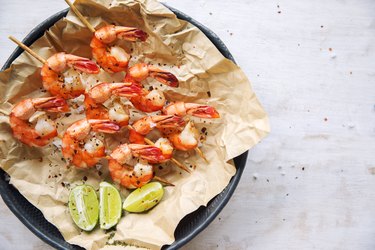
While shrimp and prawns might look and taste similar, prawns actually belong to a different species, although both are crustaceans. Prawns come only from fresh water and are larger and meatier than shrimp, with a slightly sweeter taste. Prawns can be cooked and eaten like shrimp, and they have much the same nutritional value. A 2-ounce serving of prawns is equal to 57 grams of raw shrimp, and like shrimp, they are a good source of protein and omega-3 fatty acids, both of which can aid in a weight loss diet.
Tip
Prawns are low in calories and high in protein, making them a good addition to any weight-loss plan.
Video of the Day
Low in Fat
Prawns are naturally low in fat, with only 0.5 grams of fat per 2-ounce serving. They are also a good source of unsaturated fats, which, if eaten in place of saturated fats, can improve your overall health, making prawns not only a healthy low-fat food choice, but also a healthy fat choice. A 2006 issue of the Journal of the American Medical Association included a study finding that a diet low in fat led to lower overall body weight over the course of 7 1/2 years. As well, those on a low-fat diet were less likely to gain weight over time.
Video of the Day
Filling Protein Source
Prawns contain nearly 12 grams of protein per 2-ounce serving and are considered part of the protein foods group. In addition to helping you meet the U.S. Department of Agriculture's recommended two servings of seafood a week, they also contribute to the suggested daily intake of 5 to 6 ounces of protein foods. A diet high in protein helps with weight loss and weight management. According to a study published in 2012 in the British Journal of Nutrition, protein helps with weight loss because it increases the amount of energy your body uses — burning more calories — and makes you feel fuller for longer, leading to fewer calories consumed.
Omega-3 Fatty Acids
In addition to being rich in unsaturated fats, prawns are also a good source of omega-3 fatty acids. Omega-3 fatty acids are essential polyunsaturated fatty acids that your body can only get through diet. These fatty acids can help reduce inflammation and help reduce body fat when regularly consumed. A 2009 review of a sample of studies in an issue of Obesity Reviews concluded that omega-3 fatty acid consumption reduced the amount of body fat and may also encourage fat cell death. However, few human studies have been conducted, and more long-term research is needed before omega-3 fatty acids can be recommended as an obesity aid.
Cooking Prawns
Because prawns are naturally low in fat, keep them healthy by choosing low fat cooking methods, such as steaming, broiling, poaching or grilling. Because prawns cook quickly, they take well to high heat cooking methods, like broiling and grilling, which add flavor with minimal fat. The tender texture of prawns is preserved when steaming or broiling, and you can marinate prawns beforehand to increase flavor.
- The Kitchn: What's The Difference Between A Shrimp and A Prawn?
- Journal of the American Medical Association: Low-Fat Dietary Pattern and Weight Change Over 7 Years - The Women's Health Initiative Dietary Modification Tria
- British Journal of Nutrition: Dietary Protein - Its Role in Satiety, Energetics, Weight Loss and Health
- Obesity Reviews: Anti-Obesity Effects of Long-Chain Omega-3 Polyunsaturated Fatty Acids
- USDA: Crustaceans, shrimp, mixed species
- USDA Choose My Plate: Vary Your Protein Routine