






























Which Vegetables Help to Increase Red Blood Cells?

Which Vegetables Help to Increase Red Blood Cells?
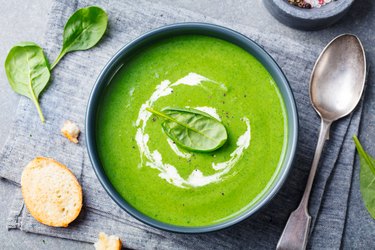
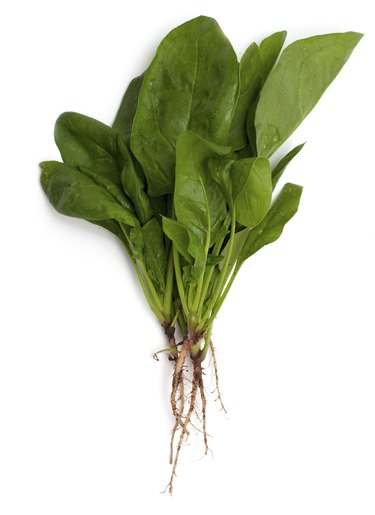
Photo Credit spinach image by Ramon Grosso from Fotolia.com

Red blood cells, or erythrocytes, play an essential role in your health. The double concave disc-shaped cells contain proteins that bind oxygen from the air in your lungs, then store and transport that essential oxygen to other cells throughout your body. A number of nutrients, such as minerals and vitamins, help contribute to red blood cell growth and function. Eating vegetables containing erythrocyte-healthy vitamins can help nourish your red blood cells, and ensure the continued health of your blood.

Iron-Rich Vegetables

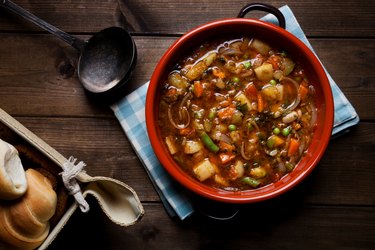
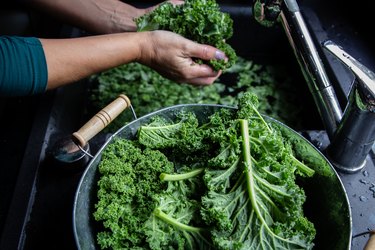
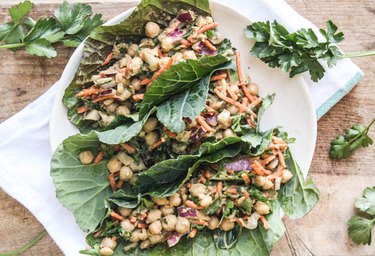
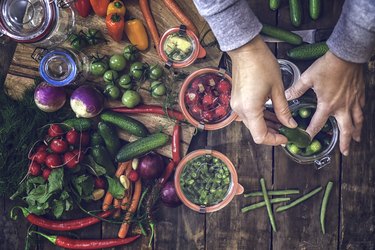
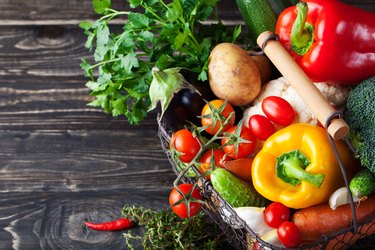
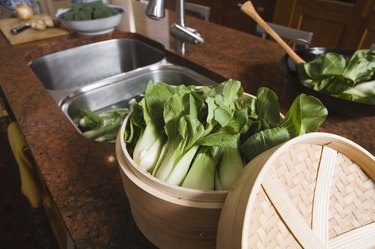
One type of vegetable that can benefit your red blood cells are those rich in iron. This mineral makes up an essential part of your diet, and proves essential for the function of hemoglobin, a protein abundant within your red blood cells. Hemoglobin contains four iron molecules, and each of these irons can bind oxygen, carrying the oxygen into your tissues. Vegetables rich in iron include green leafy vegetables, beans and peas. To help maximise your iron intake, pair iron-rich veggies with animal sources of iron, such as meat, poultry or fish.

Vitamin E-Rich Vegetables

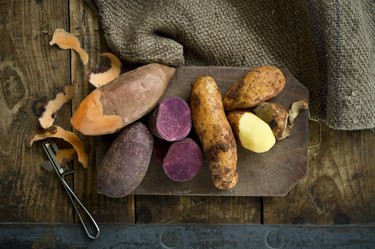
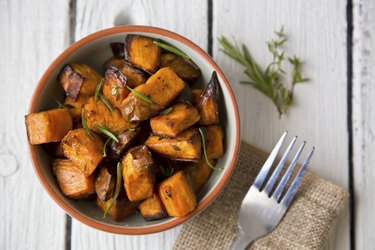
Consuming vegetables rich in vitamin E can also benefit your red blood cells, by helping to encourage proper cell turnover. Your body continually produces new red blood cells, while destroying older cells. Maintaining the balance between new cell growth and old cell destruction helps maintain constant red blood cell counts. Vitamin E helps contribute to new red blood cell production, while Colorado State University explains that vitamin E deficiency increases the rate of red blood cell destruction. Consuming leafy greens, sweet potatoes, asparagus and avocado all provide a source of vitamin E to help promote the health of your erythrocytes.

Folic Acid-Rich Vegetables

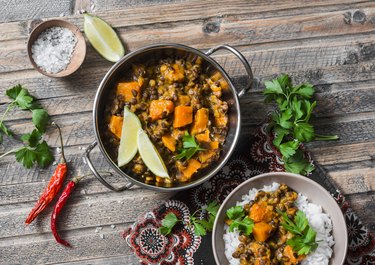
Another type of vegetables that contribute to the health of your red blood cells are veggies that contain folic acid, or vitamin B-9. Folic acid promotes the growth and development of new red blood cells. People suffering from folic acid deficiency develop anemia because they cannot generate enough healthy and functional red blood cells cells to support their body's oxygen requirements, according to the University of Maryland Medical Center. Spinach, asparagus, lime and garbanzo beans, as well as lentils, all provide vegetable sources of folic acid to support your red blood cells.

Vitamin B-6-Rich Vegetables

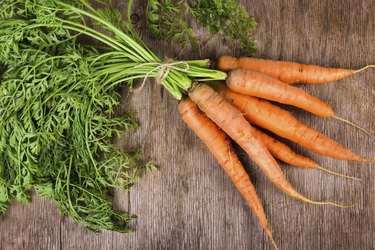
Vegetables rich in vitamin B-6 can also benefit your red blood cells. According to the Linus Pauling Institute at Oregon State University, vitamin B-6 act as a cofactor to enzymes that produce heme -- the part of hemoglobin that binds oxygen. Without adequate vitamin B-6, your body produces less functional heme, and in turn produces less functional hemoglobin. Consuming vegetables such as spinach, lentils, carrots, beans and vegetable juice cocktails can also provide a source of vitamin B-6 for your body and support proper hemoglobin function.

References

Article reviewed by Jenna Marie Last updated on: Apr 11, 2011

Must see: Photo Galleries