







































































Fruits That Raise Blood Sugar

Fruits That Raise Blood Sugar
Photo Credit fruit juice image by Olga Fesko from Fotolia.com

Fruits, like most foods, contain carbohydrates that can raise your blood sugar. However, fruit also carries with it an abundance of healthy vitamins and minerals as well as fiber, which all are part of a well-balanced diet. Understanding the benefits of fruit, as well as which fruits can drastically increase your blood sugar, is all part of ensuring blood-glucose control.

Sugars in Fruits

Most fruits contain the sugar fructose. Fructose is a monosaccharide, meaning it consists of a single sugar molecule. Fructose is one of the most common sugars found in nature. Fructose is considered a carbohydrate. Most fruits also contain fiber, another carbohydrate or polysaccharide. Fruits contain pectin, which is a soluble fiber, and cellulose, an insoluble fiber.

Glycemic Index of Fruits

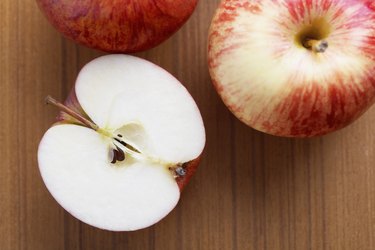
Since fruits contain carbohydrates, most fruits will increase your blood sugar. However, some can affect it more than others. A good way to determine a food's effect on your blood sugar is to know its glycemic index. The glycemic index is a rating given to food, indicating the level it will increase your blood glucose. The scale goes from zero to 100; the higher the food is on the glycemic index, the higher and faster it will raise your blood sugar. According to the Mayo Clinic, if a food is between 0 and 55, it is a low-glycemic food. From 56 to 69, it is considered a moderate glycemic food, and from 70 to 100, it is a high-glycemic food. Watermelon is an example of a high-glycemic fruit that significantly raises blood sugar. Fruits that have a moderately high glycemic effect include bananas, pineapple and raisins. Low-glycemic fruits are apples, oranges, mangoes and grapefruit.

Carbs and Fruit

According to the "Cecil Essentials of Medicine," diabetics should limit their intake of carbohydrates to 15 g per meal. This is equal to 1/2 cup of frozen fruit, 3/4 to 1 cup of melon or berries and 1/3 to 1/2 cup of fruit juice. Dried fruits, like raisins or cherries, can contain 25 g of carbs in just 2 tbsp.

Benefits of Fruit

The fiber content of fruit may be helpful in limiting the effect that fruit sugar has on your blood glucose. Eating fiber with a food lowers its glycemic effect. A high glycemic index means a spike in blood glucose, while a low-glycemic index food results in a moderate rise over a prolonged time. Fiber slows the digestion of foods and also blocks the absorption of sugars all at once. These combined factors result in a moderate rise in blood sugar over a significant amount of time. In addition, fruit offers an array of vitamins and minerals, so don't skip your intake of fruit just because you think it contains too much sugar.

References

Article reviewed by Leah Ann Crussell Last updated on: Apr 11, 2011

Must see: Photo Galleries