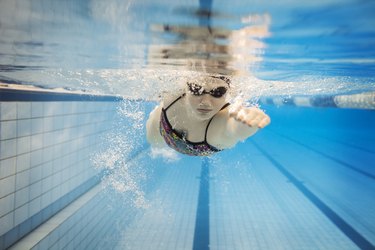
Hitting the pool can cool you off and is a fun way to get fit. While a refreshing swim might leave your body renewed and invigorated, it can also lead to uncomfortable, itchy eyes. Eye irritation due to chlorine in eyes is a common problem among those who swim in treated pools.
What Is "Swimmers Eye"?
Video of the Day
Conjunctivitis, also known as pink eye, can stem from allergies, bacteria, or — as often happens with the form called swimmers eye — contact with chemicals. Caused by irritants such as chlorine in eyes, air pollution or chemical exposure, chemical conjunctivitis is an inflammation of the conjunctiva, the thin layer of transparent tissue that covers the white of the eye.
Video of the Day
Learn to identify swimmers eye, as well as to prevent it before your next dip in the pool. People who experience chemical conjunctivitis from swimming may display symptoms in one or both eyes. These symptoms include a gritty sensation, itching, burning eyes and excessive eye-watering.
Discharge from one or both eyes is a common symptom of swimmers eye, as are swollen eyelids, eye redness, light sensitivity and blurred vision.
Read more: How to Treat a Swollen Eyelid
Home Remedies for Pink Eye
According to the American Optometric Association, flushing the eyes thoroughly with warm water or saline solution can help remove irritants from the surface of the eye, relieving chemical conjunctivitis. Contact lens wearers may need to discontinue the use of their lenses until the eye inflammation and irritation has passed.
Mayo Clinic notes that cold compresses continue to be among the most effective home treatments for pink eye. Most people find a clean cloth soaked in cool water the most soothing, but you can also alternate with a warm compress.
To further combat inflammation and irritation, over-the-counter lubricating eye drops can ease itching and burning. If your doctor suspects you have an actual allergy to chlorine in eyes or other swimming-related allergens, she may recommend eyedrops containing antihistamines.
When to Seek Professional Treatment
Eye irritation that lasts for more than a few hours after swimming or does not respond to self-care treatment should be evaluated by an eye care professional. See your eye doctor if thick, pus-like discharge is present.
Swimmers eye related to chlorine irritation can result in the temporary clouding of vision. This brief blurriness is not unusual, but consult your eye doctor if vision changes persist for more than an hour or two. Prolonged vision problems may indicate more serious complications.
Preventing Eye Irritation
Help prevent eye irritation when swimming in a home pool by testing the water's pH level frequently and adjusting pool chemicals accordingly. According to the Centers for Disease Control and Prevention, a pH level between 7.2 and 7.8 is ideal for eye comfort and pool disinfection.
Realistically, however, maintaining the ideal pH level in a pool can be difficult, even when it's your own. And in a public pool, chemical and pH levels are definitely beyond your control.
Because of this uncertainty, guarding your eyes is your best defense against swimmers eye. Swimming goggles can be a good alternative for both children and adults. This protective eyewear guard against eye irritation from chlorine in eyes by providing a watertight barrier between sensitive eye tissues and pool water.