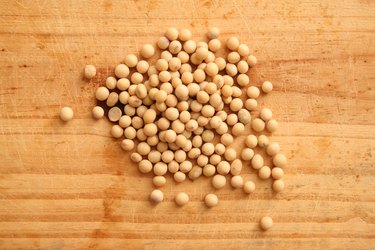
Hydrolysis of proteins breaks down large protein molecules into their smaller, constituent amino acids. This chemical process breaks the peptide bonds that hold together the individual amino acids. Hydrolyzed soy proteins are typically used to enhance the flavors in chicken and other meat products.
According to the Food Safety and Inspection Service, hydrolyzed soy protein is not the only type of plant-based protein. In fact, it can be made from other plant sources like wheat and corn — hydrolyzed corn protein and hydrolyzed wheat protein are examples — or even from an animal source such as milk.
Video of the Day
Video of the Day
Tip
Hydrolyzed soy protein is made by breaking down large soy protein molecules into their smaller, constituent amino acids by a chemical process. Hydrolyzed proteins are used as flavor enhancers, sources of vegetable protein and are even present as soy ingredients in cosmetics.
Hydrolyzed Soy Protein Nutrition
According to the American Cancer Society, soy-based products such as hydrolyzed soy protein serve as an appropriate replacement to meat thanks to their high protein content. A 100-gram serving of Bob's Red Mill Natural Foods organic textured soy protein has 588 calories, which is much higher than a 100-gram serving of lean, grass-fed beef strip steaks, which contain just 117 calories.
A serving of textured soy protein is also higher in protein compared to beef, which offers 23.70 grams of protein. Textured soy protein, on the other hand, provides 52.94 grams of protein, 11.76 grams of fat, 35.29 grams of carbohydrates and 23.5 grams of total dietary fiber.
Read more: Soy Protein vs. Whey Protein
The Dietitians of Canada states that soy is also high in calcium, which is required to maintain a healthy skeletal system. A 100-gram serving offers 353 milligrams of calcium and 10.59 milligrams of iron, a mineral responsible for oxygenation of body cells. They are good sources of isoflavones, a type of phytoestrogen whose efficacy increases on digestion.
Benefits of Hydrolyzed Soy Protein
The Linus Pauling Institute explains that isoflavones come from plant-based sources, namely soybeans. A 6-ounce serving of cooked soybeans contains approximately 81 milligrams of isoflavones, while edamame includes one of the highest amounts — 138 milligrams worth in 6 ounces.
Read more: Soy Protein Vs. Meat Protein
Isoflavones have been known to influence estrogen levels in the body. They may also be responsible for decreasing the incidence of breast cancer in adults who consumed isoflavone-rich foods as children.
Researchers of a study published in Medicines in June 2017 found that soy also has the potential to prevent the recurrence of breast cancer. This is mainly due to the presence of isoflavones in soy-based products like hydrolyzed soy protein, which possess the ability to suppress tumor cells.
Similarly, a study featured in the March 2014 issue of the_ Journal of Steroid Biochemistry and Molecular Biology_ states that the antioxidant properties of soy isoflavones have the potential to protect against prostate cancer. However, more studies need to be carried out to determine the mechanism of action of soy isoflavones, but the results so far have been promising.
It's also not just in food. The use of soy ingredients in cosmetics, fertilizers and as a biofuel is becoming more frequent. According to a study published in the February 2015 issue of Acta Poloniae Pharmaceutica, soy ingredients in cosmetics have been shown to stimulate collagen, provide anti-inflammatory benefits and even protect against harmful UV rays.
Derivatives of soy are also being used in exfoliating face washes, which make use of soy microbeads as an environmentally friendly alternative to plastic microbeads.
Soy Protein Isolate Dangers
Unfortunately, some people may experience soy protein isolate dangers that stem from a soy allergy. According to Mayo Clinic, mild forms of a soy allergy may result in hives, swelling, tingling or itching in the mouth. Some people may also experience redness of the skin, diarrhea, nausea and vomiting. This can occur soon after consuming products containing soy or hydrolyzed soy protein.
Read more: A List of Foods With MSG
An allergic reaction may also occur when consuming products not directly made from soy or soybeans. Ingredients like monosodium glutamate (MSG), textured vegetable protein (TVP) and artificial flavorings all have some soy in them. Even in small amounts, this may prove fatal to those who have a severe soy allergy.
- Purdue University: "Startup Commercializes Soy Microbead to Provide Safe, Ecofriendly Alternative to Plastic Microbeads Used in Cosmetic, Soap Products"
- Yale Global Online: “Soybeans: The Miracle Crop"
- Mayo Clinic: "Soy Allergy"
- USDA FoodData Central: “Organic, Textured Soy Protein”
- USDA FoodData Central: "Beef, Grass-Fed, Strip Steaks, Lean Only, Raw"
- Linus Pauling Institute: "Soy Isoflavones"
- Dietitians of Canada: "What Are the Health Benefits of Soy?"
- American Cancer Society: "Common Questions About Diet and Cancer"
- Medicines: "Dietary Isoflavones and Breast Cancer Risk"
- Food Safety and Inspection Service: "Additives in Meat and Poultry Products"
- Journal of Steroid Biochemistry and Molecular Biology: "Soy Isoflavones and Prostate Cancer: A Review of Molecular Mechanisms"
- LibreTexts: "Hydrolysis of Proteins"
- Acta Poloniae Pharmaceutica: "Dermatological and Cosmeceutical Benefits of Glycine Max (Soybean) and Its Active Components"