














































Nutritarian Diet

Nutritarian Diet
Photo Credit fruits and vegetables - isolated on white image by msdnv from Fotolia.com

A nutritarian diet is one that includes mainly the foods that are highest in nutritional value. Dr. Joel Fuhrman's Eat to Live diet is one example of a nutritarian diet. Nutritarians choose what foods to eat using the Aggregate Nutrient Density Index, or ANDI, which gives foods a score by dividing the amount of nutrients in the food by the amount of calories in the food.

Foods to Consume

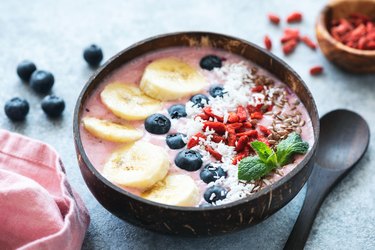
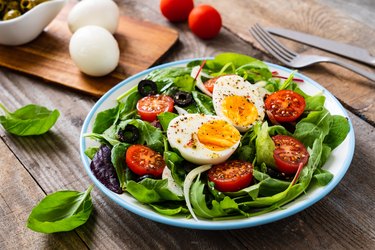
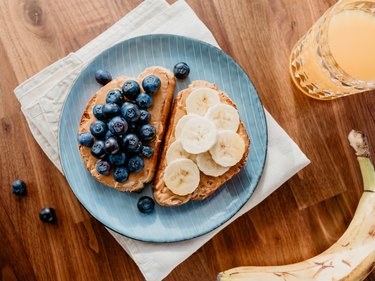
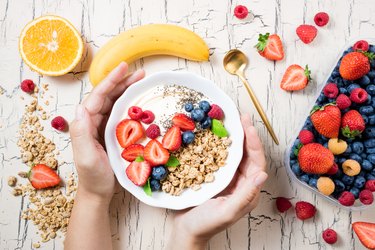
Nutritarians should eat at least 1 lb. of raw vegetables, 1 lb. of cooked vegetables, 1 cup of beans or legumes, 1 lb. of fruits and 1 oz. of nuts or seeds each day. Whole grains are allowed as well, and some nutritarians eat small amounts of fish and eggs. The most nutrient-dense vegetables are brussels sprouts, cooked collard greens, cooked kale, cooked mustard greens, cooked turnip greens, cooked bok choy, raw and cooked spinach, raw watercress and swiss chard. The fruits with the highest nutrient density include blueberries, cantaloupe, grapefruit, kiwi, oranges, plums, pomegranate juice, raspberries, strawberries and watermelon.

Foods to Limit

Processed foods, foods containing added sugar or salt, refined grains, foods containing trans fats, dairy products, high-mercury fish, isolated plant oils, red or processed meats and alcoholic or caffeinated beverages are not consumed on a nutritarian diet. Foods like these tend to have low nutrient density, so they don't provide much benefit in terms of health or weight loss.

Benefits

Eating a nutrient-dense diet like the nutritarian diet can help lower your risk for a number of health conditions, including cancer, type 2 diabetes, heart disease, stroke and obesity. You will also be eating a nutritious diet that is relatively low in calories and filled with essential vitamins and minerals.

Considerations

It may be hard to follow a strict nutritarian diet, especially if you don't have much time to prepare your meals, but even working toward this diet by choosing more nutrient-dense foods and limiting processed foods can provide nutrition and health benefits. Choose fruits and vegetables in a rainbow of colors, whole grains and lean meat and dairy products.

References

Article reviewed by Holland Hammond Last updated on: May 4, 2011

Must see: Photo Galleries

Member Comments