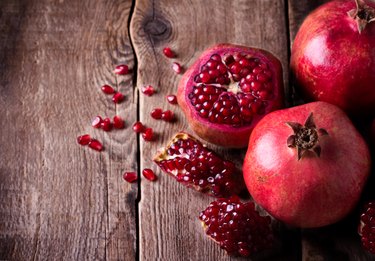
Pomegranates are available mostly between the months of October and January and they're rife with antioxidants and other important nutrients.
Unfortunately, many people don't know how to eat pomegranates and decide to avoid the fruit because of its seemingly time-consuming cutting process. You can save time and effort by purchasing and eating the seeds directly for a nutritious snack.
Video of the Day
Video of the Day
Tip
Looking for an easy way to cut open a pomegranate and remove the sweet arils? Try the Pomegranate Council's methods here.
Pomegranate Arils vs. Seeds
Pomegranate seeds are enclosed in small, red, jewel-like drops called arils. The material inside the arils is tart and juicy, and surrounds the white seeds of the pomegranate fruit, according to the Pomegranate Council.
When a pomegranate is cut, you might assume the arils are the seeds, but this is a misconception. The arils and crunchy white seeds are the only edible portions of the pomegranate.
Yes, Pomegranate Seeds Are Edible
You can eat the whole pomegranate seed — in fact, it's easiest to eat pomegranate seeds together with the arils. It's completely safe to chew and swallow the seeds along with the juicy arils, and you might just enjoy the variations in texture.
Still, you don't have to eat the seeds if you don't care for the texture. Instead, you can spit them out as you would when eating seeded watermelons or citrus fruits.
Pomegranate Nutrition Facts
Pomegranate seeds enclosed in juicy arils make up a low-calorie, antioxidant-rich food choice. According to the USDA, a 1/2-cup serving contains 72 calories, along with 3.5 grams of fiber and 10 percent of your daily value of the antioxidant vitamin C.
Fiber helps keep you regular and can help lower cholesterol and blood sugar levels, per the Mayo Clinic. The crunchy seed is actually where most of the fiber in the pomegranate resides. Meanwhile, vitamin C helps support your body's healing processes and protects your cells from free radicals, per the Mayo Clinic.
If you're watching your sugar intake, note that the same 1/2-cup serving contains 12 grams of natural sugars.
Removing Pomegranate Seeds
While pomegranate seeds are edible, not everyone likes them. In fact, you might seek only the juicy arils wrapped around the seeds. But if you spit out the seeds, note that you'll miss out on some of the fruit's nutritional benefits.
If you don't enjoy eating the seeds but want to cash in on the benefits of the fruit, try incorporating pomegranates into recipes where you're less likely to notice the seeds' crunch.
If you want to eliminate the seeds without the hassle of spitting them out, beat the arils gently with a wooden spoon in a bowl. Keep in mind, though, that the juice is likely to break from the arils, so this technique is best saved for making pomegranate juice.