





















Why Are Breathing Exercises Important?

Why Are Breathing Exercises Important?
Photo Credit Goodshoot/Goodshoot/Getty Images

For years, those people who practice Eastern meditation have extolled the virtues of controlled breathing exercises as a way to achieve inner calm and enlightenment. As of 2010, Western medical research is documenting the physical benefits of breathing exercises. Inner calm, also known as stress reduction, may be effected using simple breathing techniques. Scientists are also examining how proper breathing may help prevent chronic disease and alleviate symptoms of altitude sickness and high blood pressure.

Breathing for Stress Control

Deep breathing triggers the parasympathetic nervous system, the part of the nervous system that slows the heart rate. This makes breathing exercises an immediate and effective antidote for stress and panic. By taking slow and deliberate breaths, it is possible to calm down in a stressful situation. Scientists are researching the effect of breathing on the sympathetic nervous system as well, to determine how breathing may be used to lower blood pressure.

Stimulating the Lymph System

The kind of deep abdominal breathing practiced in most breathing exercises sends the diaphragm muscle downward in order to fill the lungs. That action massages and helps detoxify organs, promote blood flow and peristalsis, and push the lymph more vigorously through the lymph system. The lymph system carries away toxins, so the breathing exercises help to clear the body of garbage that can lead to serious chronic disease.

Filling the Lungs

Human beings habitually shallow-breathe, failing to fill and empty the lungs with each breath. According to the University of Missouri Extension, humans may experience as much as a 20 percent reduction in oxygen blood levels as a result of poor breathing habits. Inefficient breathing depletes energy, affects mental alertness and allows more carbon dioxide to remain in the lungs. Because the shape of the lungs is larger at the bottom, inhaling deeply expands the lungs, sending fresh oxygen into the whole area, and a complete exhalation releases more carbon dioxide.

Breathing Exercises at Higher Altitudes

An increase in oxygen resulting from breathing exercises may be helpful in combating altitude sickness or adjusting to changes in altitude. Practice deep breathing upon arising and at intervals throughout the day. For a quick oxygen boost, do 75 to 100 rapid, forced exhalations and gentle inhalations, then hold a deep inhale as long as is comfortable and let it out very slowly. Repeat once.

Simple Breathing Exercises

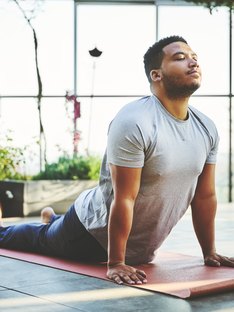
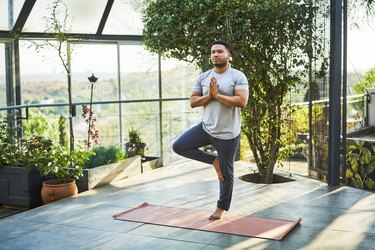
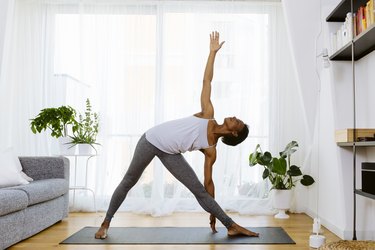
A number of breathing exercises are practiced by different schools of yoga and at stress reduction clinics. The exercises promote feelings of calmness and renewed energy. For the simplest deep breathing, sit comfortably on a chair or a floor cushion. Place your hands on your knees. Exhale completely through your nose as you tighten the abdominal muscles to squeeze out the last bit of air from the bottom of the lungs. Pause for a count of two. Inhale slowly and deeply, filling the belly, the rib area and the chest. Pause. Repeat five to 10 times. For classic pranayama, sit with the mouth closed and breathe in and out rapidly and vigorously through the nose for about 15 seconds. Increase the time as you become more practiced.

References

Article reviewed by Mark Asbury Last updated on: Jun 10, 2011

Must see: Photo Galleries