










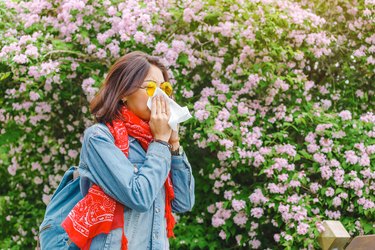






Echinacea and goldenseal are herbal medicines sometimes used to fight colds. Echinacea may improve immune systems and lessen the symptoms and duration of colds, and goldenseal may help suppress mucus. However, evidence is preliminary and contradictory regarding the benefits of using of these herbs to treat colds.
Echinacea Dosage
Clinical trials tested echinacea in capsule form for five to seven days in doses between 500 mg and 1,000 mg taken three times per day. You can also take echinacea extract for up to six months using a dose of 300 mg to 800 mg taken twice a day. These are the doses for adults; discuss possible echinacea use with your child's doctor to determine the appropriate dose and whether use is recommended since some children get a rash when taking echinacea.
Goldenseal Dosage
Goldenseal is not recommended for use in children. The recommended dose for adults is 500 mg to 1,000 mg in capsule form or 30 mg to 120 mg of standardized extract taken up to three times per day. You can also use one capsule of goldenseal powder mixed with one cup of warm water and 1/4 tsp. salt to make a mouthwash to help with a sore throat, according to the University of Maryland Medical Center.
Side Effects
Side effects from echinacea use are not common, but may include rash, headache, sore throat, stomach upset, nausea, muscle aches, dizziness and drowsiness. However, some people experience allergic reactions to this herb. Goldenseal side effects include depression, anxiety, nausea, seizures, vomiting and paralysis, but these rarely occur unless people use high doses of goldenseal. Goldenseal may make you more sensitive to sunlight.
Safety
Pregnant women, people with liver transplants and people allergic to ragweed, marigolds, chrysanthemums and daisies should avoid taking echinacea. Avoid taking goldenseal if you are pregnant or breastfeeding, and you should not give this herb to babies or young children. Check with your doctor before taking goldenseal if you have liver or heart problems or high blood pressure. Goldenseal may interact with blood thinners and tetracycline.
References
- MayoClinic.com; Echinacea (Echinacea Angustifolia DC, Echinacea Pallida, Echinacea Purpurea); April 2011
- "American Family Physician"; Echinacea; Benjamin Klinger, M.D.; January 2003
- National Center for Complementary and Alternative Medicine; Echinacea; July 2010
- Drugs.com: Goldenseal
- National Center for Complementary and Alternative Medicine; Goldenseal; July 2010
- University of Maryland Medical Center; Goldenseal; Steven D. Ehrlich, NMD; March 2009


Member Comments