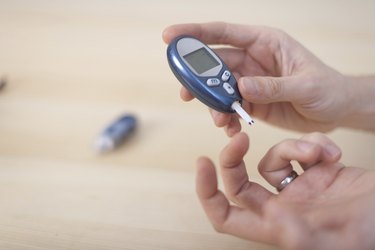
First developed in the early 1980s, the glycemic index, also abbreviated GI, is used to categorize carbohydrate-containing foods according to their potential to raise blood sugar levels. Low-GI carbohydrates are considered healthier for you because they do not cause large blood sugar variations like high-GI foods do. High-GI foods, by producing a sharp rise in your blood sugars, can often make you feel hungry within a couple of hours and are associated with weight gain, while low-GI foods make you feel more satisfied until your next meal and could help you lose weight more easily.
Glycemic Index
To measure the glycemic index of a food, healthy or diabetic volunteers have to eat a serving that provides exactly 50 g of available carbohydrates. For example, in the case of bread, this corresponds to a bit more than 3 slices. When testing apples, the equivalent of four small or two large apples have to be consumed in a relatively short period of time. The GI is based on a scale from 0 to 100 -- 0 corresponding to no blood sugar level rise at all and 100 corresponding to the rise observed after ingesting pure glucose, one of the most quickly absorbed sugar. Any value below 55 is considered low, between 56 and 69 is considered medium and above 70 is considered high.
Meat and Poultry Nutrition Facts
Meat and poultry are excellent sources of protein and also contain some fat, depending on the type of meat and the cut chosen. However, meat and poultry do not contain any carbohydrates at all, with the exception of the processed products that are breaded, such as chicken nuggets, or served with a sauce containing sugar or starch.
Meat and Poultry Glycemic Index
Because meat and poultry do not contain carbs, it is impossible to measure their GI. Only carbohydrate-containing foods can be assigned a GI. However, knowing that meat and poultry are free of carbs, you can estimate that their effect on your blood sugar levels is non-significant in the first hours following your meal, which would make their GI very close to zero. The same is true for other carb-free foods, such as eggs, hard cheeses, avocado, nuts as well as fats and oils.
Meat and Poultry on a Low-GI Diet
If you are following a low-GI diet, either to lose weight or improve your health, you can include meat and poultry without any problems. These foods will not contribute to raising your blood sugar levels during the period following your meal and may actually help you feel more satiated with your diet because of their high protein content, as explained in the May 2008 issue of the "American Journal of Clinical Nutrition."
References
- University of Sydney: The Glycemic Index
- Harvard School of Public Health: Carbohydrates: Good Carbs Guide the Way
- "American Journal of Clinical Nutrition"; International Table of Glycemic Index and Glycemic Load Value; Kaye Foster-Powell et al.; 2002
- "American Journal of Clinical Nutrition"; Protein, Weight Management and Satiety; Douglas Paddon-Jones, et al.; May 2008


