Nothing quite satisfies a hot summer day than a juicy piece of watermelon.
While it's most certainly a classic fruit during warm weather months, you can find watermelon year-round at your grocery store — and even bottled as watermelon juice. And thank goodness, because that dribble-down-your-chin goodness comes with some big health benefits.
Video of the Day
Video of the Day
Watermelon Nutrition Facts
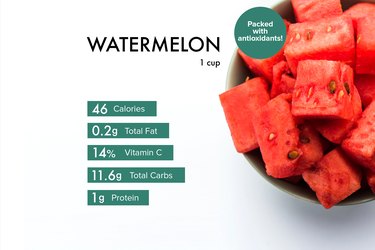
One cup of watermelon is equal to one serving. One cup of watermelon contains:
- Calories: 46
- Total fat: 0.2 g
- Cholesterol: 0 mg
- Sodium: 1.5 mg
- Total carbs: 11.6 g
- Dietary fiber: 0.6 g
- Sugar: 9.5 g
- Added sugar: 0 g
- Protein: 1 g
Watermelon Macros
- Total fat: One cup of watermelon has 0.2 grams of total fat, which includes 0 grams of saturated fat and 0 grams of trans fat.
- Carbohydrates: One cup of watermelon has 11.6 grams of carbs, which includes 0.6 grams of fiber and 9.5 grams of natural sugars.
- Protein: One cup of watermelon has 1 gram of protein.
Vitamins, Minerals and Other Micronutrients in Watermelon
- Vitamin C: 14% of your Daily Value (DV)
- One cup of watermelon contains other vitamins, including vitamin A (5% DV), potassium (4% DV), magnesium (4% DV), calcium (1% DV), iron (2% DV), copper (7% DV), manganese (3% DV) and zinc (1% DV).
When you're eating watermelon in the comfort of your own kitchen, it's easy to slice and measure out watermelon to a one-cup serving. That said, you may also enjoy eating watermelon slices, mini watermelons or personal sized-watermelons, and you might not be able to measure them by a one-cup serving.
Here's a bit more nutritional information about these types of watermelon.
One watermelon wedge or slice — which is about 1/16th of a regular-sized watermelon, or 286 grams — contains 86 calories, 0.4 g fat, 22 g carbohydrates, 1.7 g sugar.
Is the Sugar in Watermelon Bad for You?
You might notice that watermelon is higher in sugar — but that sugar is naturally occurring. “As a dietitian, I encourage my clients to not fear the sugar in fruit," Mia Syn, RDN, tells LIVESTRONG.com. "While we should limit added sugar, [watermelon] is a natural source that also provides a slew of vitamins, minerals and antioxidants,” she says.
Health Benefits of Watermelon
Watermelon isn't calorie-dense yet is high in nutrients, deeming it a perfect snack or tasty addition to recipes.
1. Watermelon Is Packed With Antioxidants
It's all in the vibrant, red-pink hue: Watermelon is packed with plant chemicals like lycopene, vitamin C and beta-carotene, notes a March 2019 review in the International Journal of Food Properties. Each offers unique health properties, but overall, they act as potent antioxidants.
Dietary antioxidants help your body sop up damaging free radicals and counteract the inflammation that's at the root of chronic health concerns like heart disease and diabetes. In fact, watermelon is more antioxidant-rich than tomatoes, strawberries and guava, the March 2019 study found.
Watermelon and the Glycemic Index
At 72, watermelon has a high glycemic index (GI), per the Defeat Diabetes Foundation.
But, as we know, a food's glycemic index doesn't tell the whole story. Because watermelon is mainly water, the fruit has a very low glycemic load, which means it's unlikely to spike a person's insulin levels.
For this reason, the Defeat Diabetes Foundation says consuming watermelon in its whole fruit form is a safe to eat in moderation for people with diabetes and those at risk for developing diabetes.
In other words, someone with diabetes can enjoy watermelon. Watermelon juice, however, has a high glycemic load and should be avoided.
2. It Keeps You Hydrated
You're right to crave it on a hot day: "What I love about watermelon is that it is incredibly hydrating. It's made up of about 91 percent water," says Syn. And yes, that does count toward your water quota for the day. About 20 percent of your daily water intake can come from food, according to the Institute of Medicine.
Why's that important? Keeping your body hydrated ensures nutrients are delivered to your cells and bacteria are flushed from your bladder, as well as regulates your digestion, according to Harvard Health Publishing.
Some people say watermelon is good for gout or that watermelon is good for arthritis. While more research is needed to understand watermelon's role in relieving symptoms of these conditions, the fact that watermelon is so hydrating could be promising.
Drinking a lot of water is recommended for patients with gout, per the Mayo Clinic, so eating watermelon can be part of staying hydrated.
3. Watermelon May Boost Exercise Performance
Just consider watermelon a natural sports drink. In addition to containing electrolytes potassium and magnesium, which are necessary for proper hydration and muscle function, watermelon also offers L-citrulline.
Consuming this amino acid regularly has been shown to increase the production of nitric oxide, which can boost blood flow and thus ferry more blood to muscles during endurance workouts, according to a January 2017 study in Current Opinion in Clinical Nutrition and Metabolic Care.
Before a long run, try snacking on watermelon chunks or sip on watermelon juice to hydrate pre-workout. (Note that watermelon does not contain a significant amount of sodium, which is typically present in sports drinks, so you'll have to get sodium elsewhere.)
4. It's Linked to Good Heart Health
The juicy fruit is also a heart-smart snack. In a September 2017 meta-analysis of 14 studies, lycopene intake was associated with a 17 percent lower risk of heart disease and stroke, per research published in Molecular Nutrition & Food Research.
Another study backed up those findings: In a September 2017 meta-analysis of 28 studies, people who had the highest blood levels of lycopene were observed to have a 26 percent lower risk of stroke, 14 percent lower risk of heart disease and, overall, a 37 percent lower risk of death from these diseases, per research in Critical Reviews in Food Science and Nutrition.
Lycopene is linked to preventing blood clots, making arteries more flexible so that blood can flow freely, and improving blood vessel function, among other heart-happy benefits, according to a May 2017 study in Proceedings of the Nutrition Society.
What's more, watermelon has been linked to lowering blood pressure thanks to the L-citrulline, the January 2017 study in Current Opinion in Clinical Nutrition and Metabolic Care found.
Related Reading
5. Watermelon Is Tied to a Lower Risk of Cancer
As an antioxidant, lycopene in watermelon may help your body fend off a variety of diseases. However, research shows it's particularly adept at guarding against one in particular: prostate cancer, which is the most common cancer in American men second to skin cancer, per the American Cancer Society.
In a meta-analysis of 42 studies, which included nearly 700,000 men, high dietary intake and blood levels of lycopene were associated with a lower risk of prostate cancer, per December 2017 research in Prostate Cancer and Prostatic Diseases.
6. Watermelon May Help Support Weight Loss
Because 90 percent of a watermelon's weight is water, it's a great pick for those who are trying to banish belly fat. You can feel satisfied by watermelon, which will fill you up with very few calories.
In addition to helping the body stay hydrated, snacking on watermelon will help you feel full so you won't have cravings between meals.A 2014 study featured in the American Journal of Hypertension found that this fruit may reduce cardiac stress and aortic blood pressure in adults with obesity.
Lycopene, one of the most abundant antioxidants in watermelon, may help lower the risk for diabetes and heart disease, per June 2014 research in EXCLI Journal.
Eating watermelon can increase the amount of an an amino acid called arginine in the blood, which research suggests may help burn fat quickly.
An August 2020 meta-analysis in the Journal of Functional Foods looked at human studies in which L-arginine was provided as a dietary supplement, finding that groups given the supplement saw reduced BMI, waist circumference and fat mass.
More research is needed to better understand the effects arginine has on weight.
Watermelon Recipes
Looking for some ways to eat watermelon beyond straight off the rind? Here are some of our favorite watermelon recipes:
Can You Eat Watermelon Rind?
While most people toss it out, the watermelon's rind is edible and nutritious. Choosing to eat the rind rather than throw it away is a great way to reap some of the fruit's health benefits and help reduce food waste, which contributes to climate change and the earth's rising temperatures.
The thick watermelon skin, which is called the rind, is rich in a compound called citrulline, an amino acid that raises levels of arginine in the blood, which in turn helps maintain blood flow, healthy blood vessels and heart health, per the Watermelon Board.
While it is possible to do, eating raw watermelon rind may be tough on your teeth and stomach. To make it go down more easily, you grate, julienne or blend this outer part of the fruit, or can pickle or juice watermelon rind. You can also slice it up and add it to your stir frys for a tasty and unique crunch.
Find some special watermelon rind recipes, like this Roasted Watermelon Rind Parmesan, on the Watermelon Board's website.
Allergies, Interactions and Warnings
Food Allergies
Good news: The FDA does not list watermelon as a potential food-drug interaction for common medications. "Because fruits like watermelon are a good source of fiber, vitamins, minerals and antioxidants, it's recommended to all healthy individuals to consume," Syn says.
Drug Interactions
If you're on ACE inhibitors or diuretics to reduce fluid retention and treat high blood pressure, you may want to check with your doctor or dietitian about foods high in potassium, like watermelon, per Consumer Reports.
Eating too many potassium-rich foods can increase the potassium levels in your body, which can lead to an irregular heartbeat.
If you take these medications, speak to your doctor to determine the maximum amount of potassium you can have per day. (Two watermelon slices pack in about 14 percent of your daily value of potassium.)
Alternatives to Watermelon
If you don't like watermelon, you might find that lycopene-rich tomatoes are similarly juicy and can easily substitute for watermelon in dishes like salads.
But if it's a sweet fruit you're after, swap watermelon for any other type of melon, like cantaloupe or honeydew, or even strawberries and guava, which also contain heart-healthy lycopene.
And for the perfect sub, try papaya. (If you can't find it fresh, many grocers offer cubed papaya in the refrigerated section.)
The sweetness of the fruit matches watermelon — and 2016 research in Agriculture and Agricultural Science Procedia shows that the tropical treat offers some lycopene, too.
Related Reading
- US Department of Agriculture: “Watermelon, Raw”
- Institute of Medicine: “Dietary Reference Intakes: Electrolytes and Water.”
- International Journal of Food Properties: “Watermelon as a potential fruit snack.”
- Current Opinion in Clinical Nutrition and Metabolic Care: “Influence of L:-citrulline And Watermelon Supplementation on Vascular Function and Exercise Performance”
- Molecular Nutrition & Food Research: “Lycopene and Risk of Cardiovascular Diseases: a Meta-Analysis of Observational Studies”
- Critical Reviews in Food Science and Nutrition: “Lycopene And Tomato and Risk of Cardiovascular Diseases: a Systematic Review and Meta-Analysis of Epidemiological Evidence”
- Prostate Cancer and Prostatic Diseases. “Increased Dietary and Circulating Lycopene Are Associated With Reduced Prostate Cancer Risk: a Systematic Review and Meta-Analysis”
- Agriculture and Agricultural Science Procedia: “Analyzing Lycopene Content in Fruits”
- Harvard Health Publishing: "The Importance of Staying Hydrated"
- Consumer Reports: "Food and Drug Interactions You Need to Know About"
- Proceedings of the Nutrition Society: "Cardiovascular Benefits of Lycopene: Fantasy or Reality?"
- Journal of Functional Foods: "The effects of supplementation with L-arginine on anthropometric indices and body composition in overweight or obese subjects: A systematic review and meta-analysis"
- EXCLI Journal: "Watermelon lycopene and allied health claims."
- Watermelon.org: "Rind Headquarters"
- Mayo Clinic: "Gout Diet"
- Defeat Diabetes Foundaion: "Watermelon"