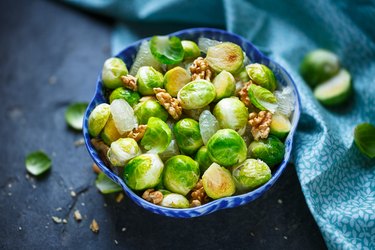
When taking warfarin, either limit or avoid foods high in vitamin K, including liver and certain green, leafy vegetables. Try not to vary your intake of these foods.
Other than cranberries, all fruits are acceptable, and, indeed, beneficial to include in your diet. With the exception of liver, you may get protein from eggs, dairy products, beans, fish, poultry and lean cuts of meat. Whole grains, nuts and seeds, as well as vegetables that are low in vitamin K, are also acceptable and nutritious foods to eat while on warfarin.
Video of the Day
Video of the Day
Tip
The main foods to watch or limit while taking warfarin are liver and many green, leafy vegetables because they have high amounts of vitamin K.
What Is Warfarin?
Warfarin and diet is a common concern. Warfarin is sold under the brand names Coumadin and Jantoven. It's a prescription drug used to prevent blood clots, says the American Heart Association.
In normal health, the body's blood-clotting mechanism helps stop bleeding when you have an injury. Yet, it doesn't produce clots that can block an artery and cause a heart attack, stroke or an occlusion in the veins. In other words, the blood-clotting mechanism is in a delicate balance.
Since warfarin suppresses blood-clot formation, it's called an anticoagulant. Although some people refer to anticoagulants as blood thinners, they don't actually thin the blood; instead, they slow the blood-clotting action, notes the AHA.
Blood clotting is a complex process, involving multiple substances termed "clotting factors." Warfarin blocks the synthesis of vitamin K-dependent clotting factors that prevent excessive bleeding. This action helps to guard against the harmful formation and growth of dangerous blood clots, states the AHA.
Doctors prescribe warfarin for patients who have had blood clots in the heart, brain, leg or arm, says MedlinePlus. They also prescribe it for those who have a new heart valve, an enlarged heart or an abnormal heart rhythm.
Vitamin K and Warfarin
Vitamin K is a fat-soluble vitamin found throughout the body. In addition to its role in blood clotting, it strengthens bones and helps prevent hardening of the arteries, states Harvard T.H. Chan School of Public Health. An adequate intake (AI) of vitamin K is 120 micrograms for men and 90 micrograms for women. The AI designation is used when insufficient scientific evidence exists to establish a recommended dietary allowance.
When you're on a coumadin diet, you still need to eat some vitamin K-rich foods since they're very nutritious. However, you should be careful not to eat an excess amount because they'll reduce the drug's effectiveness.
If your diet contains a large amount of vitamin K foods, you may need a higher dose of warfarin. Conversely, if your diet contains fewer vitamin K foods, you may need a lower dose of the medication.
Your dose of warfarin is chosen based on your blood-clotting time, so it's also important to avoid varying your intake of foods with vitamin K, advises the Cleveland Clinic. Consistency is the key. You can opt to eat a vitamin K food daily, weekly or several times weekly; but keep the frequency steady.
Vitamin K Foods
Green, leafy vegetables are the most common vitamin K foods, notes University of Iowa Hospitals & Clinics. Chicken and beef liver also contain the vitamin.
University of Iowa Hospitals & Clinics provides the below lists of vitamin K foods. The following vegetables are very high in vitamin K, containing more than 800 micrograms per serving:
- Kale
- Collards
- Turnip greens
- Spinach (frozen or cooked)
Below are vegetables high in vitamin K, containing 400 to 800 micrograms per serving:
- Mustard greens
- Beet greens
- Dandelion greens
The following vegetables are medium in vitamin K, containing 80 to 400 micrograms per serving:
- Spinach (raw)
- Broccoli
- Cabbage
- Asparagus
- Brussels sprouts
- Green leaf lettuce
- Onions
- Okra
- Endive
- Parsley
- Escarole
Vegetables in the the three lists are based on a portion size of 1 cup, with the exception of parsley, which is based on a portion size of 10 sprigs.
An array of vegetables have lower amounts of vitamin K, reports the Cleveland Clinic. Romaine lettuce and iceberg lettuce are low enough in the vitamin that most people can eat either variety every day. Other low-vitamin K foods to eat while taking coumadin include the vegetables below:
- Tomatoes
- Carrots
- Cucumbers
- Squash
- Cauliflower
- Potatoes
- Sweet potatoes
- Peppers
In addition to limiting your intake of liver and vegetables with a high vitamin K content, eat only small amounts of mayonnaise, soybean oil and canola oil, says MedlinePlus. Plan your warfarin diet with a doctor or nutritionist.
If you take warfarin, you should be careful with certain beverages. Refrain from drinking large amounts of green tea because it contains vitamin K, advocates the Mayo Clinic. Alcohol and cranberry juice can increase the effectiveness of warfarin and cause bleeding, so either avoid them or limit your intake to small amounts.
Precautions Concerning Supplements and Medications
Other sources of vitamin K include tobacco products like cigarettes. The vitamin is also included in nutritional supplements like Ensure, Boost and SlimFast, along with Viactiv calcium chews and certain multivitamins. Before buying a vitamin or supplement, check the label to see how much vitamin K it contains.
According to the U.S. Department of Veterans Affairs, it's best to avoid all herbal supplements and teas when taking warfarin. Common supplements, such as garlic, ginger root and fish oil, can interfere with the medication.
Certain drugs affect the way warfarin works, warns the Ohio State University Wexner Medical Center. These include antibiotics, antidepressants, anti-anxiety agents, steroids, nonsteroidal anti-inflammatory drugs and other anticoagulants. Apprise your doctor of all prescription drugs, nonprescription drugs and supplements you take.
Guidelines for Warfarin Patients
The main problem associated with warfarin is excessive bleeding, which can occur in any part of the body, notes the American Heart Association. Report any accidents or falls, along with unusual bruising or signs of bleeding, to your doctor. Symptoms of abnormal bleeding include a nosebleed, vomiting blood, bleeding gums, blood in the urine and bloody or dark stools.
Also, call your doctor if you experience the signs below, cautions MedlinePlus:
- Feel weak, dizzy and have a headache.
- Have a fever, infection or other illness, including nausea and vomiting.
To decrease the risk of bleeding, the American Heart Association recommends the following:
- Avoid contact sports and activities with a risk of falling or injuries.
- Use a soft-bristle toothbrush, and floss with waxed rather than unwaxed floss.
- Be extra careful when using sharp objects like scissors or knives.
- Use an electric razor instead of a blade.
It's important to prevent falls. MedlinePlus suggests removing electric cords and loose rugs from pathways. Instead of climbing for objects in the kitchen, arrange things so you can easily reach them. Avoid walking on ice and other slippery surfaces.
- American Heart Association: "A Patient's Guide to Taking Warfarin"
- MedlinePlus: "Taking Warfarin (Coumadin)"
- Harvard T.H. Chan School of Public Health: "Vitamin K"
- Cleveland Clinic: "Why Vitamin K Can Be Dangerous if You Take Warfarin"
- University of Iowa Hospitals and Clinics: "Warfarin, Your Diet, and Vitamin K Foods"
- U.S. Department of Veterans Affairs: "Warfarin and Diet"
- Mayo Clinic: "Warfarin Diet: What Foods Should I Avoid?"
- Ohio State University Wexner Medical Center: "Diet and Warfarin"
- Office of Dietary Supplements: Important Information to Know When You Are Taking: Coumadin and Vitamin K