























































What Are the Health Benefits of Eating Cottage Cheese?

What Are the Health Benefits of Eating Cottage Cheese?
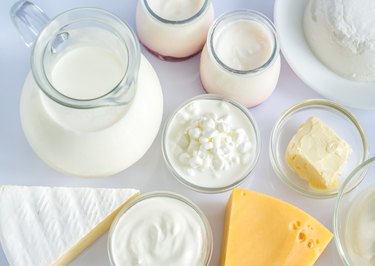
Photo Credit Jupiterimages/Comstock/Getty Images

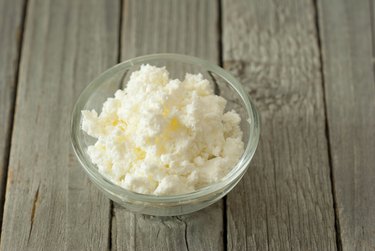
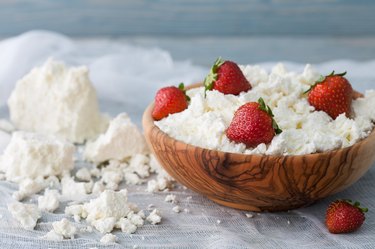
Cottage cheese may conjure up visions of the diet plate at your local diner. Choose low-fat versions to minimize your intake of saturated fat and to benefit from its other healthful features. When eaten in moderation, cottage cheese can be a healthy addition to your diet.

Protein

Cottage cheese contains 25 to 28 g of protein per cup, as much as 3 oz. of chicken breast. Cottage cheese can be a valuable source of protein for ovo-lacto vegetarians who do not eat meat. It is also portable and requires no cooking, making it a good high-protein snack when you are on the go.

Weight Loss

Eating five servings of low-fat dairy foods, as part of a low-calorie diet, may help accelerate weight loss as suggested by a study out of Australia's Curtin University, published in October 2009. Participants who ate five servings of dairy per day, including skim milk, nonfat yogurt and low-fat cheese, lost more weight and belly fat than participants eating three servings per day. One cup of low-fat cottage cheese, with 1 percent milk fat, contains 163 calories and 2 g of fat.

Minerals

Cottage cheese provides 138 mg of calcium, about 14 percent of the daily value of 1,000 mg recommended for a 2,000-calorie diet. A cup of cottage cheese also provides 303 mg of phosphorus. Calcium and phosphorous contribute to healthy bones. A 2-cup serving of cottage cheese equals a cup of milk according to the U.S. Department of Agriculture. Most adults need 3 cups of milk daily.

B Vitamins

Cottage cheese is also a source of the B-complex of vitamins. Per cup, it contains 1.4 mcg of vitamin B-12, which is important to nerve cell function and the body's ability to use iron. It also offers 0.4 mg of riboflavin, which helps with the body's ability to metabolize carbohydrates into energy. Cottage cheese also provides smaller amounts of B-6, panthothenic acid, thiamin, niacin and folate.

Sodium Considerations

One cup of loosely packed, low-fat cheese contains 918 mg of sodium. The U.S. Department of Agriculture Dietary Guidelines for Americans 2010 recommends not eating more than 2,300 mg per day. For about half of the population, including African-Americans, people over age 51 and those with diabetes or kidney disease, the recommendation is even lower -- 1,500 mg per day. One seemingly harmless serving of cottage cheese offers more than half of this recommendation.

References

Article reviewed by Elizabeth Ahders Last updated on: Jun 9, 2011

Must see: Photo Galleries

Member Comments