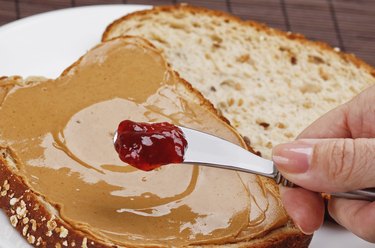
People who consume a balanced diet rich in monounsaturated fats from foods like peanut butter successfully lose weight and keep it off, reported a study published in the "International Journal of Obesity" in 2001. "Prevention" magazine nutrition editor Holly McCord had this and similar studies in mind when she developed her Peanut Butter Diet, sometimes referred to as the Peanut Butter and Jelly Diet. The plan's guidelines are detailed in her book "The Peanut Butter Diet." Ask your doctor for advice before beginning the program.
Basic Guidelines
Video of the Day

The Peanut Butter Diet has three daily guidelines: Consume three meals and several snacks, include peanut butter in some meals and engage in moderate aerobic activity for 45 minutes. The average woman following the program is allowed 1,500 calories and 4 tablespoons of peanut butter per day, while a man should aim to consume around 2,200 calories and 6 tablespoons of peanut butter. McCord says you can expect to lose half a pound weekly if you follow these guidelines, although this blanket guideline might not apply to everyone.
Video of the Day
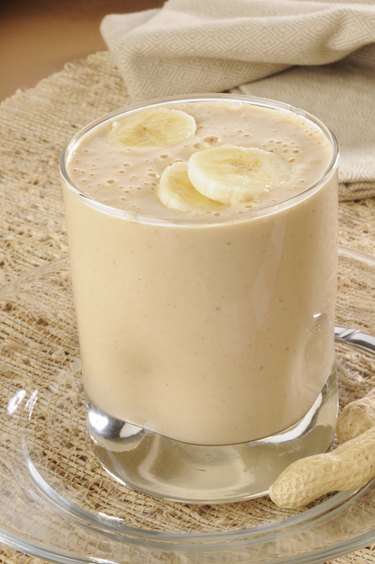
You don't need to include peanut butter every time you eat. Sample plans in McCord's book demonstrate how you can divide your quota throughout the day. For instance, breakfast on the Peanut Butter Diet might consist of cereal, milk and a banana or a serving of peanut butter oatmeal. A bean burrito or a peanut butter and jelly sandwich on whole-grain bread paired with fresh whole fruit could serve as lunch, followed by a dinner of salad greens topped with boneless skinless chicken breast, avocado cubes and chopped nuts. Snacks could include a peanut butter shake or peanut butter spread on toasted whole-wheat English muffins.
Possible Advantages
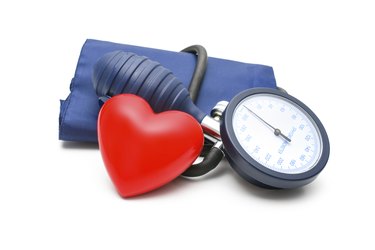
The Peanut Butter Diet permits more calories per day than other weight-loss plans, and this may help followers stick with the program longer because they won't feel deprived or feel extreme hunger. Because peanut butter is a comfort food for many people, they might find McCord's program easier to follow than other more restrictive diets. The diet emphasizes the role of exercise in sustainable weight loss and does not require dietary supplements. In addition, a high intake of the monounsaturated fats provided by the peanut butter may lower your risk of heart disease, high blood cholesterol and stroke.
Potential Disadvantages

Going overboard on the peanut butter while following McCord's plan -- or not carefully controlling your intake of other foods, especially other sources of fat -- may cause you to gain weight, not lose it. Each 2-tablespoon serving of peanut butter contains about 190 calories, 16 grams of fat and over 3 grams of saturated fat. Regular peanut butter is also high in sodium. If you're a woman on a low-sodium diet, 4 tablespoons of peanut butter would supply 20 percent of your daily 1,500-milligram limit. A man consuming 6 tablespoons of peanut butter daily would fulfill almost 30 percent of that limit. The program may also lead dieters to believe that peanut butter alone is the key to losing pounds, a notion that the Academy of Nutrition and Dietetics says is false.
- International Journal of Obesity: A Randomized Controlled Trial of a Moderate-Fat, Low-Energy Diet Compared with a Low-Fat, Low-Energy Diet for Weight Loss in Overweight Adults
- ABC News: Can You Slim Down on Peanut Butter Diet?
- Every Diet: Peanut Butter Diet
- The Diet Channel: Peanut Butter Diet
- USDA National Nutrient Database: Peanut Butter, Smooth Style, With Salt
- American Heart Association: Monounsaturated Fats
- ABC News: Recipes for a Peanut Butter Diet
- Academy of Nutrition and Dietetics: Staying Away from Fad Diets