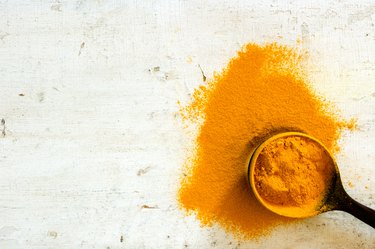
Spices not only add flavor and color to the foods you cook, many have been used medicinally for thousands of years. Some, such as turmeric, were even used as currency way back in biblical days and even earlier. Turmeric and curry are both often associated only with Indian cooking, but this is a misperception.
Turmeric and curry are very different things, but they are both used in cuisines all over the world, including England, India, Thailand, Japan and the Middle East. In addition, turmeric has medicinal uses that the curry powder you find in your supermarket does not.
Video of the Day
Video of the Day
Tip
The word "curry" is used to describe a culinary grouping of dishes, a cooking method and a mixed spice seasoning while turmeric is only a spice.
Facts and Fallacies About Curry
According to the culinary experts at Chowhound, there are about as many different types of curry as there are sandwiches. Most people in America associate curry with the fragrant yellow powder used to spice up chicken salad, deviled eggs and other dishes. In India and Thailand, curry is a method of cooking or a certain style of dish that includes meat, chicken, seafood or vegetables in a pungent sauce, which is served over rice.
As explained by the food enthusiasts at Sukhi's, the word curry comes from the Tamil word kari which simply means "sauce." Indian curries tend to be made with dry spices roasted in oil, while Thai curries start with a paste made up of a mixture of spices and chili peppers.
The difference between curry and turmeric is the same as the difference between curry and cumin or between curry and cinnamon. One is a spice blend and the others are individual spices.
Where Curry Comes From
There are several types of curry used in cooking. Curry leaves come from the curry tree (Murraya koenigii) which is also called sweet neem and is native to India. The fresh, citrusy leaves are a staple of cooking in India and Sri Lanka. According to the plant experts at the University of Illinois-Chicago, the flavor of the leaves is best enhanced by cooking them in oil.
Curry powder is not made of dried and powdered curry leaves. Brought home by British soldiers during the time of the Raj, curry powder as it is commonly known is a mixture of other spices, including turmeric, cumin, chili powder, ginger, coriander and pepper, though an authentic Indian curry masala, or spice paste, according to the food lovers at BBC Good Food, can contain as many as 20 different spices.
Curry for Cooking
To get the most authentic flavor, do not add curry powder by sprinkling it into the dish. Heat a small bit of oil in your skillet and stir in the curry powder and other spices. Let the spices cook for several seconds while stirring frequently. This lightly roasts the seasonings, bringing out their natural flavors.
Use any type of oil you like, but only add enough to keep the spices from sticking to the pan. Roast the spices over medium heat, and don't take your eyes off of them because they will go from fragrant to scorched very quickly.
Curry paste is used much the same way except that you should not have to add any oil to the pan. Roast the curry paste in a medium-hot pan and then add your protein or vegetables. You can either cook them in the curry paste or add water, broth or coconut milk and braise the main ingredients. This works better for meat and poultry than it does for vegetables or seafood which both tend to cook fairly quickly.
Read more: Is Curry Powder Good For You?
Red Curry vs. Green Curry
Red, green and yellow curries are most often found in Thai cooking. The differences between these curries come from the type of chiles and other seasonings used:
Red curry is made with red chili peppers or with chili powder.
Green curry is made with green chiles, basil, garlic and kaffir lime leaves.
Yellow curry is made with turmeric, cumin, nutmeg, kaffir lime leaves/juice
and coconut cream.
Red curry tends to be spicy, yellow curry is particularly rich and green curry is usually the hottest and most intense of the three.
The Truth About Turmeric
Turmeric is not only an intensely flavored and colored spice used in cooking, it also has a long history of medicinal uses, especially in Ayurdevic medicine. The health enthusiasts at Pennsylvania State University explain that the active ingredient in turmeric is curcumin.
Differences as far as curcumin vs. cumin or curcumin vs. most other spices exist because curcumin contains so many antioxidants. These help reduce the effect of free radicals on your cells, much the way a good solvent clears away rust. According to the University of California-Los Angeles, curcumin also contains anti-inflammatory properties.
A study published in the March 2018 American Journal of Geriatric Psychology found that curcumin not only helped alleviate inflammation in the brain, but that it helped improve both memory and mood in people who were not already suffering the effects of dementia.
Read more: Benefits of Turmeric Powder
Cooking With Turmeric
Turmeric is a favorite of those looking to boost the beneficial health effects of their cuisine, according to the Auguste Escoffier School of Culinary Arts. As with spirulina and matcha, the health effects offered by turmeric are every bit as enticing as the flavor profile and intense colors.
Cooking with turmeric is not much different from cooking with any other spice, though, as with curry, star anise, tamarind and other traditionally Indian spices, it is best to roast dry turmeric in oil or butter before proceeding. Keep the heat no higher than medium to avoid scorching the dry spices.
Turmeric complements a wide range of foods from meats, poultry and seafood to vegetables. It goes very well with coconut milk in soups and stews. According to an article published in 2014 by the National Center for Biotechnology Information, black pepper may help your body to better absorb and process the curcumin in turmeric, so don't be afraid to spice up your dishes.
Turmeric for Your Health
Another way to enjoy turmeric, remind the health enthusiasts at Prevention, is to add it to your morning smoothie. Start with soy or nut milk and yogurt protein, and add bananas for sweetness and texture. Sprinkle in a tablespoon or so of turmeric and complete your shake with a number of nutritious combinations, such as:
- Mango, ginger and a splash of coconut milk
- Pineapple, mango and black pepper
- Chia seeds, mango, apple and ginger
- Pumpkin, tart apples and ginger
- Spinach, sweet apples and pineapple
- Blueberries, strawberries, blackberries and mango
- Sukhis: What Is Curry?: Your Comprehensive Curry Guide
- Bon Appetit: What Is Curry Anyway?
- University of Illinois at Chicago: Curry Leaf Tree (Murraya koenegii)
- Pennsylvania State University: Totally Taken With Turmeric
- University of California-Los Angeles: Curcumin Improves Memory and Mood, New UCLA Study Says
- Auguste Escoffier School of Culinary Arts: Why Turmeric Is Becoming More Popular
- Chowhound: What Is the Difference Among Types of Curry?
- BBC Good Food: Curry Powder Recipes
- The American Journal of Geriatric Psychology: Memory and Brain Amyloid and Tau Effects of a Bioavailable Form of Curcumin in Non-Demented Adults - A Double-Blind, Placebo-Controlled 18-Month Trial
- Prevention: 14 Delicious Turmeric Smoothie Recipes to Boost Your Mornings
- National Center for Biotechnology Information: Recent Developments in Delivery, Bioavailability, Absorption and Metabolism of Curcumin: The Golden Pigment From Golden Spice
- One Green Planet: The Ultimate Guide to Thai Curries + Learn How to Make a Curry Paste