























































What Organ Causes Body Overheating When Exercising?

What Organ Causes Body Overheating When Exercising?
Photo Credit Pixland/Pixland/Getty Images

The brain, specifically the hypothalamus, regulates body temperature. The largest organ of the body, the skin, also plays a major role. There are receptors all over the skin that monitor for overheating. These detect temperature changes and alert the hypothalamus accordingly. If the body fails to cool itself quickly enough, the body can overheat including heat cramps, heat exhaustion and heat stroke to various degrees.

How Overheating Occurs

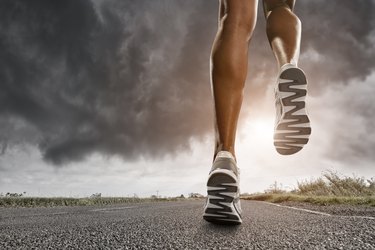
Gaining heat faster than losing it leads to overheating. During exercise, the body produces more heat internally through an increased metabolism. External factors like weather and clothing may add heat and hinder cooling. The body must get rid of this extra heat to keep your core temperature in check. The hypothalamus is in charge of initiating the cooling process once it receives the message from the heat receptors on the skin.

How the Body Loses Heat

One mechanism for cooling the body is vasodilation. In hot conditions, blood vessels dilate or widen to allow for increased blood flow. Capillaries nearest the skin's surface are particularly affected and more blood near the skin equates to more heat loss. The heat releases through the skin to the outside. Increasing temperatures induce sweating to help lower body temperature as well. Water and salt excrete through the skin and cool the body upon evaporation. Impaired sweating abilities mean greater risk of overheating.

Overheating Ailments

A lesser form of overheating is heat cramps. These manifest as painful muscle spasms and are typically due to a fluid imbalance. Heat exhaustion is more serious occurring when blood flow is greater near the skin and lessens in the organs and tissues. Symptoms include fatigue, drowsiness, vomiting, accelerated pulse, cold and clammy skin. Heat stroke is the extreme form of overheating. Characteristics are a core temperature over 105 degrees, decreased motor control, and confusion, hot, dry and often flushed skin. Heat stroke can lead to passing out and even death.

Prevention and Treatment

Proper hydration is the key to prevention of overheating. Electrolytes or salts are lost along with water through sweat. Keeping the body's fluid balanced depends on taking in enough water and electrolytes to counteract the losses experienced during exercise. Once heat exhaustion set in, tepid water on the skin for cooling and rest may ward off more harmful ailments. Heat stroke victims need to seek medical attention.

References

  • "Fitness: The Complete Guide"; Frederick C Hatfield, PhD; 2008
  • "Oxford Dictionary of Sports Science and Medicine"; Michael Kent; 2006
  • "Nutrition: The Complete Guide"; John Berardi PhD, Ryan Andrews, MS/MA, RD; 2009

Article reviewed by Jessica Lyons Last updated on: Jul 1, 2011

Must see: Photo Galleries

Member Comments