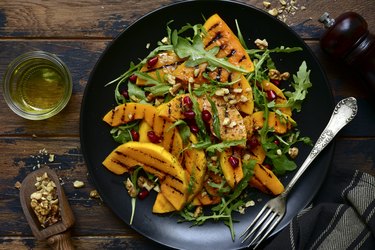
Pumpkin — an undeniable fall favorite — is loaded with fiber and other nutrients, making it a healthy food to include in your diet. But it can also cause some changes in your bowel movements.
Keep reading to find out if pumpkin may be the key to relieving constipation — or the culprit — and how it may even help with diarrhea.
Video of the Day
Video of the Day
Is Pumpkin a Laxative?
Both fresh and canned pumpkin are high in fiber, as we mentioned above, which can help with constipation.
According to the Academy of Nutrition and Dietetics, adults should get between 25 and 38 grams of fiber each day to stay healthy and prevent constipation, a condition marked by fewer than three bowel movements per week or BMs that are small, dry, hard and painful to pass, per the National Institute of Diabetes and Digestive and Kidney Diseases.
Fiber, aka roughage or bulk, isn't digested by your body, per the Mayo Clinic. It goes in, and it goes out (and that's a good thing).
"Pumpkin is an excellent laxative for two reasons," says Niket Sonpal, MD, internist and gastroenterologist in New York City. "The first is that it's high in fiber, and fiber is your colon's best friend. The second reason is that pumpkins are high in magnesium, and we know that people who suffer from constipation can sometimes be low in this naturally occurring nutrient. Therefore, the combined effects lead to softer and better daily bowel movements."
Magnesium is an essential nutrient, as it regulates muscle and nerve function, controls blood sugar levels and blood pressure, and makes bone, protein and DNA, according to the National Institutes of Health. It's also an ingredient in some laxatives, but if you want to add some naturally occurring magnesium to your diet, pumpkin is the way to go.
Related Reading
How to Eat Pumpkin to Relieve Constipation
Now, before you hit the supermarket, keep in mind that depending on the type of pumpkin you choose, fiber — as well as other nutritional contents — will vary:
- 1 cup of canned, unsalted pumpkin has about 7 grams of dietary fiber and 56 milligrams of magnesium, according to the U.S Department of Agriculture (USDA)
- 1 ounce of roasted, unsalted pumpkin seeds contains 1.8 grams of fiber and 156 milligrams of magnesium, per the USDA
- Boiled, fresh pumpkin also provides some fiber, though in lower amounts — around 3 grams per cup, and only 22 milligrams of magnesium, per the USDA
You can incorporate pumpkin into so many delicious and healthy dishes:
- Stir a spoonful of canned pumpkin into soups, oatmeal or yogurt
- Make healthy pumpkin pancakes
- Add fresh pumpkin to ground beef, vegetables and spices for an easy casserole
- Use fresh or roasted pumpkin it to make a colorful fall salad
"The best type of pumpkin to eat is the most natural, and cooked in a way that has the best flavor, but also retains the most amount of fiber," Dr. Sonpal says. "Canned versions may be too high in sugar and not have enough fiber. Natural is always best."
Can Pumpkin Cause Constipation?
Surprise, it actually can! While the fiber in pumpkin can help you go, it can sometimes block you up, or even help relieve diarrhea. Wait, what?
OK, so sometimes foods higher in fiber — like pumpkin— can worsen constipation symptoms, according to the Cleveland Clinic. If the bowel isn't moving things through fast enough, foods like pumpkin can just get you even more backed up.
"Any fiber can cause constipation if you don't balance it with enough water intake, and if you're not exercising enough to help contract those muscles to get things squishing and squashing," Dr. Sonpal says.
You'll also want to avoid increasing your fiber too quickly. Eating too much fiber all at once can contribute to constipation, so take it slow.
A small September 2012 study in World Journal of Gastroenterology investigated 66 people with chronic constipation who were on high-fiber diets. They were asked to go on a no-fiber diet for two weeks, then go on a reduced-fiber diet that they felt was suitable. After six months, those who reduced or stopped their dietary fiber intake showed significant improvement in their symptoms.
What About Pumpkin Spice?
Contrary to popular belief, pumpkin spice does not cause constipation. That’s because there’s no pumpkin in pumpkin spice! Cinnamon, nutmeg, ginger and clove or allspice are the ingredients that make up pumpkin spice, according to Chemical and Engineering News. Myth debunked.
How Does Pumpkin Help Diarrhea?
Pumpkin may actually help relieve diarrhea. Pumpkin's fiber can solidify watery stool because it absorbs water and adds bulk, according to the Mayo Clinic.
But go easy with the daily fiber in general. Diets that are very high in fiber can cause diarrhea, especially for those with irritable bowel syndrome, according to the International Foundation for Gastrointestinal Disorders.
Stick to the recommended 25 to 38 grams per day, and increase the amount of fiber in your diet slowly.
- National Institute of Diabetes and Digestive and Kidney Diseases: "Definition & Facts for Constipation"
- Academy of Nutrition and Dietetics: "Fiber"
- Mayo Clinic: "Dietary Fiber: Essential for a Healthy Diet"
- U.S. Department of Agriculture: "Pumpkin, Canned, with Salt"
- U.S Department of Agriculture: "Pumpkin, Cooked, Boiled, Drained, Without Salt"
- Cleveland Clinic: Constipation: 6 Tips to Help You Return to Regular Bowel Movements"
- World Journal of Gastroenterology: "Stopping or Reducing Dietary Fiber Intake Reduce Constipation and Its Associated Symptoms"
- Chemical and Engineering News: "What's Pumpkin Spice Flavor, and Why Do We Fall for it Every Autumn?
- International Foundation for Gastrointestinal Disorders: "IBS Diet"
- National Institutes of Health: "Magnesium"
Is this an emergency? If you are experiencing serious medical symptoms, please see the National Library of Medicine’s list of signs you need emergency medical attention or call 911.