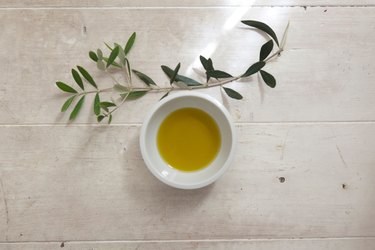
Selecting extra virgin olive oil as a dietary fat is a healthy choice. While some evidence exists that olive oil may be helpful in your weight-loss efforts, dropping pounds requires a decrease in calorie intake, which is easy to track on a calorie counter. Consult your doctor to discuss healthy strategies and the use of extra virgin olive oil to help you lose weight.
Why Drink Extra Virgin Olive Oil?
Video of the Day
The idea behind drinking olive oil to lose weight may have come from the Shangri-La Diet developed by Dr. Seth Roberts. His weight-loss theory is that you can reset your appetite "set point" by eating a diet filled with bland foods, along with ingesting 1 to 2 tablespoons of a bland oil, such as extra light olive oil, a day. His belief is that filling your diet with bland foods decreases your desire to eat and helps you lose weight. However, according to the website Diets in Review, the evidence to support Dr. Roberts' theory is based on experiments he conducted on himself.
Video of the Day
It's important to note that the flavor of extra virgin olive oil varies depending on type. Based on the theory developed by Dr. Roberts, you would drink a light or delicate extra virgin olive oil or the extra light olive oil, which has a bland flavor.
Extra Virgin Olive Oil and Weight Loss
Many diets, including the Mediterranean Diet, have incorporated healthy fats like olive oil for weight loss. The Lancet Diabetes and Endocrinology Journal published a study that took place in Spain, which concluded that consuming a Mediterranean diet rich in extra virgin olive oil had a positive effect on weight loss. Using more than 7000 overweight participants tracked over five years, the group that experienced the greatest weight loss followed the Mediterranean diet supplemented with extra virgin olive oil. This group consumed foods that were high in fat but replaced red meat, butter, processed foods, sweets and desserts with nuts, whole grains, vegetables, fish and fruits.
Extra Virgin Olive Oil Calories and Weight Loss
Even though olive oil is a healthy food, it's still a source of calories. And all calories count when you're trying to lose weight, especially those from concentrated sources like olive oil. One tablespoon of extra virgin olive oil, whether it's light, organic or delicate, has 120 calories, 14 grams of total fat and 0 grams of carbs or protein. Keep in mind that for olive oil, "light" on the label means lighter-tasting, not lower in calories.
If you're following a weight-reducing diet consisting of 1,500 calories a day, one tablespoon of olive oil would account for almost 10 percent of your caloric intake. If you're adding a tablespoon of olive oil to your diet without counting it toward your caloric intake, the extra calories may cause a 1 pound weight gain every four weeks.
Additional Health Benefits of Olive Oil
While the weight-loss benefits of extra virgin olive oil are still under debate, there's no doubt that replacing foods with saturated fat — such as butter — with olive oil is better for your heart. The American Heart Association says the monounsaturated fat in olive oil helps reduce bad cholesterol levels and reduces risk of heart attack and stroke.
The oil may also be good for helping to manage blood sugar. A 2015 study published in Nutrition and Diabetes found that consuming extra virgin olive oil with a meal helped lower post-meal blood sugar. Olive oil is also a source of omega-3 fatty acids, which are essential fats that may help decrease inflammation, another benefit to your heart and overall health.
Tips and Uses for Extra Virgin Olive Oil
Instead of drinking olive oil for weight loss, use the oil to add flavor to the food you're eating. Olive oil makes a good sauté oil for vegetables and meat. Blend it with vinegar or lemon juice and herbs to make homemade salad dressing for mixed greens as well as grain-based salads. Pour some extra virgin olive oil in a dish with herbs and spices such as basil, garlic or rosemary to create an infused oil dip for bread and raw vegetables.
- Filipo Berio: Our Products
- Diets in Review: Shangri-La Diet
- National Heart, Lung and Blood Institute: Healthy Eating
- The Shangri-La Diet: The No Hunger Eat Anything Weight Loss Plan; Seth Roberts
- American Heart Association: Monounsaturated Fats
- Nutrition and Diabetes: Extra Virgin Olive Oil Use Is Associated With Improved Post-Prandial Blood Glucose and LDL Cholesterol in Healthy Subjects
- The Lancet Diabetes & Endocrinology: Effect of a High-Fat Mediterranean Diet on Bodyweight and Waist Circumference: A Prespecified Secondary Outcomes Analysis of the PREDIMED Randomised Controlled Trial
- Journal of Internal Medicine: The Role of Omega-3 Fatty Acids Contained in Olive Oil on Chronic Inflammation