















If you have high blood pressure, your health care provider may recommend that you increase your intake of potassium. This essential mineral regulates fluid and salt levels in your body. A diet high in potassium decreases your risk of stroke and helps reduce blood pressure. You can obtain significant amounts of potassium from a variety of foods, including fruits, vegetables, meat and protein and dairy foods. Talk to your doctor about the types of dietary changes that are right for you.
Required Amounts
The Institute of Medicine has set adequate intake levels of potassium based on amounts that reduce salt sensitivity, lower blood pressure and reduce the risk of kidney stones. The institute recommends that adults receive 4,700 mg of potassium each day. Due to the potential for adverse side effects, you should not take potassium supplements unless your doctor prescribes them. Instead, aim to obtain all your potassium needs from dietary sources.
Fresh Fruits
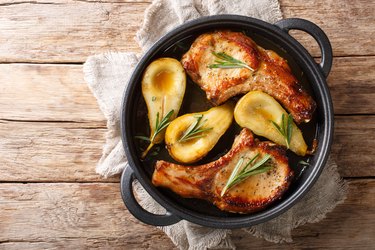
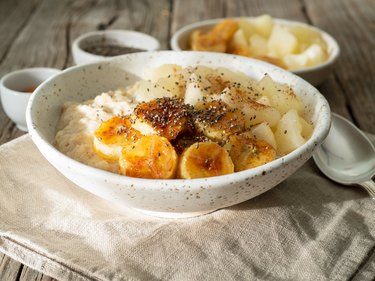
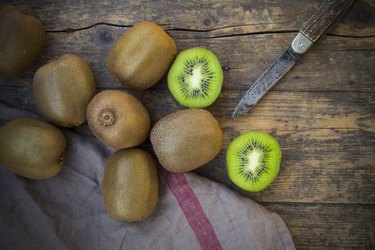
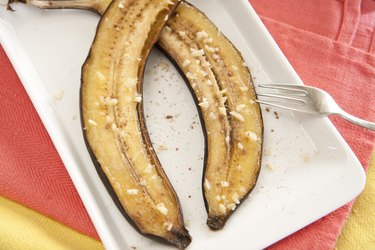
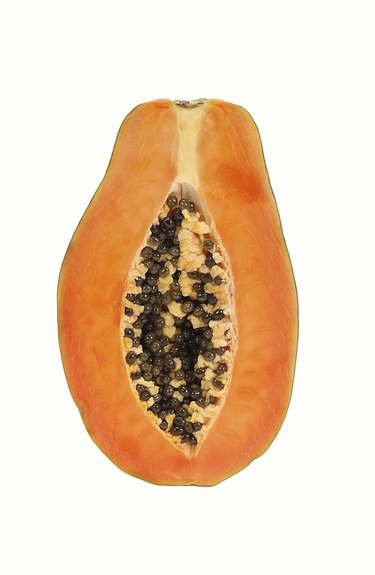
Papaya is one of the richest fruit sources of potassium, with approximately 781 mg in each fruit. Melons are also excellent sources, with 494 mg in 1 cup of cubed cantaloupe and 461 mg in each cup of diced honeydew melon. For their size, bananas pack a high amount of potassium, with 467 mg in a small fruit. Fresh mango, kiwi, pear and orange are other fruits high in potassium.
Dried Fruits
Don't overlook dried fruits as a versatile high-potassium food. You can add these to cereal or granola, stir them into yogurt, sprinkle them over salad or add them to trail mix. A 1/4-cup serving of dried peaches contains 398 mg of potassium. Dried apricots contain 378 mg in a 1/4-cup serving. A 1/3-cup portion of raisins provides 363 mg of potassium.
Fruit Juices
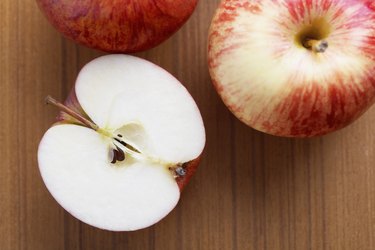
The juices of many fruits are high in potassium, and this may be a convenient way to boost your potassium intake. One cup of prune juice contains 707 mg of potassium, while 1 cup of orange juice provides 472 mg. A 3/4-cup serving of tomato juice contains 417 mg of potassium and just 31 calories. Apple juice is somewhat lower in potassium, with 294 mg in 1 cup.


Member Comments