Starches are complex carbohydrates that produce vital energy when your body converts them to glucose during digestion. These starches provide fuel for your muscles, brain and other vital organs.
When you're planning your diet, choose minimally processed starchy foods rather than refined starches to keep calories under control and increase the nutritional value of your meals, advises the Centers for Disease Control and Prevention (CDC).
Video of the Day
Video of the Day
List of Foods That Contain Starch
- Peas
- Corn
- Whole grains, such as brown rice, barley, farro, quinoa and millet
- Potatoes of all types, including sweet potatoes
- Wheat
- Legumes
- Corn
- Parsnips
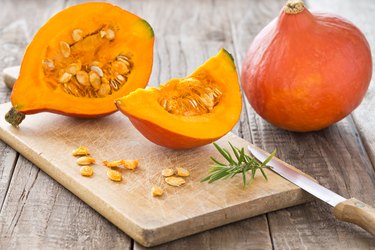
- Pumpkin
- Squash
- Yams
- Sweet potatoes
- Pinto beans
- Garbanzo beans
- Lentils
- Peas
- Lima beans
- Dried beans
Nutritional Value of Starches
Starches, sugars and fiber are carbs, a class of nutrients that play essential roles in energy production and digestion. Because starches are made up of chains of molecules, they are considered complex carbs. Foods that have starch such as wheat, legumes, potatoes and some vegetables and fruits help you meet your daily requirements for vitamins and minerals.
Many starchy foods are also rich in fiber, an indigestible complex carb that regulates bowel activity. For this reason, many starchy foods are often considered healthy.
Starchy Vegetables and Fruits
Potatoes, corn, parsnips, pumpkin, squash, yams and sweet potatoes are starchy vegetables. A 1/2-cup serving of corn, 1/4 of a large baked potato and 1 cup of pumpkin or squash make a serving of starchy vegetables, according to the American Diabetes Association.
Bananas are a starchy fruit, offering 6 grams of starch per medium banana, according to the United States Department of Agriculture (USDA). Starchy vegetables and fruits also provide fiber, essential vitamins and minerals. A 1/2-cup serving of sweet potato has 21 grams of total carbs, 3 grams of fiber, 2 grams of protein, 20 milligrams of vitamin C and 19,218 international units (IU) of vitamin A, according to the USDA.
Beans and Legumes
Legumes of all shapes, sizes and colors are starchy foods. Pinto beans, garbanzo beans, lentils, peas and lima beans are rich in starches. Beans also provide protein, fiber, iron, potassium and other essential nutrients.
One serving of legumes is about 1/2 cup of cooked beans. A 1/2 cup of lentils offers 20 grams of total carbs, 8 grams of fiber, 9 grams of protein, 3 milligrams of iron and 365 milligrams of potassium, according to the USDA.
Whole Grains and Cereals
Wheat, barley, rice, rye and other grains are rich in starches. Because the milling process removes the nutrient-rich bran and germ from grain kernels during the production of flour, breads, cereals and other starchy foods made from refined flour contain less fiber and fewer vitamins and minerals than whole-grain products, per the CDC.
One serving is equal to one slice of bread, one 6-inch flour tortilla, 1/3 cup of cooked rice or barley and 1/2 cup of ready-to-eat dry cereal. A 1/2 cup of whole-wheat cereal provides 17 grams of total carbs, 2 grams of fiber, 2 grams of protein and 16 micrograms of selenium, according to the USDA.
Starches: The Bad
Refined and processed starchy foods can wreak havoc on your health. For example, refined grains, such as white flour and white bread, have most of their fiber removed during milling, which gives them a smoother, finer texture and milder flavor.
With very little fiber, they digest quickly and may spike your blood sugar, according to the American Heart Association. This provides immediate energy, but that energy is quickly depleted and may leave you feeling fatigued. You may also feel hungry again soon after eating, which may lead to eating more calories than your body needs.
Many junk foods contain starchy simple carbs, as well as other unhealthy ingredients like saturated fat, excess sodium and added sugar. Potato chips, donuts, sugary cereals and cookies are among them.
When choosing starchy foods, go for whole, unprocessed grains and vegetables. Check the nutrition facts and look for high-fiber, low-sugar options. When tempted by starchy simple carbs, reach for half of a baked sweet potato or a slice of whole-grain bread instead. Be sure to stick to one serving as many starchy carbs are high in calories.
Starchy Foods to Limit or Avoid
- Potato chips
- Donuts
- Sugary cereals
- Cookies
- Baked goods
- U.S. Department of Agriculture: Sweet Potato, Cooked, Baked in Skin, without Salt, 0.5 Cup
- U.S. Department of Agriculture: Lentils, Mature Seeds, Boiled, without Salt, 0.5 Cup
- AHA: Carbohydrates
- CDC: More About Carbs
- American Diabetes Association: Carbohydrate Counting
- American Diabetes Association: Create Your Plate
- U.S. Department of Agriculture: Bananas, Raw, 1 Medium