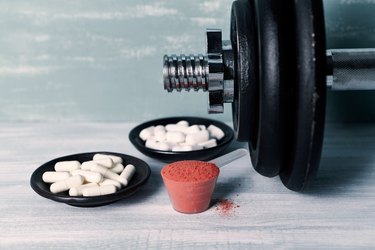
Because so little is known about the long-term effects of creatine, it's not recommended for children and teens under the age of 18. For this group, it's better to improve sports performance through nutrition and athletic training.
Tip
The minimum age for taking creatine supplements is 18.
Video of the Day
Creatine Not Recommended for Teenagers
A compound that occurs naturally in the body, creatine is also sold as an over-the-counter supplement to increase muscle mass and boost athletic performance, says the Mayo Clinic. The long-term health effects of taking creatine, particularly in growing children, aren't known.
Video of the Day
According to the American Academy of Orthopaedic Surgeons, children and adolescents under 18 years of age shouldn't take creatine supplements. Other performance-enhancing supplements, such as anabolic steroids and steroid precursors, also aren't recommended for teenagers.
Teens are interested in taking creatine for various reasons, most of them stemming from the unique pressures of adolescence. Some teens are looking for a supplement to give them a competitive edge in sports, while others want to increase their muscle size because of a negative body image. Thin adolescents may feel pressure from parents and peers about their weight
The American Academy of Pediatrics advocates education to prevent the adolescent use of performance-enhancing substances like creatine. Multiple studies suggest a link between the use of the supplements and drug and alcohol abuse, as well as other risk-taking behaviors. For most teenage athletes, the use of creatine and similar supplements won't boost performance any more than athletic training and proper nutrition.
Studies don't show that creatine stunts growth or helps teens grow taller. However, it should be reiterated that little is known about its effects.
Possible Creatine Benefits
Bear in mind that any benefits only apply to people who are 18 and older. Research on creatine use in athletics shows mixed results, but it may help athletes who engage in activities requiring short bursts of energy, such as sprinting and weightlifting, reports the Mayo Clinic.
A February 2018 study published in Sports Health reviewed the body of scientific literature investigating the effects of creatine on sports performance. Because of the lack of consistent findings, the authors concluded that creatine's efficacy for this use isn't known.
Creatine is used for a broad variety of maladies, but it's only considered possibly effective for a few. Other than perhaps improving athletic performance, these include relieving age-related muscle loss and improving muscle strength, notes the U.S. National Library of Medicine.
In addition, creatine supplements can help people who have low creatine levels when their body doesn't make enough of the compound. Consult with your doctor before taking the supplement.
Creatine Side Effects
The Mayo Clinic states that creatine is generally considered safe if taken for up to five years at the advised dosage. It causes side effects that include weight gain, dehydration, water retention, nausea, muscle cramping, diarrhea, heat intolerance, dizziness, fever and gastrointestinal pain.
High doses are possibly unsafe, because they may harm the heart, kidneys and liver. Anyone with liver disease or a condition that damages the kidneys, such as diabetes, shouldn't take creatine. Some medications, including non-steroidal anti-inflammatory drugs and certain antibiotics, can harm the kidneys. Taking the supplement with these medicines can increase its risks.
Creatine draws water from the body, so anyone on the supplements needs to drink more fluids to prevent dehydration, says the U.S. National Library of Medicine. They also should avoid exercising in the heat.
- Mayo Clinic: "Performance-Enhancing Drugs and Teen Athletes"
- American Academy of Orthopaedic Surgeons: "Creatine Supplements"
- American Academy of Pediatrics: "AAP Urges Education to Prevent Teen Use of Performance Enhancing Substances"
- Mayo Clinic: "Creatine"
- Sports Health: "Creatine Use in Sports"
- U.S. National Library of Medicine: "Creatine"
Was this article helpful?
150 Characters Max
0/150
Thank you for sharing!
Thank you for your feedback!