























































Over 2/3 of Americans were overweight or obese in 2008, according to the Centers for Disease Control and Prevention. For those looking to lose weight, the notion of weight loss-promoting foods can sound appealing. Although no one food can cause weight loss, adopting a nutritious, balanced dietary lifestyle can enhance the overall process. Depending on how you approach them, raisins can help or hinder your efforts. For best results, discuss dietary changes with your doctor or dietitian.
Benefits
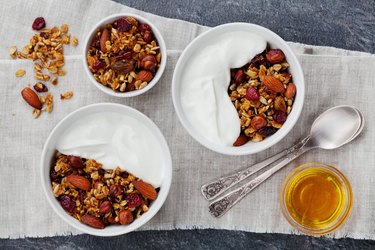
Most women should consume at least 20 g of fiber per day for overall health and men should aim for at least 30 g daily, according to the Harvard School of Public Health. And most Americans fall short. Topping ready-to-eat oatmeal with 1/4 cup of raisins brings its fiber content up from 2.7 g to 4.1 grams. In doing so, you may experience reduced hunger before lunch. Raisins also provide a nutritious, higher-fiber alternative to sugary sweets, such as jelly beans, hard candy and milk chocolate, which are high in calories and easy to overeat.
Disadvantages
Unlike the grapes they derive from, raisins lack water. As a result, they contain more concentrated amounts of natural sugar and calories. While 1 cup of grapes provides about 104 calories, 1/4 cup of raisins provides about 108. The difference in calories is small, but the portion size is substantial -- if you were to consume a cup of raisins, you would take in 434 calories. For this reason, MayoClinic.com recommends emphasizing fresh fruits over dried fruit for enhanced weight loss. You can eat more food volume while staying within your caloric needs. Raisins also have a high glycemic index, or impact on your blood sugar. An overall high-glycemic diet can offset your blood sugar and lead to increased appetite between meals, increasing your risk for weight gain and obesity.
Suggestions
If you enjoy raisins and hold weight loss as a goal, incorporate modest amounts into balanced meals and snacks. Pairing raisins with low-glycemic foods, such as low-fat milk or whole grains, can guard against appetite increases related to blood sugar imbalances. In her blog, registered dietitian and weight loss specialist Cindy Berner recommends topping bunches of kale with 2 tbsp. raisins for improved flavor. If you aren't partial to raisins, select whole fresh fruits and vegetables more often. Particularly water and fiber-rich fruits and vegetables include citrus fruits, plums, grapes, carrots and bell peppers.
Research
In a study published in the "American College of Clinical Nutrition" in June 2007, 97 obese women were instructed to consume a reduced-fat diet or a reduced-fat diet emphasizing water-rich foods -- particularly fruits and vegetables. By the study's end, one year later, researchers found a significant positive link between increased water-rich food intake and reduced overall calorie intake. Dieters who consumed ample fruits and vegetables reported less hunger and lost more weight.
References
- "American College of Clinical Nutrition"; Dietary Energy Density in the Treatment of Obesity: A Year-Long Trial Comparing 2 Weight-Loss Diets; Julia A Ello-Martin et al.; June 2007
- Harvard School of Public Health: Fiber: Start Roughing It!
- USDA National Nutrient Database for Standard Reference: Fiber Content of Selected Foods
- MayoClinic.com: Energy Density and Weight Loss
- Linus Pauling Institute: Glycemic Index and Glycemic Load
- CindyBerner.com: Kale and Garlic


Member Comments