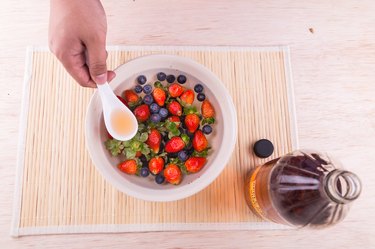
Should you be washing vegetables in vinegar before you eat them? Think about how many people have handled your produce before it arrives in your kitchen! And with all the stories in the news about contamination outbreaks, it's no wonder you're a little wary. But is vinegar the best method?
As it turns out, cleaning veggies with vinegar or cleaning fruit with vinegar might be a myth, as few reputable sources recommend this as an option. Instead, using plain water is all you need. In fact, because most pesticides are water soluble, they will come off easily with a plain water rinse, as University of Minnesota Extension notes.
Video of the Day
Video of the Day
Washing Your Fruits and Veggies
The Food and Drug Administration details the many ways that fresh produce could get dirty on its way from the field to your table. Animals, harmful substances in the soil or water, and unhygienic workers could all dirty the produce before it is even harvested. From there, it gets transported to the grocery store, where countless people handle it, and then from the store to your home.
However, there's no need to use soap or a special type of wash, according to the FDA. Instead, you can simply rub the produce gently with your hands under plain running water. If it's a firmer fruit or vegetable, you can use a vegetable brush. Afterward, use a clean cloth or paper towel to dry the produce, and then remove the outermost leaves of lettuce or cabbage.
Colorado State University concurs with the FDA's advice, emphasizing that many fruits and vegetables could absorb detergent or bleach solutions during washing. Additionally, commercial chemical washes available on the market have not been evaluated for safety.
According a study published in November 2017 in the Journal of Agriculture and Food Chemistry, the most effective home pesticide wash is simple baking soda when compared with plain tap water or even bleach. When faced with this info, a vinegar fruit wash just doesn't seem necessary.
However, even this effective baking soda solution — in which 10 milligrams of baking soda was dissolved in 1 milliliter of water — was not able to remove the pesticides that had penetrated beneath the skin of the produce.
Cleaning Veggies With Vinegar
This isn't to say that washing vegetables in vinegar is always wrong. In fact, Colorado State University recommends it for when you're cleaning leafy green vegetables, such as spinach or kale, which should be soaked in a water bath to loosen any dirt or other contaminants on them.
Adding a half-cup of white vinegar per 1 cup of water, followed by a clean water rinse, will reduce bacteria. Those who try this method should note; however, that it could affect the way the greens taste.
Washing vegetables in vinegar or baking soda might present similar problems. University of Minnesota Extension explains that because baking soda has sodium, it will affect the flavor of fruits and vegetables as well. Neither of these are notably harmful, but the bigger concern is chlorine bleach, which is toxic if used in amounts that are too large.
If you still feel better using some type of cleaning agent, but you don't like the taste that vinegar gives your produce, switch from cleaning veggies with vinegar to cleaning veggies with lemon juice. If you mix a half-cup of lemon juice per two cups of water for two minutes and rinse for 15 seconds afterward, this should help remove many contaminants.
Read more: The 10 Worst Chemicals in Our Food
Even though the need for cleaning vegetables with vinegar or cleaning fruit with vinegar is a myth, that doesn't mean there aren't steps you can't take to reduce contamination and prevent illness.
Use plain running water to provide the cleaning power you need, and if you need a little boost, try a soak made from baking soda or lemon juice. This will help you enjoy your fruits and veggies while avoiding the risk of sickness.
- Journal of Agriculture and Food Chemistry: “Effectiveness of Commercial and Homemade Washing Agents in Removing Pesticide Residues on and in Apples”
- Colorado State University: “Guide to Washing Fresh Produce”
- Food and Drug Administration: “7 Tips for Cleaning Fruits, Vegetables”
- University of Minnesota: “Handling Fresh Fruits and Vegetables Safely”
- University of Florida: “Keep It Clean: Washing Fruits and Vegetables”