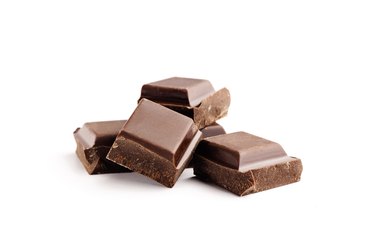
Everybody loves chocolate — well, almost everybody. For most people, chocolate is a delight to the senses, and some people actually crave it. But for another slice of the population, chocolate isn't so appealing; the sweet stuff can trigger heartburn and cause digestive upset, which can lead to bloating and gas.
Tip
Lactose intolerance, acid reflux or a food allergy could cause you to experience bloating and gas after eating chocolate.
Video of the Day
Chocolate and Indigestion
Manhattan Gastroenterology includes chocolate on its list of worst foods for indigestion. Especially if you have a digestive disorder, such as irritable bowel syndrome, Crohn's disease or diverticulitis, chocolate can cause the digestive system to produce excess gas.
Video of the Day
The main symptom of indigestion is bloating and feeling uncomfortably full during and after eating, according to Mayo Clinic. You may also feel abdominal pain, a burning sensation in the upper abdomen and nausea.
Chocolate and Acidity
Cocoa itself is acidic, which can increase the risk of acid reflux — a condition in which stomach acid backs up into the esophagus. This can cause upset stomach, a feeling of being full and abdominal bloating, according to MedicineNet.
Other symptoms of acid reflux include an acidic taste in the back of the throat, sore throat, upset stomach, abdominal pain, nausea and heartburn, which is a sensation of burning in the chest. It can also feel like the throat is very tight, and you may feel as if it's difficult to swallow, or that you have food stuck in your throat.
Allergy to Chocolate
Food allergy and intolerance are often used interchangeably, but they are not the same thing. A food allergy causes an immune system reaction that can be severe and even life-threatening, according to Mayo Clinic.
Symptoms typically include hives, difficulty breathing, abdominal pain, swelling of the throat, lips and tongue, wheezing and vomiting. Because of the digestive symptoms, you may also feel bloated and have gas.
Chocolate Food Intolerance
A food intolerance is unrelated to the immune system and less of a health concern, but it can still be bothersome. Food intolerance may occur for several reasons, including your body's lack of an enzyme used to digest a food. An example is lactose intolerance.
According to the Australasian Society of Clinical Immunology and Allergy, chocolate contains natural substances called vasoactive amines that can trigger symptoms of intolerance in some people.
Symptoms of food intolerance typically include nausea, abdominal pain, gas, cramps, bloating, vomiting, heartburn, diarrhea, headaches, irritability and nervousness, according to the Cleveland Clinic.
Chocolate and Lactose Intolerance
Lactose intolerance is one of the most common food intolerances, and milk chocolate poses particular problems that dark chocolate may not. Milk contains a natural sugar called lactose that, according to the National Institutes of Health, 65 percent of people have trouble digesting. This is statistically more prevalent among East Asians, as well as West Africans, Arabs and people of Jewish, Greek, and Italian descent.
Lactose intolerance occurs because of a gradual decline in LCT gene expression that all adults experience as they get older. LCT gene expression is controlled by a regulatory element, and certain people have inherited alterations of this element that allow for sustained production of lactase in the small intestine. This enables them to digest lactose throughout their life. However, those who lack this alteration may find that, as they age, their ability to digest lactose declines.
The primary symptoms of lactose intolerance are abdominal pain, bloating, flatulence, nausea and diarrhea.
Read more: The Health Benefits of Dark Vs. Milk Chocolate
Other Ingredients in Chocolate
Besides milk and cocoa, many chocolate confections include other ingredients. Such ingredients and foods that cause gas include:
- Nuts: According to registered dietitian Lily Nichols, nuts contain antioxidant compounds called phytates. Although phytates offer many health benefits, they can be difficult to digest, causing gas and bloating.
- Sugar alcohols: These noncaloric sweeteners, such as malitol, xylitol and sorbitol, can cause digestive problems, including gas and bloating, especially when consumed in excess, according to Yale New Haven Health.
- Dried fruits: A sugar in fruit called fructose is fermented by bacteria in the gut, which causes gas and bloating, reports UW Health.
- High-fructose corn syrup: As its name implies, high-fructose corn syrup contains large amounts of fructose.
Other foods that cause gas that may be hidden in chocolate include soy, gluten from barley malt and wheat flour, and other types of dairy including butter and whey. Read the ingredients list on your favorite chocolate treat to make sure you're not unknowingly consuming these potentially gassy foods.
Should You Give Up Chocolate?
As much as you love chocolate, bloating and gas after eating it are not fun. Does that mean you can't eat it? Not necessarily. Unless you know you have a serious allergy to chocolate, you may be able to work around your symptoms by trying natural remedies for gas and taking a few steps:
Switch to Dark Chocolate
Dark chocolate often doesn't contain milk — or as much milk — as milk chocolate. If lactose intolerance is your problem, just avoid milk chocolate. However, read the label carefully; the FDA warns that there may be hidden or inadvertent sources of milk in many chocolates that don't have it listed on the label.
These products might include advisory messages, such as "may contain milk" or "may contain dairy." In testing, the FDA found three out of four such products contained milk, some with just as much milk as products that explicitly include milk on the ingredients list. Therefore, the FDA suggests reading "may" as "likely."
Choosing products that explicitly say they don't contain milk is your best bet.
Avoid Sugar Alcohols
Sugar alcohols may appear on labels in many forms. Some examples are:
- Erythritol
- Maltitol
- Hydrogenated starch hydrolysates
- Isomalt
- Lactitol
- Mannitol
- Sorbitol
- Xylitol
If You Have Acid Reflux
Some people with acid reflux find they can eat small amounts of trigger foods without problem. Start with a very small amount, and see if symptoms appear. If not, you can increase your serving size in very small increments.
If that doesn't work, you can take an over-the-counter antacid. You could also try taking a medication aimed at reducing gas and bloating specifically.
According to MedicineNet, certain lifestyle changes may help you resolve acid reflux so that trigger foods like chocolate bother you less or not at all. These include:
- Not eating close to bedtime
- Not lying down after you eat
- Avoiding alcohol
- Quitting smoking
- Losing weight
- Maintaining good posture
Switch to Carob
If all else fails, you can try carob, a chocolate-like alternative often used as a chocolate substitute. Medicinally, carob can actually treat digestive issues such as heartburn and the inability of the intestines' ability to absorb particular nutrients in foods, such as occurs with celiac disease, according to WebMD.
Don't expect carob to taste much like chocolate, however. According to Cook's Info, although carob can function like chocolate, the primary thing carob has in common with chocolate is the color brown.
Read more: The 11 Best "Clean" Dark Chocolate Bars
- Manhattan Gastroenterology: 10 Worst Foods for Digestive Health
- Mayo Clinic: Indigestion
- MedicineNet: Heartburn vs. Acid Reflux: How to Tell the Difference
- Mayo Clinic: What's the Difference Between a Food Intolerance and a Food Allergy?
- Australasian Society of Clinical Immunology and Allergy: Food Intolerance
- Cleveland Clinic: Food Problems: Is it an Allergy or Intolerance
- National Institutes of Health: U.S. National Library of Medicine: Genetics Home Reference: Lactose Intolerance
- Lily Nichols, RDN: Why Eating Nuts Upsets Your Stomach
- Yale New Haven Health: Eat Any Sugar Alcohol Lately?
- UW Health: Fructose-Restricted Diet
- U.S. Food & Drug Administration: Dark Chocolate and Milk Allergies
- Built Lean: Is Sugar Alcohol Bad For You?
- WebMD: Carob
- Cook's Info: Carob