




































































Jogging offers a middle ground between walking and running. According to Mayo Clinic, jogging at five miles per hour burns about 584 calories, whereas running at eight miles per hour burns 986 calories and walking at two miles per hour burns 183 calories. All caloric readings are based on a person who weighs 160 pounds. However, the high-impact nature of jogging exposes participants to the same health risks as running.
Joints
The primary hazard of jogging is strain or damage to your joints. While knees are the joints most commonly affected, high-impact exercise can also strain your hips and ankles. Every time you take a jogging stride, your foot strikes the ground with all the force of your full body weight. The stride used during walking, however, doesn't expose your joints to the same level of impact involved in jogging or running. Brisk walking does offer comparable benefits to your cardiovascular system and the health of your bones and muscles.
Shoes and Feet
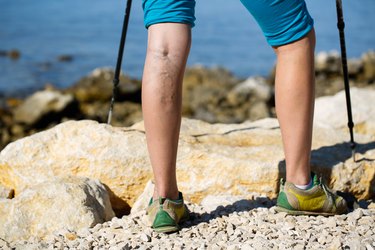
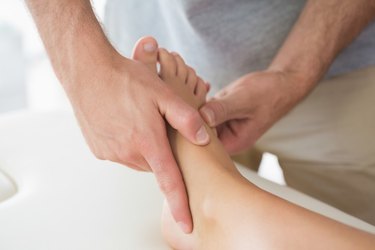
While joints such as the knees and hips absorb much of the shock from the jogging stride, your feet also experience high levels of impact. Jogging over a rough terrain or pushing yourself too hard increases your risk of an uncoordinated footfall, which may result in ankle or foot injuries. The intense repetitive motion of jogging can also cause superficial pain or distress to your feet. Corns, calluses, blisters and muscle cramps may result also. More serious potential foot injuries include plantar fasciitis, a painful inflammation of the soles, and metatarsalgia, pain or stress in the forward area of the sole.
Risk Factors
Wearing improper footwear can increase the likelihood of injury and stress during jogging. According to a 2007 study published in podiatry journal, "The Foot," just wearing shoes may increase the likelihood of strain or injury to the foot. The study surveyed European, Sotho and Zulu individuals and found the habitual shoe-wearers had the highest incidence of foot problems. If you already suffer from chronic disease, arthritis or joint problems, walking offers a better alternative to the high-impact of jogging, according to the Centers for Disease Control and Prevention and the American College of Sports Medicine.
Mitigating Factors
While jogging does expose your joints to additional stress, when compared with walking, a 2005 study carried out at Stanford University suggests that regular high-impact exercise may better prepare your body for the attendant shocks. The researchers found that regular runners had 25 percent less musculoskeletal pain compared with non-runners. The study included subjects at a range of ages; the oldest participant was 76 years old.
References
- MayoClinic.com; Exercise for Weight Loss: Calories Burned in 1 Hour; December 2009
- University of Rochester Medical Center: Jog or Walk? Both Boost Your Health
- University of Maryland Medical Center: Foot Pain - Causes
- "New York Magazine"; You Walk Wrong; Adam Sternberg; April 2008
- "The Washington Post"; Don't Run Away From Jogging; Heidi Splete Johnstone; October 2005


Member Comments