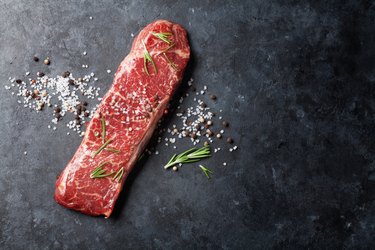
Natural meat tenderizers can transform an economical cut of beef into a delectable dinner. Such tenderizers come in three categories — salt, acid or enzyme.
Use certain ingredients in a meat marinade to help make what may have been a cheap cut at the butcher's taste like the most expensive entrée from a top-notch steak house.
Video of the Day
Video of the Day
Salt as Natural Meat Tenderizer
Salt and its alkaline cousin, baking soda, both break down proteins in beef. A thick coating of kosher salt, sea salt or baking soda applied one hour before cooking will draw water from the meat, allowing some of the salt or soda to sink into the beef. This improves the meat's texture. Drain off the water and rinse the meat well before cooking.
If you have high blood pressure or other risk factors for heart disease, salt might not be your best choice of natural meat tenderizer. Salt can worsen these conditions and risk factors. According to the American Heart Association, daily sodium intake should not exceed 2,300 milligrams for healthy adults, or 1,500 milligrams if you have high blood pressure.
Let Acids Do the Work
Acids are one of the workhorses in cooking. They are found in most foods that humans eat and serve many cooking functions. When used for tenderizing steak and other cuts of beef, acids soften tough muscle at the same time that they give meat more flavor.
What's more, flavorful acids run the gamut from simple vinegar to citrus or tomato juices. Choose balsamic, apple cider or plain white vinegar, or tenderize with lemon, lime or even orange juice. Tomato-based sauces also are acidic, which is one reason why many barbecue sauces use them.
Brew a Beverage
Wine and beer pack a one-two punch as tenderizers and marinades. Both contain acids and tannins, another natural tenderizing substance. Two other beverages make the grade as tenderizers — tea and coffee.
Tea contains tannins, while coffee has natural acids. When using tea or coffee as tenderizers, brew them strong and allow them to cool before marinating the beef for as long as 24 hours.
Try Some Fruit Magic
Fruits and roots tenderize beef because of certain enzymes they contain. For example, papaya has papain, an enzyme that's used in commercial tenderizing products. According to the Food and Drug Administration, papain is generally recognized as safe (GRAS) as a food additive. Like acids and salt, the enzyme breaks down tough muscle fibers.
According to the USDA Food Safety and Inspection Service, pineapple contains bromelin — an enzyme that softens meat by dissolving collagen and elastin.
Ground fresh ginger root works as a tenderizer as well as a flavor enhancer when sprinkled over beef. Ginger contains an enzyme classified as proteolytic, meaning that it breaks down the proteins in meat. Plant tenderizers work best on thin cuts of meat. Simply mash up the fruit pulp and spread it over the meat, or top the meat with several fruit slices.
Time It Right
How long beef should marinate in a tenderizer depends on which type you choose. For example, marinate meat in wine, vinegar or citrus juice no longer than two hours, because excess acidity will have the opposite effect of tenderizing.
In other words, too much acid for too long will turn the meat tough. To get more flavor into the meat, choose a marinade that includes oil as well as acid, because the oil will keep the meat moist.
Was this article helpful?
150 Characters Max
0/150
Thank you for sharing!
Thank you for your feedback!