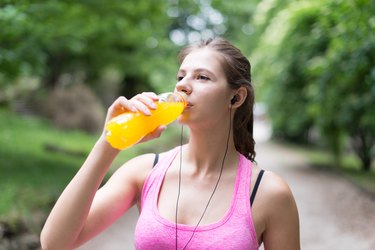
Gatorade is a vitamin-enriched sports drink you can use to rehydrate when performing endurance activities such as running and cycling. It's also popular among athletes training in warm climates. Sipping this sweet beverage does have its perks, but too much Gatorade can cause adverse side effects.
Purpose of Sports Drinks
Video of the Day
Many people reach for Gatorade when exercising for extended periods of time or when competing in fitness or athletic events in hot weather because the sports drink contains sugar and electrolytes like sodium and potassium. This combination of electrolytes and carbohydrates can help you refuel and rehydrate while performing extended bouts of cardio such as marathon training or cycling.
Video of the Day
Typically, sports drinks like Gatorade, or a similar product like Gatorade energy chews, are only recommended for physical activities lasting longer than 60 minutes. Plus, they are only a better choice than water for athletes engaged in a moderate-to high-intensity exercise that lasts 60 minutes or longer, according to the Academy of Nutrition and Dietetics. Which means, if you are exercising for less than an hour, water should be your drink of choice.
Sometimes, Gatorade is recommended if you are vomiting or have diarrhea to help rehydrate and replace electrolytes. That said, if this suggestion is for a child, Harvard Health says the excess sugar can worsen diarrhea. And unless you are dealing with severe dehydration, they say the goal is just to consume fluids. Before using Gatorade for yourself or a sick child, it is always best to talk with your doctor.
Read more: Dehydration and Water Vs. Gatorade
Gatorade Side Effects
Just like any other food or drink, consuming a sports drink in moderation is generally safe. However, if you have too much, you may experience some adverse Gatorade side effects. According to the Gatorade website, a 20-ounce serving of Gatorade contains 140 calories and 36 grams of carbohydrates, with 34 grams of carbohydrates coming straight from sugar.
For athletes engaged in moderate to high-intensity exercise for an extended period of time, replenishing with a drink like Gatorade may be beneficial. Athletes can lose more than 500 milligrams of sodium for every pound of sweat they secrete, according to a March 2017 review of literature published in the Sports Medicine journal.
So, it makes sense that replenishing with Gatorade having just 270 milligrams in 8 ounces is appropriate to prevent severe electrolyte imbalances or muscle cramps.
That said, unless you are pounding the pavement for hours, filling your body full of that much sugar and sodium from one dietary source is not a healthy choice for hydration. In fact, the American Heart Association says most women should not exceed 100 calories or six teaspoons of sugar per day, and men should not exceed 150 calories or 9 teaspoons per day.
It also contains 75 milligrams of potassium and 270 milligrams of sodium, which often need to be replaced when performing moderate to high-intensity cardio exercise lasting longer than 60 minutes. However, if you drink too much Gatorade or eat too many Gatorade energy chews, you could end up consuming too much sodium for general health.
The U.S. Food and Drug Administration says your body needs a small amount of sodium to work properly, and too much can be bad for your health, especially if you have certain conditions like high blood pressure. For optimal health, your daily sodium intake should not exceed 2,300 milligrams.
Read more: How Can I Tell When My Body Is Hydrated?
Hydration for Exercise
The proper hydration for physical activity begins and ends with water. Staying hydrated throughout the day is key to feeling your best during exercise. To do this, you need to drink the right amount of fluids before, during and after physical activity. While there is no definitive answer on the exact amount of fluids you need to drink in a day, there are some general guidelines you can follow.
For example, monitor the color of your urine. If it is lemonade color, this is a sign of appropriate hydration. But, if it looks more like apple juice, this may be an indicator that you are dehydrated. Make sure to check your urine several times a day, especially when exercising in hot climates.
Other than dark-colored urine, the signs of dehydration to look out for include, extreme thirst, fatigue, faster breathing, dizziness, feeling weak, flushed skin, confusion, being able to do less and labored breathing, according to the Mayo Clinic.
If you are feeling any of these signs, stop what you're doing and hydrate. And remember, if your activity lasts longer than one hour and it is performed at a moderate to high intensity, you may need to replace lost fluids with a drink containing electrolytes and carbohydrates.
- Gatorade: "Nutrition Information"
- Harvard Health Publishing: "When Treating Stomach Bugs, the Best Solution May Be the Simplest One"
- American Heart Association: "Sugar 101"
- U.S. Food and Drug Administration: "Use the Nutrition Facts Label to Reduce Your Intake of Sodium in Your Diet"
- Academy of Nutrition and Dietetics: "Hydrate Right"
- Mayo Clinic: "Dehydration"
- Sports Medicine: "Sweating Rate and Sweat Sodium Concentration in Athletes: A Review of Methodology and Intra/Interindividual Variability"
- Centers for Disease Control and Prevention: Americans Consume Too Much Salt