The mineral potassium is needed in your body to maintain proper heart function and fluid balance. advises Medical News Today. It also plays a part in muscle contraction, regulating blood pressure and maintaining healthy bones.
According to the NA of Dietary Reference Intake, adult men and women need at least 4,700 milligrams of potassium daily. Your body is unable to make or store potassium, so it must come from your daily diet. Including potassium-rich foods and drinks can help you meet your daily requirements.
Video of the Day
Video of the Day
Coconut Water
Coconut water, which comes from the inside of young coconuts, is an all-natural beverage that is a good source of potassium. According to the USDA National Nutrient Database, coconut water contains 600 milligrams of potassium per cup, which meets roughly 13 percent of your daily need for the mineral. It's also a good source of other electrolytes, such as magnesium and phosphorus.
Try using coconut water to rehydrate after exercising instead of high-sugar sports drinks. You can find it for sale in cans or tetra packs in most health food stores and some grocery stores.
Fruit Juices
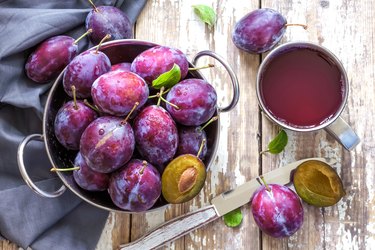
Fruits are high in potassium so drinking fruit juices will boost your potassium intake. An 8-ounce serving of prune juice supplies you with 707 milligrams of potassium, or 15 percent of your daily need, says USDA.
Another drink high in potassium is orange juice, which contains 496 milligrams per serving. Pineapple juice and grapefruit juice have between 325 and 378 milligrams of potassium per cup. Apple and grape juice aren't excellent sources, but still provide 250 to 263 milligrams per serving.
Look for all natural, no-sugar-added versions of these fruit juices to get the most potassium with the least amount of added ingredients or calories.
Vegetable Juices
Vegetable juices provide you with potassium as well. Drinking 8 ounces of carrot juice gives you 689 milligrams of potassium, or 15 percent of your daily need. An 8-ounce serving of tomato juice, without salt, supplies you with 527 milligrams of potassium, or 11 percent of your daily need for the mineral.
Many fruit and vegetable juice blends are available in grocery stores as well. These drinks contain a variety of fruits and vegetables, such as tomatoes, carrots, spinach, grapes, bananas, citrus fruits and berries. Canned vegetable Juice cocktail supplies 468 milligrams of potassium per serving, according to USDA Database.
Milk and Nondairy Beverages
You can also drink milk or nondairy milk alternatives to get potassium. A 1-cup serving of reduced-fat milk has 366 milligrams of potassium, or 10 percent of your daily need. A cup of soy milk provides 287 milligrams, or 8 percent DV for potassium, says National Institute of Health. and a cup of unsweetened almond milk has 176 milligrams of the mineral, according to USDA National Nutrient Database.
Protein Shakes
Another way to increase potassium intake from beverages is by drinking protein shakes or nutritional supplement shakes. These beverages are engineered to be high in certain nutrients to supplement your daily vitamin and mineral intake. NutritionIX says the average protein shakes contain 528 milligrams of potassium per 295 g bottle. But, read the label on the product to determine exactly how much potassium it contains.
- USDA National Nutrient Database for Standard Reference: Beverages, Almond Milk, Unsweetened, Shelf Stable
- Medical News: Everything you need to know about potassium
- NIH: Potassium facts for Health Professionals
- National Academies.org: Dietary Reference Intake
- NutritionIX: Protein Shake
- USDA National Nutrient Database for Standard Reference: Nuts, Coconut Water (liquid from coconuts)
- USDA National Nutrient Database for Standard Reference: