

























































5 Things You Need to Know About Fruit Smoothies

1. They're Great for Reaching Your Daily Fiber Intake

Unlike juicing, a process by which the fiber or "pulp" is extracted from the fruit, chunks of whole fruits are added to a liquid in a blender in order to produce smoothies, allowing you to retain the fiber that’s found naturally in fruits. Why is this important? Fiber is indigestible within the human body, so it is virtually calorie-free. It's also a bulky substance, so you'll feel full with less calories. But wait; there's more! Fiber can also help stabilize your blood sugar, lower your cholesterol and regulate your bowel habits. With all the benefits fiber has to offer, consider putting the juicer in the cabinet and placing the food processor on the counter.

2. You Can Drink a Smoothie on the Way to Work

Smoothies make for great meals on the run; perfect for a morning meal. Can't manage to hold a smoothie and your coffee cup at the same time? Try mixing the two by making a mocha-fruit smoothie. Combine four ounces of iced coffee or espresso, eight ounces of nonfat milk; add 1/2 cup frozen raspberries or other fruits and blend. Add a dash of sweetener, such as cinnamon, if desired and you're out the door with a caffeine-breakfast combo in no time flat.

3. They're Full of Antioxidants

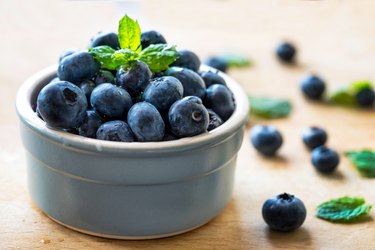
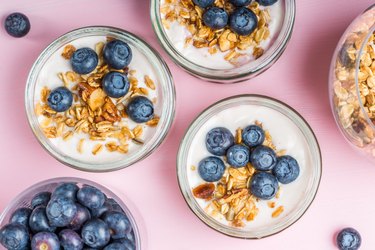
Not only will fixing yourself a smoothie allow you to reach your recommended fruit servings for the day in just one shot, those fruits you’re adding are jam-packed with disease-fighting antioxidants. Antioxidants in plant foods are typically tied to their pigments, and different colored fruits provide different healthful antioxidants. Many people fail to eat either enough fruits or enough of a variety of fruits each day. Blending a colorful spectrum of purple (1/2 cup blueberries), orange (1/4 cup mango) and red (1/2 cup strawberries) frozen fruits, along with 1/2 cup each of nonfat milk and low-fat yogurt and you’re on your way towards better health.

4. Skip the Juice and Grab the Milk

Smoothies need a liquid base, and while it makes sense to throw in some apple or orange juice into the mix, a healthier option would be to add nonfat or low-fat dairy. Milk and yogurt provide bone-building calcium as well as protein, and juices fall short of both of these nutrients. If you’re looking towards smoothies as a quick, easy meal make it a well-rounded one by adding dairy.

5. Fruit Smoothies Are Not Always Healthy

Fruit smoothies offer many health benefits, but considering the fact that they typically contain a large amount of fruits along with additions such as juice, whole milk and peanut butter, it's easy to pack on some pounds if you’re not careful. Depending upon its size and ingredients, a smoothie can run up to well over a whopping thousand calories per serving! Be sure to select the smallest size possible if you’re purchasing one from a store and be mindful of any high-calorie add-ins that may seem tempting.

Last updated on: Aug 17, 2010

Must see: Photo Galleries

Member Comments