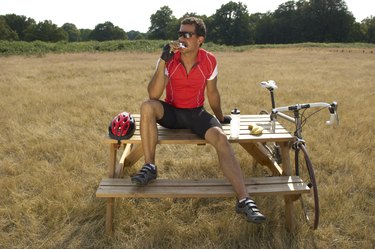
Training for a triathlon is grueling, often requiring two workouts a day. In addition to training sessions and work and family responsibilities, triathletes also need to find time to develop and follow a triathlon meal plan.
Whether you're competing in your first triathlon or your tenth, what to eat before a triathlon plays a major role in helping you gain the strength and endurance you need for training and competition.
Video of the Day
Video of the Day
Consume Carbs for Fuel
If you're having a hard time finishing your workout, you might not be getting enough carbs in your diet. Carbs are your muscles preferred source of energy, so you'll want to consume 45 to 65 percent of your daily calories as carbohydrates, according to the current dietary guidelines for Americans.
For example, if you consume 2,000 calories each day, 900 to 1,300 of them should be from carbs. And since each gram has 4 calories, you'll aim for 225 to 325 grams of carbs per day.
When you're out for an intense training session, though, you'll need 30 to 60 grams of carbohydrates per hour (or 0.7 g/kg of body weight) in order to maintain your blood glucose levels, according to a January 2011 article from the British Journal of Sports Medicine.
Ideally, these carbs should come from real food, such as whole grains, fruits, beans and vegetables. These foods not only supply your body with energy, but also provide essential nutrients your body needs for recovery and health.
Pack on Protein for Muscle Recovery
Protein supplies the amino acids your muscles need for recovery and growth, making it an essential component of a triathlete diet plan. Like carbs, proteins needs vary depending on the intensity and duration of your training, and range from 1.2 to 1.4 grams protein/kg, according to a June 2016 study from PLOS One.
For example, a 150-pound person (68 kg) training heavily needs between 81 and 95 grams of protein per day. To maximize your nutritional intake, make your protein choices healthy by including lean meats such as poultry and fish, beans, nuts, seeds and low-fat dairy products.
Fit in Fat for Optimal Function
As a triathlete, you might be wary about getting too much fat in your diet because you want to stay lean; however, adequate fat intake is essential for training. Fat provides energy, fat-soluble vitamins and essential fatty acids.
Whatever calories you have left in your daily diet after accounting for carbs and protein should come from healthy fat sources, including fatty fish like salmon, vegetable oils, avocados, nuts and seeds.
Stay Hydrated
Consuming water is just as important as consuming the right foods in triathlon training. According to the American Council on Exercise, you should consume between 17 and 20 ounces of water two hours before exercise and 16 to 24 ounces of water for every pound of body weight you've lost after your event. During your triathlon, you should consume 7 to 10 ounces every 10 to 20 minutes.
Put Together Your Triathlon Meal Plan
Now that you know what to eat on your triathlete meal plan, it's important to know how to put it all together. How you split up your meals depends on your schedule and preferences, but 2 to 4 hours before you train, you should eat a high-carb, low-fat meal, according to an August 2011 paper in the Journal of Sports Sciences.
As previously mentioned, you'll need 30 to 60 grams of carbohydrates per hour during longer training sessions. According to USA Triathlon, that works out to:
- 2 to 2.5 grams per pound of your body weight for 60 minutes
- 2.5 to 3 grams per pound of your body weight for 75 to 90 minutes
- 3 to 3.5 grams per pound of your body weight for over 90 to 120 minutes
- 3.5 to 4 grams per pound of your body weight for 2 to 3 hours
And afterwards, to improve muscle recovery, eat a high-carb meal with a moderate amount of protein.
What to Eat Before a Triathlon
The foundation of triathlon fueling is "nothing new on race day." That means trying no new foods or timing strategies on the big day.
Instead, you want to test out these day-of timing and feeding strategies during the course of your training. Then, on the day of your triathlon, you'll know exactly which foods set best in your stomach before a triathlon, what foods and beverages you prefer during the race and what recovery foods you love.
- The night before: Eat a low-fiber high-carb meal, such as grilled chicken with white rice.
- The morning of: Eat a light, high-carb breakfast such as toast with egg whites and diluted juice. Drink a carb-containing sports drink one hour before the race.
- During: If your race lasts longer than an hour and a half, drink another carb-containing sports drink during the cycle portion of your race.
- Immediately following the race: Eat a carb and protein snack, such as cheese and crackers, to help with recovery.
- Throughout the day after the race: Eat a high-carb snack or meal with protein every 2 to 3 hours, such as cheese and fruit or fish with vegetables and rice.
- Journal of Sports Sciences: "Nutrition for Endurance Sports: Marathon, Triathlon and Road Cycling"
- USDA: "Dietary Guidelines for Americans, 2020-2025"
- British Journal of Sports Medicine: "Carbohydrate requirements of elite athletes"
- PLOS One: "Protein Requirements Are Elevated in Endurance Athletes after Exercise as Determined by the Indicator Amino Acid Oxidation Method"
- USA Triathlon: "FUELING FOR THE SPRINT DISTANCE"
- American Council on Exercise: "Healthy Hydration"