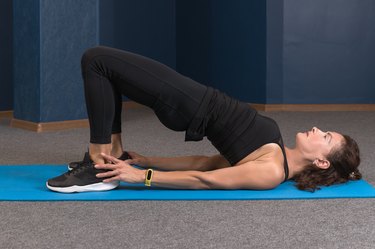
Hips are ball and socket joints, surrounded by a circular structure made up of cartilage called the labrum. Everyday movements can lead to labrum tears, but athletes are at higher risk due to extreme movements during training. ...
The hip flexors are deep muscles that lie across the front of your hip near the spine. Like a rubber band or spring, a muscle is shorter when it is not stretched. When muscles stay short, or contracted, over a long period of ti...
Hip flexor stretches are one of the most recommended and used stretches for athletes of all types, as well as those undergoing various forms of physical therapy. Your hip flexors are the muscles on the front of your upper leg t...
Your hip adductors are on the inside of your thighs. These muscles include the adductor magnus, brevis and longus as well as the gracilis and pectineus. When they contract, they adduct your thighs, or bring them toward the midl...
As a ball-and-socket joint, the hip has the capacity for many different types of movements including abduction, adduction, external rotation, internal rotation, extension and flexion. When the hip flexes, the angle between the ...
Whether you’re preparing to work out or just want to loosen up at your desk, stretching is an effective way to strengthen and tone any of your body’s muscles, such as the hip flexors and abdominal muscles. These mus...
The hip rotators consist of six, small primary muscles that work with the surrounding ligaments and tendons in the hip joints to internally and externally rotation the hips and legs. You can stretch these muscles together in va...
Long periods of sitting, however, can result in tight, inflexible hip flexors, compromising your mobility. To restore flexibility to your hips, practice a few simple stretches. Use the force of gravity on your own body weight a...
The hip flexors are a group of muscles lying on the front of the hip and include the iliacus, psoas major, rectus femoris, sartorius, pectineus, tensor fascia latae, adductor longus and gracilis. When these muscles contract, th...
These muscles help perform an assortment of everyday activities, including walking, twisting and turning, and should be the focus of any exercise routine. Most hip and lower-back stretches can be done without the aid of a machine.
The vastus lateralis, vastus medialis, vastus intermedius and the rectus femoris help you flex, or bend, your hips when performing actions like walking and running. Tightness in these quad muscles can leave you more prone to in...
This is the case with straddle stretches. Straddle stretches target the inner thighs and hamstrings of the legs, but also help to stretch and loosen the hip muscles. Performing a straddle exercise is done in two ways: standing ...
When your hip flexors are too tight, they pull your pelvis forward, putting extra strain on your lower back. Stretching these muscles daily can loosen them and decrease the pain in your lower back. Proceed cautiously, never str...
Strong legs require flexibility and a large range of motion in your hips. When your hips are open, your running stride improves, your kicking stroke is more powerful and your cycling speed increases. Include daily hip stretches...
Your hip joint is one of the most complex in your body. It allows you to rotate and move your leg forward, back and side to side. The muscles around the joint can become tight, and stretching helps to alleviate these tight, sho...
Because the psoas major has its origin at the lumbar region of the spine, it is also a very important muscle when it comes to promoting or maintaining good posture. Having tight hip flexors can cause lower back pain and increas...
People who spend their days sitting at a desk often develop shortened hip flexors, and people who regularly stretch their hamstrings can create an imbalance by neglecting the opposing muscles. This can lead to lower back proble...
Hip stretches have a therapeutic effect for most athletes and may improve low back pain when properly executed. Use a yoga mat for cushioning and traction, remaining in each stretch for 15 to 30 seconds to allow your hip muscle...
Although stretching does burn a few more calories than just sitting, it doesn't contribute significantly to weight loss. However, when your hip flexors and lower back muscles are tight, you tend to adopt a pelvis-tilted-forward...
Dynamic stretching, which involves lengthening and shortening your muscles repeatedly over a specific period, is one of several methods that you can use to improve your hip mobility, or range of motion, and the flexibility of t...
The primary muscles are the glutes, which can be strengthened using machines developed specifically to isolate them. They can also be stretched in yoga poses and stretching frame machines found in gyms and physical therapy clin...
While stretching can help you loosen up tight hips, there are other exercises and activities you can engage in after you have stretched. While stretches help you prevent injury, hip-loosening exercise can help you strengthen an...
Cheer jumps are an integral part of tryouts, dances and cheers. When performed in unison with other members of your squad, jumps provide an aesthetically pleasing effect for your audience. The higher you jump with the best poss...
Runners and cyclists can also develop tight hips. Combining a stretch of the hip flexors with arm raises will benefit the lower back and shoulder joint because these are areas that also tighten up.
If leg movements are painful, move your arms instead by reaching them up and down overhead or in circular motions out to your sides. Specific hip stretches may reduce the pain that travels down your leg from pressure on your sc...
Thus, the National Academy of Sports Medicine recommends that you stretch your quads and hip together to improve movement and tissue elasticity. You can perform these stretching exercises daily, two to three times a day.
Your hip flexors, which are a group of muscles in your hip that flexes and extends your hip joints, shorten from the sitting position. Stretching your hip flexors and surrounding muscles can prevent low back pain and stiff hips.
Below-the-knee amputations are the most common in the United States, which has an estimated 1.5 amputees per 1,000 people, according to Orthotics and Prosthetics. Your physician will recommend hip abduction exercises to strengt...
Stretching the abductors helps fix hip dysfunction and conditions such as hip abductor tendinitis and hip abductor pain syndrome.
They flex, extend, rotate and move toward and away from the middle of your body. Having optimal range of motion in your hip joints can help you prevent back, hip and knee pain. Therefore, stretch your hip joints in different di...
Although the ball isn't essential for stretching any major muscle groups, you can use it as direct support or to help nudge you into the proper position. In particular, you can use the exercise ball to stretch the muscles at th...
Your hip extensors are responsible for lifting the thigh up and back from your hip. This group of muscles connects your pelvis with the back of your thigh bone. Stretching your hips extensors is important to maintain or improve...
These muscles are the reason why you are able to bend at the waist and lift your knees. Stretching the hip flexors may be especially important for people that spend a great deal of time sitting down, according to "Yoga Journal....
The result is loose, springy hamstrings that do nothing to counteract the tightness of the hips, causing the pelvis to tilt forward and down. This causes bad posture, which is a major contributor to lower back pain. By incorpor...
Pain from inflamed hip rotator muscles is often felt in the back -- called referred pain -- or deep in the buttocks if the inflamed muscle puts pressure on the sciatic nerve. A combination of stretching and strength training ca...
The Mayo Clinic reports flexibility and range of motion can improve your balance and decrease risk of injury. Stretching not only keeps your hips flexible, but also improves your circulation and relieves tense muscles.
These muscles act on your hip joints to produce abduction, adduction, extension, flexion and rotation ranges of motion. Any of these muscles are susceptible to injury when stressed beyond their customary limits. If you suffer a...
Hip adductors contract to move your leg in toward your other leg. This area, the groin, is suspectible to muscle pulls if you do not maintain the flexibility of your inner thighs. Use daily stretching exercises to increase your...
This causes a decrease in hip mobility and weakens the buttocks, causing low back and knee pain, according to physical therapist Gray Cook, author of "Movement." Stretching your hip in various directions, such as flexion and ex...
Popping in the outside of the hip when walking happens during snapping hip syndrome. Popping when you lift the leg is indicative of hip bursitis. Tight muscles contribute to both conditions, so stretching is a part of rehabilit...
Stretching your hip muscles and joints decreases your risk of low back and knee pain, according to physical therapist Gray Cook, author of "Movement." Myofascial release is a technique that physical therapists and massage thera...
The muscles and supporting tissues of the hips help support body positioning and posture and benefit from daily stretches.
A lack of flexibility in the muscles and connective tissues that surround your hips can restrict these movements, potentially affecting the accuracy and distance of your shots. Stretch your hips daily, and especially before eac...
Hip muscles can weaken or shorten through repetitive use patterns and after injury. Incorporating stretching into your exercise routine can help lengthen and strengthen hip muscles as well as potentially prevent injury.
In minor tears, surgery may not be required and conservative methods of treatment may be prescribed. Whether severe or minor, rehabilitation for a hip labral tear involves physiotherapy treatments such as massage, joint mobiliz...
Myofascial release, or MFR, is a technique used to reduce pain and/or improve range of motion by applying manual pressure to your body's myofascial tissue, says the Essence Center Myofascial Release and Holistic Birth. In doing...
If you want to improve the flexibility of your hips, yoga may be a solution. However, some yoga postures are better than others when it comes to stretching and adding flexibility to the leg, hip and abdominal muscles responsibl...
Problems arise when these muscles and tendons become tight and inflexible. Such issues are seen in runners who develop tendinitis or knee pain. Keep your legs flexible and healthy with good stretches for the outer hip and thighs.
Even though exercising may feel like the last thing you want to do, it will improve your range of motion and reduce joint pain. After you exercise, practice gentle stretching exercises to reduce arthritis pain in the hips. Talk...
Slow, static stretching of your groin and hip flexors can help relieve groin pain and prevent future injury.
Bursitis may develop when the muscles surrounding the joint are overused. Cyclists and runners are at risk for hip bursitis due to the repetitive motion of their sports. Appropriate stretches performed while lying on your ba...
The hip flexors bring your thigh toward the abdomen. The adductors are on the inside of your thigh and work to pull the leg toward the center of the body. Imbalances created by tightness in either of these muscle groups can lea...
Tight hip muscles may negatively affect your posture, contribute to lower back pain and hinder your athletic capability. Performing static stretches after a warmup or workout will lengthen and relax tight hip muscles. Contact y...
Hip stretches improve circulation, reduce your risk of injury, elongate your muscles and alleviate tension and soreness caused by tight muscles. Warming your hip muscles up with gentle activity such as walking or a set of squat...
Internal hip rotation stretches can improve your level of flexibility and help increase your range of motion. They are beneficial if you have tight hips, because they can reduce your risk of injury and can alleviate pain. Cons...
The muscles and tendons associated with the hips are relatively difficult to isolate and stretch when compared to other muscle groups in your body. But it's just as important to stretch your hips, especially if you're going to ...
A survey of more than 6,500 adults over age 60, published in 2002 the "Journal of Family Practice," found that 14.3 percent of respondents reported experiencing hip pain most days during the six weeks prior to the survey. Aging...
A hip pointer is an injury that most often occurs in contact sports, usually from a blow to the top of your iliac crest, or the point of your hip bone. It often results in extreme pain, bruising and a loss of range of motion in...
Performing stretches before you exercise can help reduce your risk of injury and warm up your muscles for better performance.
Having flexible, or open, hips are important in a variety of sports to improve speed and power. Open hips are also critical for flexibility and stability in the pelvis and femur. Tightness in the hips is attributed to a lack of...
Stiff hips can have an adverse effect not only on your hip joint but also on your lower back. Your hips are one of the most mobile joints in your body and are controlled by a number of different muscles. An effective hip stretc...
If your right hip is tight or you feel pain, stretching the hip will alleviate tension and pain. Stretching also increases mobility and range of motion so if your right hip is tight, your movement may be restricted. It is not u...
Inertia can also wreak havoc on your musculature. Muscles, such as your hip flexors, that are not stretched regularly can become shortened and lead to lower back pain. Asanas, or yoga poses, can stretch the hip flexors and pu...
The hip flexor or iliopsoas muscle connects from the lower spine to the femur, and its principle function is to lift the knee up in activities such as stair climbing or sprinting. Hip flexors can become inflamed and sore due to...
Because the hip joint is a ball-and-socket joint, the type with the greatest capacity for range of motion being that it can move in all directions, stretching to increase range of motion is logical and necessary to perform dail...
Your hip flexor muscles on your upper thigh just below your pelvis can easily get tight, leading to cramping and limited flexibility. Stretching your hip flexors helps you stay flexible and reduces your risk of injury while pla...
Hip problems due to inactivity, aging, trauma and disease may limit hip mobility and cause pain and stiffness. Excessive and repetitive movements often strain your muscles and connective tissue, causing pain and inflammation. S...
These muscle groups allow you to flex the hips and sit. Sitting for extended periods of time creates stiffness. There are many stretches that can stretch these hip flexors, including many classic yoga poses.
Incorporating stretches for improving hip flexibility into your fitness routine can help improve flexibility and range of motion as well as reduce pain and stiffness. Stretching routines also reduce stress and tension; keeping ...
That's why it's essential when you exercise to stretch your hip muscles to prevent injury and warm your body up for physical activity. Learning and performing hip stretches typically takes only a few minutes.
The sacrum area, where the lower back and pelvis meet, is the body's major nerve center. Tension in this area results in pain in the hips and lower back, and possibly down the legs. Stretching lets you open the hips, relieve te...
If your hip flexors are tight, they will pull down and forward on your pelvis, which can cause the pelvis to tilt and cause low back problems. Performing some of the best hip flexor stretches can help with the tightness associa...
A popping or snapping sound in the hip typically indicates a condition called snapping hip syndrome. Snapping hip syndrome is when the iliotibial, or IT, band -- a muscle-tendon that runs from the outer hip to the outside of th...
Keeping these muscles strong as well as flexible is important to your athletic performance, and can help you perform everyday tasks. Variations of the quadricep and hip flexor stretches exist and are often performed while lying...
It is important that you incorporate stretching of the hip muscles into your regular fitness routine, keeping the hip area loose and flexible. As with any stretching routine, begin with a thorough warm-up of your muscles. Hold ...
Too much sitting places the hip flexors in a flexed position, which may shorten them. This can affect the alignment of the pelvis and reduce range of motion in the hips. Passive hip stretches increase flexibility as well as act...
They allow you to lift your knee and to raise your leg straight out in front of you. Hip flexors are constantly working to support your body, so they can get stressed, fatigued and tight. Many exercises work major muscle group...
Tightness in the hip flexor muscles can lead to lower back pain and difficulty walking and running. If you have tight hip flexor muscles, it is good to arm yourself with different types of stretches. As with all stretching, hol...
They help support both the upper body and provide mobility and flexibility to the lower body, allowing you to turn, bend over and rotate your body. But when your hip muscles and tendons are tight, it can put a damper on your ex...
When the effects of gravity are reduced, and you feel lighter, the stress on your joints is also lessened. You will be able to move your hips through a greater range of motion which will enhance flexibility and make it easier t...
The impact of sports and exercise can often create hip pain. Many pregnant women also experience hip pain as bones in the pelvic area gradually loosen. When stretching your hip, choose stretches that suit your physical conditio...
The outside of the hips consists of a muscle group called the hip abductors. The job of these muscles is to bring your leg away from the body and also to stabilize the hips when doing weight-bearing activities such as running a...
Various methods of stretching therapy increase the range of motion of the hip joints and muscles. The goal is to alleviate pain and restore optimal range of motion in not only the hip joints, but also the entire body, according...
Whether you've injured your hip, had surgery on your hip or your hip is a little sore after a workout, rest is important. Once you feel up to it, gentle stretches can help easy your pain by slowly acclimating your hip to moveme...
After suffering a hip strain, you should not do any of the activities that caused your strain for 10 to 14 days. You may, however, do stretching and strengthening exercises to aid in recovery. Stretching exercises for the hips ...
A clicking or snapping hip is most often caused by the crossing of a muscle or tendon over a bony structure. If there is no pain, then there is really no need for treatment. If you experience any pain or discomfort some targete...
Your hip ligaments also have a role in leg movement, which means the ligaments can be stretched just like your leg muscles. While for the most part this stretching is a safe practice, in certain instances some stretches may not...
Inflexible hips can compromise these movements and not allow you to pitch at your best. The main muscles you want to focus on when stretching your hip are the flexors. Your best bet is to do a balance of dynamic and static stre...
In addition to causing discomfort, tight hips can lead to injuries in your quadriceps and hamstrings. When one muscle group or joint is particularly stiff or tight, it can pull your body out of alignment and place stress on the...
Despite the benefits of running, the repetitive stride action over a relatively small range of movement can result in muscle tightness. Tight muscles are more prone to injury and can also affect your posture. Running can cause ...
Tight muscles do not function as they should and can be prone to injury. After warming up before exercise, stretch your muscles and repeat as part of your cool-down, or stretch as a stand-alone training session to enhance your ...
Whether you are an athlete or an office worker, having flexible muscles makes many aspects of life easier. Performing stretches with a partner can enhance the experience even more by allowing you to relax your body and let the ...
It is comprised of your pelvic and thigh bones and the muscles of your hamstrings, quadriceps and buttocks. Stretching these muscles and their attached ligaments and tendons will help provide you with the ability to easily move...
These include your iliopsoas, quadriceps, adductors, sartorius, gracilis and tensor fascia latae. Stretching these muscles and adjacent ones minimizes your risk of back and knee pain and improves your hip joints' range of motion.
Long hours of sitting at a computer or leaning over a work surface can cause tight hip flexors, and those tight muscles can in turn cause low back pain and a host of other troubles with posture and athletic performance. Learnin...
Pregnancy changes your body's hormonal balance. One result of this change is a loosening of the muscles and tissue in your hips, explains NetWellness. In some women, this loosening causes hip pain. Performing exercises to work ...
Yoga stretches for the hips will help bring flexibility to your hip flexor muscles, which are directly related to the position of your pelvis. When your hip flexor muscles are unstretched, by long sitting periods and a sedentar...
One of the most used muscle groups in the human body are found in the hip and gluteal region. Healthy muscles in this area extend the legs during running and walking, as well as keep the body balanced while sitting. According t...
Located just above the quadriceps muscles on the front of the leg, the hip flexor is responsible for all forward movements and motions of the leg. Since the hip flexor pulls the leg forward while walking and running, they are...
In either case, stretching exercises are an important part of the rehabilitation process. The labrum is cartilage that surrounds the hip joint, which is a ball and socket joint. The labrum seals the hip joint, helps distribute ...
When your hips become tight your body turns to other muscle groups, such as the hamstrings, lower back and shoulders to compensate. The resulting muscle imbalances and tightness greatly affect your performance, describes "...
These imbalances occur when certain muscles are being used more than others, resulting in tightness, fatigue and knots in the individual fibers. The muscles surrounding the hips become tight because the glutes, hamstrings and q...
Stiffness in this joint can result in the inability to move your legs freely and a decline in your overall quality of life. Stretching your hip joint can make you healthier, minimize your chances of injury and improve your spor...
You may have tight hips if you sit for extended periods of time, experience a new workout, or stand for a lengthy duration. Regardless of the reason, your hips can be stretched in a variety of positions, including standing, sea...
The hip flexors are those muscles at the front of your leg that work together as a group to lift your leg at your hip joint. Tight hip flexors are a common problem resulting from constant sitting, walking and other forward-movi...
Pain in the hip area is a common ailment reported during pregnancy, according to the American Pregnancy Association. Slow and controlled stretches may help alleviate hip pain in some women. Talk with your doctor about the pain ...
The National Scholastic Sports Foundation says tight hip flexors are linked to injuries in athletes. Yoga provides options for stretching all parts of your hips, including your external and outer rotators, flexors, extensors an...
As your hips become increasingly tighter your body will naturally compensate for this adjustment. This compensation results in increasing pain and weakness along with decreasing performance levels. Including specific exercis...
There's a number of reasons they may need to be stretched, such as rehabilitation, lengthening or tightening muscles and as a precaution before or after physical activity. Fortunately there are many beneficial stretches for you...
Successful transtibial amputees have use of their knee joints, which allows them to lift and lower. It's vital to keep hip flexors loose because the muscles are involved in stabilizing movements associated with the body's core;...
Compared with other joints, your hip joint is considered the most sturdy, with the ability to withstand most stresses. As ball-and-socket joints, your hips are capable of a large range of motion. Your thigh and lower back muscl...
Stretching the affected and surrounding muscles and tendons will reduce tightness and lower the occurrence in some cases. Inflamed or swollen muscles require rest and icing before attempting stretches to loosen and lengthen the...
This tightness is often accompanied with slight pain and discomfort which plays a role in daily movement patterns, especially when you lift weights and play sports. Seated stretches are noninvasive and they can help increase yo...
The hips are one of the main locations for this condition to take place. A treatment strategy for OA includes medications, injections and stretches. The stretches are to be used in a safe manner that will not cause any damage o...
Athletes whose exercise program places severe demands on their hips are in danger of injuring their labrum, a circular cartilage structure that surrounds the hip socket. According to the University of Wisconsin School of Medic...
Carrying around extra weight and fluids can make you feel sore, tired and downright uncomfortable. Stretching may help relieve your aching joints, especially in your legs and hips, which support the weight from your upper body.
Bursa sacs in the hip joints help absorb shock between tendons and bones. These fluid-filled sacs tend to have only a small amount of fluid in them, but when the sac gets injured, the fluid increases, resulting in swelling that...
Rather, hips are a collective of muscles working together to help you move. Hip adductors are located on the inner thigh and work to pull legs toward the center of the body. Prevent aches and soreness by stretching these muscle...
This muscle group is made up of the psoas major and minor muscles, the adductor muscles found in the inner groin, and other muscles, including the tensor fascia latae and the rectus femoris. Injury to any of the hip flexor musc...
However, due to its high mobility and the excessive forces places on this joint, the hip is prone to overuse injuries. According to ExRx.net, stretching the hip abductors can promote postural alignment and prevent chronic pain ...
The swelling and inflammation of the bursa disturbs the surrounding muscles and connective tissues. The muscles around an irritated bursa need some light stretching, once pain and inflammation have subsided. Perform each stretc...
High kicks, side kicks and other lower body movements challenge the muscles in your groin, hips and lower body. Doing dynamic stretches prior to a workout heats up and prepares your muscles for activity. Post-activity static hi...
This makes stretching all the hip flexors difficult because some will activate while others elongate. Partner stretches have the advantage of allowing you to relax all of your muscles as someone else does the heavy lifting, cir...
As with any form of osteoarthritis, hip arthritis typically results in pain, swelling around the joint and loss of mobility. Sufferers most often feel the pain in the groin and thigh areas. Doctors usually prescribe pain medica...
The hip flexors are a group of six muscles that are located on the upper thigh. They're responsible for raising your leg, and are frequently injured while sprinting or kicking, according to Stockton College Coordinator of Athle...
Tight hips are a common problem with adults as our lives become more sedentary, but children who sit at a desk for most of the day might benefit from hip stretches just like their parents. There aren't any special stretches jus...
Even a short walk can cause your knees and lower back to hurt. And poor hip mobility can hurt your posture, too. Stretching can keep your hips flexible. As with any stretches, do not bounce when you're in the stretch, and stret...
You are probably sitting at a computer right now as you read this article. At this moment your hip flexors are shortened and contracted and will remain in that position until you stand up. At some point after reading this arti...
Your exercise program should include activities that promote the maintenance of flexibility and range of motion for your hips and other joints. Perform hip stretches carefully, and in a static manner. This means slowly stretchi...
Your hip muscles play an important role while you run. Supporting the hip joints, these muscles carry your body's weight and form a base from which movement is initiated when you run. Hip stretches can increase strength and fle...
The hips are the foundation from which most of the movement of the lower body occurs. With this in mind, making hip stretches a regular part of your warm-up routine is worth considering. Through greater flexibility and an incre...
Through stretching, you can increase your flexibility, improve balance through increased range of motion and potentially increase the speed of injury recovery through better circulation. The hip muscles, in particular, play an ...
The major muscle groups of the legs and hips are the quadriceps and hip flexors, and these are especially important to keep flexible since they help keep you mobile. Regularly stretching these muscles may help counteract the ti...
In addition, this can also lead to an anterior pelvic tilt, and lower back pain can develop. Lengthen these muscles with dynamic and static stretches. Static stretches are held, and dynamic stretches are performed in motion.
Internal rotation refers to the movement of rotating a side of your hip towards your body's midline. Certain stretches that can be completed at home or under the supervision of a medical professional can improve the flexibili...
The inner hip muscles consist of the pectineus, gracilis and adductor brevis, longus and magnus. All of these muscles are responsible for hip adduction, which takes place when you move your thigh inward. Keeping the inner hip m...
Problems involving hip flexion are caused mainly by tight, not weak, hip flexor muscles, according to the "Yoga Journal" article, "Get Hip about Flexors." Stretches for the hip flexors increase flexibility in the hips. These st...
Poor hip flexibility can limit your range of motion while walking, running, playing sports or doing chores around the house. Poor hip flexibility may also lead to pain or injuries in your lower body. To maintain or increase you...
The gluteal muscles in your posterior hips are extensor muscles, and act to propel your body forward. According to the website PC Coach, stretching benefits your running by lengthening your stride, which allows you to run faste...
But activities such as prolonged sitting or slight jarring, tripping, or slipping can move the hips out of alignment. Misalignment in the hips can lead to problems in the spine and lower back, and even the knees and other parts...
Every stride that you make requires your hip joint to pull forward, and every time that you plant your foot on the pavement, your hips feel the impact. Performing hip stretches before and after a run will help you avoid injury ...
Improving the flexibility of short and tight muscles in the hip is necessary to prevent this from happening and to strengthen the hip for long term use in daily activities. Stretching can be preformed daily and is best to do af...
Internal rotation of the hip is when you twist your hips inward to bring your knees toward the midline of your body. Internally rotating your hips as you stretch targets your hip rotators and hip flexors. Tight hip flexors and ...
Stretches for your hip abductors target more than one muscle. The gluteus medius and gluteus minimus work together, but the tensor fasciae latae is stretched differently. The glute muscles are in the buttocks, but the tensor fa...
Muscles such as the rectus femoris, gluteals, iliacus, psoas major and adductors all cross the hip joint. If these muscles should become tight, your range of motion would be compromised and you increase your chances of lower ba...
Hip pointers can cause bone fractures, extreme pain and deep bruising. Treatment of hip pointers calls for rest, ice, compression and elevation but often requires rehabilitative stretching to return your full range of motion. S...
External hip rotators are muscles in your pelvic region that are responsible for hip-twisting movements such as hitting a baseball or swinging a golf club. Hip muscles have a tendency to tighten from age, injury, inactivity, or...
Because they continuously work to support the body, hip flexors tend to become stressed and tight. Typical fitness routines designed to work out major muscle groups often lack necessary stretching, especially for embedded hip f...
Prolonged sitting keeps the hip flexors in constant contraction, resulting in shortened hip flexor muscles. The shortened muscles rotate your pelvis forward, leading to a common source of back pain. Especially if your job requi...
Prolonged periods of sitting or inactivity may tighten your hip flexors, which may then pull your pelvis forward and down, causing pressure and strain on your lower back. The American Council on Exercise says it is important to...
The best time to do these are right before athletic events or before weight training sessions. By dynamically stretching your muscles, you will prime them for the movement patterns they are about to undergo. The hip flexors are...
Decreased flexibility contributes to back pain and limited mobility. According to The President's Council on Physical Fitness and Sports, upper leg and low back flexibility is particularly important to preventing back pain. Inc...
You extend your hips when you walk, run, go down stairs and perform such strength training exercises as deadlifts. Such daily activities as sitting involve hip extension. Keeping any muscle in a stationary position for a long t...
Hip stretches should be a regular part of your flexibility training. The large bones of the hips serve as anchors for several muscles, and the American Academy of Orthopaedic Surgeons warns that failure to properly stretch thes...
Flexibility training for your back and hips can create many positive benefits for your health. For pregnant women, stretching the hips keeps the pelvis flexible for labor, and stretching the lower back helps to alleviate the ba...
The practice of yoga contributes to many health and fitness-related improvements. Improved flexibility is high on the list of benefits. The muscles that move your hips are typically the least-stretched muscles. Yoga poses chall...
Because many of people spend a large proportion of our time sitting and generally sedentary, the hips can become stiff and experience a reduction of mobility, flexibility and function. Perform these stretching exercises daily t...
Sitting down is the most common posture when you are awake. Whether sitting in a car, at a desk or on a couch, people sit a lot. When you are sitting, your hips are flexed. To combat the effects of tight hip flexors from having...
Their primary function is to draw the thigh bone forward at the hip. Repetitive movements, such as running--especially uphill--or forward kicking, can lead to adaptive shortening of the muscles and an increased risk of injury. ...
To perform hip flexor stretches, you must first understand the muscle groups involved in hip flexion. There are multiple muscles involved, such as the gluteus medius and minimus, the sartorius and the psoas major. The key is kn...
Sciatica pain happens when the sciatic nerve is impinged at the spine or hip level. The pain radiates into the buttocks, and sensations of numbness, tingling or burning travel down your leg and sometimes all the way to your foo...
Range of motion may be inhibited by lack of motion and exercise. Adults and seniors often experience tightness in the hips, and find their flexibility decreases as time passes. A few simple stretching exercises done on a daily...
If you have hip flexibility issues but hate holding long, uncomfortable static stretches, it's time for you to add some movement to your stretching. Dynamic stretches incorporate active range-of-motion movements so you never ha...
The hip adductor muscles, more commonly referred to as the groin, are found on the inside of the thighs and run from your hip to your knee. These muscles work together to draw your thighs together, or adduct them, and rotate yo...
When you move your legs sideways away from your body like for a leg lift or side kick you are doing hip abduction. The hip abductor muscles can get tight from overuse or poor posture and should be stretched like the rest of you...
Hip tendonitis stretches ease the discomfort of the inflamed tendons of muscles surrounding the hip joint. The muscles crossing from the pelvis to the femur, or leg, bone begin and end as tendons. The hamstrings, adductors, pso...
The hip is a ball and socket joint like the shoulder. Since it moves freely in a variety of directions, it is easy to damage if it is stretched too far. Increasing the flexibility of the hip capsule extends the range of motion ...
When driving in a car, sitting at work or relaxing in front of the television, our hips are contracted and can become less flexible. It is important to counter these everyday sitting positions with exercises that stretch the hi...
Exercises such as walking, running or jogging require you to use your hip extensor muscles. Stretching these muscles--the gluteus maximus, hamstrings and adductor magnus--can help prevent lower back pain and improve your overa...
Today's sedentary lifestyle often results in tight hip flexors, the muscles that run in front of each hip. The hip flexors are chronically short (tight) in people that spend most of their time seated. Tight hip flexors are ofte...
Tight muscles in your hips can lead to back pain and reduced mobility. If you are doing any sort of exercise program from walking to strength training that involves the hip, you should be doing hip stretches. These stretches ar...
In addition, tight hip muscles can contribute to back pain. Gentle stretching will improve your circulation, range of motion and flexibility. There are many muscles involved in moving your hips, including those that internally ...
But it is also an area that can hardly see any motion at all if you lead a sedentary lifestyle. In either case, the muscles of the hip have a tendency to become tight, which can restrict your range of motion. They can be stretc...
Hip Hop Abs is a great way to tone abdominal muscles as it combines physical fitness with the funky style of hip hop dancing. Any type of dance class or fitness class starts with a warm up and stretching segment, as you have t...
Hip Hop Abs is a great way to tone abdominal muscles as it combines physical fitness with the funky style of hip hop dancing. Any type of dance class or fitness class starts with a warm up and stretching segment, as you have to...
Therefore, it is very wise to keep hip flexors tension free and flexible, otherwise these muscles become tight and the body's pelvis gets pulled out of alignment and causes lower back pain. Because hip flexors can become very t...