



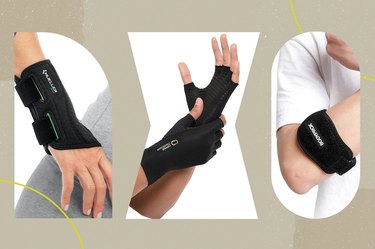
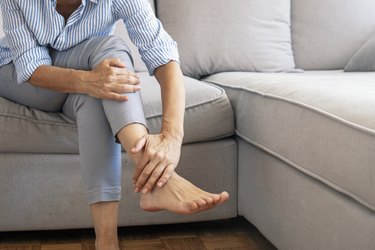





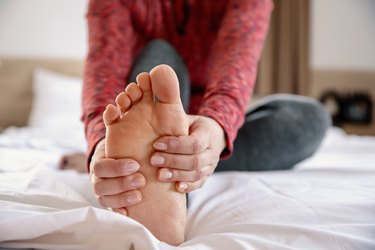














































An extended period of muscle pain in the leg is often due to chronic leg strain or to an underlying degenerative condition of the spine. In the case of chronic overuse, home remedies plus a change in lifestyle activities can bring pain relief.
...
Pain in a person's legs may be brought on by injuries to the ligaments, tendons, muscles, bones and bony coverings. People can reduce risk of pain and injury to the legs by completing a short warm-up and a quick stretch prior to more difficult...
Numerous conditions can cause muscle pain in the upper leg area or thigh. According to the Physio Advisor website, muscle pain in the thigh may be caused by structures outside the thigh, such as the lower back, hips and sacroiliac joints--the...
Pain in the upper leg can be caused by an acute injury or in response to a chronic condition. Muscles are comprised of muscle fibers that contract and produce force to move the body. Muscle fibers, if weak, can become injured causing pain,...
Leg muscle pain is a common complaint that is also described as muscle cramps. The hip, knee, shin, ankle and foot are all common origins of leg muscle pain. Leg pain can be generalized or specific to one area. Because the legs are necessary for...
Leg muscle pain can arise from a variety of causes including bruises, cramps, exercise-induced muscle soreness or fibromyalgia. Performing stretching and strengthening exercises that target the affected muscle or muscles may help ease the pain,...
Good pain enhances. Bad pain inhibits. Telling the difference between these pains comes with experience, and being able to consistently minimize inhibiting pain is a worthwhile goal. Athletes who train specifically for lower-body strength grow...
Humans rely on the leg muscles for innumerable activities. Whether standing motionless or engaging in a competitive sprint, the leg muscles support the body. A variety of temporary or chronic conditions and diseases can interfere with the normal...
Muscle pain in the leg after performing light exercise can cause frustration and discomfort, and may cause people to give up on exercise goals. Most of the time, leg pain after light exercise is temporary, lasting for only a few minutes. While...
There are numerous causes of leg muscle pain. According to the U.S. National Library of Medicine and the National Institutes of Health or NIH, leg muscle pain is a common symptom and complaint. Leg muscle pain can be caused by repetitive overuse...
Lower leg muscle pain can arise with a variety of abnormalities and conditions. The causes commonly involve the muscle tissue itself or the blood vessels and other structures associated with the muscles. Many causes of lower leg muscle pain are...
Musculoskeletal pain is a common ailment. Muscle, shoulder and leg discomfort are associated with a variety of conditions that range from the most benign, such as muscle overuse and inflammation, to morbidities like polymyalgias, systemic lupus...
Endurance exercise can help you to lose weight, reduce stress or achieve more toned and shapely legs. Running is particularly hard work and can be rough on the body, with aches and pains almost inevitable. Inner leg pain on the right or left side...
Pain in the lower leg muscles while exercising can be related to a problem with an origin beginning in the low back all the way to the feet. This pain can be related to overuse or injuries of the muscles, ligaments, tendons, bones, nerves and...
Leg pain and stiffness in children can be a mild condition that's simply part of growing up and will pass on its own, or they can indicate a more serious condition that requires medical attention. Identifying the exact location of the stiffness...
The knee is a hinge joint that moves the lower leg forward and backward. These motions are called flexion and extension; they are caused from the contraction of several leg muscles. The quadriceps are the large muscles on the front of the thigh...
Muscle soreness is common after working out. Fatigue and soreness occur when you work out harder than you normally do or longer than you are accustomed to. These feelings indicate that you are using your muscles to gain strength and endurance....
A fever and sore leg muscles are common symptoms of influenza, also known as the flu. These symptoms can also occur with a common cold and Lyme disease. Consult your doctor for a proper diagnosis and treatment of your symptoms.
Leg presses build muscles in your legs and buttocks. Specifically, the exercise develops your hamstrings, quadriceps and gluteus maximus, or glutes. Your glutes are large muscle groups that contribute to the shape of your buttocks. Leg presses are...
A challenging workout can produce muscle fatigue or muscle pain. However, if you feel extreme, prolonged or regular leg muscle pain while walking after workouts, you need to make some changes to your exercise regimen. Have a personal trainer or...
Lower back pain may have several causes, from muscle strain to spinal conditions such as a herniated lumbar disc, according to Spine Health. Aches in your lower back may be accompanied by spasms in the lower back muscles, stiffness and difficulty...
If your legs feel heavy after a workout, it can mean one of two things. Either you have not done proper preparation for your exercise regimen or you have targeted your leg muscles to the point of muscle fatigue. In either case, you can tailor your...
The influenza virus can attack the body suddenly, leading to a myriad of uncomfortable symptoms. When kids get sick there are certain signs to look out for at the onset of the illness.
Pain in the arms and legs can have a number of causes, from arthritis to muscle cramps. There are a number of ways you can relieve arm and leg pain without using prescription medications. If you prefer an alternative approach to pain relief, there...
Sore, aching muscles often accompany the health benefits gained by running. The effort exerted by your leg muscles in particular is strenuous while running. Warming up, wearing proper shoes, stretching and staying hydrated helps you prevent some...
Pregnancy is a time of great physical change. The most obvious of these changes is a large increase in weight, centered over the front of the pelvis. This increase in weight can cause pain in the legs, either directly or from its effect on the...
Polio is an illness causes by a virus that affects multiple systems of the body. Less serious cases of poliovirus infection may cause uneasiness, headache, sore throat or vomiting, and this milder form of polio, referred to as nonparalytic polio,...
Leg weakness consists of a loss of strength in the leg, which prevents certain movements, according to HealthHype.com. People who suffer from leg weakness may have a hard time walking or lifting a foot when the muscles connected to the feet are...
Research suggests that the majority of Americans are deficient in vitamin D. Vitamin D is a fat soluble vitamin both synthesized by the skin and absorbed from food. If a person has reduced exposure to the sun, does not eat enough food which...