The average American eats a whopping 57 pounds of added sugar each year, according to the University of California San Francisco. It's no wonder, then, that you get frequent cravings for a cookie, soda or piece of chocolate.
When you're trying to beat sugar cravings, integrative and functional medicine dietitian Bridgitte Carroll, RD, of Boston-based Johnson Compounding and Wellness, recommends thinking about blood sugar balance.
Video of the Day
Video of the Day
If you have oatmeal with maple syrup and fruit for breakfast, that's all carbohydrates, she says, adding that your blood sugar will spike and then drop as a result. When your blood sugar is low, your body wants a quick sugar fix, which can lead to those pesky hankerings.
To beat the sugar cravings, Carroll recommends focusing on eating snacks comprised of fats, protein and fiber. "It's really about the pairings," she adds. Next time the cravings hit, try these healthy sweet snacks below instead of reaching for a doughnut or candy bar.
1. Homemade Smoothies
One of Carroll's favorite sugar-busting snacks is a loaded smoothie. She recommends blending up a bunch of greens (think kale and spinach) along with a quarter-cup of berries and dairy, nut milk or water. "Make sure you have a source of protein in there, too, like plant-based protein powder."
The combo of fiber from the veggies and fruit, fat from the milk and protein from your powder can help you feel satiated, which can stop cravings in their tracks.
A Recipe to Try
This Blueberry Protein Power Smoothie recipe packs in healthy fats along with 8 grams of fiber and 32 grams of protein.
2. Plain Yogurt With Cinnamon
Yogurt offers up a bevy of health benefits, including protein and calcium, according to the Harvard T.H. Chan School of Public Health. However, one of the biggest reasons to enjoy plain yogurt — which doesn't have the added sugar that flavored varieties contain — is the live cultures within, which are tied to helping reduce the risk for diseases such as obesity, type 2 diabetes, irritable bowel syndrome and chronic inflammatory disorders, per the Harvard T.H. Chan School of Public Health.
If you pair the yogurt with ground cinnamon, it's not only a tasty combo, but you'll also get the health benefits of the warm spice. Cinnamon helps to lower blood sugar levels in people with type 2 diabetes, as well as can potentially decrease high blood cholesterol and triglyceride levels, according to Johns Hopkins Medicine.
3. Chia Seed Pudding
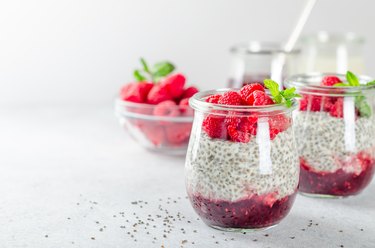
Chia pudding is another great sweet treat that adds a boost of fiber to your daily meal plan to beat sugar cravings. "It's so simple — it's literally just nut milk, about a half-cup of coconut milk and two tablespoons of chia seeds." Leave it in the fridge overnight and then add berries or other fruit the next day, right before enjoying. "It's high in fat and protein, but doesn't have as many of the carbs," she adds.
Plus, chia seeds pack omega-3 fatty acids, which provide myriad health benefits, including reducing the risk of cardiovascular disease, decreasing inflammation and lowering triglycerides levels, according to the Cleveland Clinic.
Recipes to Try
Both the Chocolate Protein Chia Pudding and the Easy Vanilla Chia Seed Pudding With Blueberries pack in 8 grams of fiber (over a third of your recommended daily value) or more.
4. Homemade Grain-Free Granola
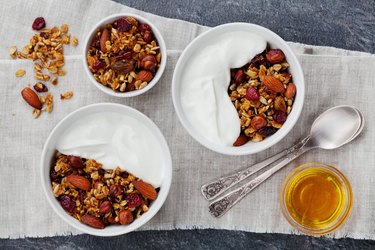
Granola has long been considered a health food, but it's far too high in sugar and simple carbohydrates for that to be true. Instead of buying packaged granola, Carroll recommends making your own homemade grain-free granola. Include nuts, seeds, coconut strips and dates. It won't have any sugar added, but there will pack some complex carbs for energy, she says.
A Recipe to Try
Whip up this recipe for Sweet and Savory Grain-Free Granola and omit the maple syrup if you want to further slash sugar.
5. Steel-Cut Oatmeal With Nuts
Sugar cravings can also often be a sign that your blood sugar levels are out of balance, which is why it's important to eat low glycemic index (GI) foods that prevent energy crashes and sugar cravings. Most breakfast cereals contain simple carbohydrates, which break down into sugar in your body and cause a rapid rise in your blood sugar levels. Instead of a muffin, sugary cereal or handful of cookies, steel-cut oatmeal will keep your blood sugar level more stable.
The whole grain contains soluble fiber, which helps you feel full for longer because it's digested slowly, according to the Dairy Council of California. Soluble fiber can also improve low-density lipoprotein cholesterol levels, as well as lower the risk of high blood pressure and cardiovascular disease. If you need to sweeten it up a bit, add some fresh or dried fruit to your bowl.
6. Sliced Apples With Nut Butter
If your blood sugar levels are low, you'll want to replenish with a healthy source of complex carbs like apples, which provide both fiber and anti-inflammatory antioxidants.
An even better way to eat apples: Pair them with nut butter. Eating protein is an excellent way to reduce sugar cravings because it has little effect on your blood sugar levels, according to Open Cities Health Center. Nuts and nut butters (or sunflower butter, if you have nut allergies) provide protein along with healthy fats, but if you're trying to lose weight, only eat two tablespoons a day — and be sure to buy jars wirh no sugar added.
7. DIY Ice Pops
Rachel Fine RD, CSSD of To The Point Nutrition recommends honoring your cravings in a healthy way. "The more we avoid restricting our favorite foods, the less we're inclined to overdo it," she says.
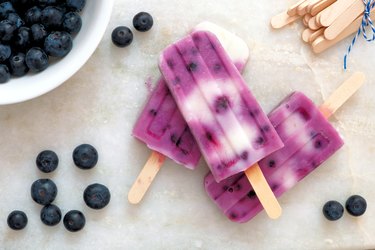
That said, don't overdo it — DIY ice pops are a personal favorite of Fine's because they contain minimal added sugar. Blend your favorite fruit, such as berries and bananas, mix in a dash of cane sugar and freeze in ice pop molds. "These are a sweet alternative to most conventionally made ice pops, which may come packed with highly processed sugars like high-fructose corn syrup," Fine says.
Recipes to Try
These Tropical Fruit Pops and Honeydew Cantaloupe Pops pack in plenty of fruit.
- University of California San Francisco: "How Much Is Too Much?"
- Harvard T.H. Chan School of Public Health: "Yogurt"
- Johns Hopkins Medicine: "5 Spices with Healthy Benefits"
- Dairy Council of California: "Health Benefits of Oatmeal"
- Open Cities Health Center: "Avoiding Blood Sugar Spikes"
- Cleveland Clinic: "Omega-3 Fatty Acids"