






































































5 Ways to Treat Hay Fever
1. Avoid Hay Fever Triggers
To eliminate or limit hay fever (allergic rhinitis) symptoms, avoidance of troublesome allergens works very well. Limit your time outdoors in the early morning or evening hours to avoid contact with allergens. On windy and dry days, pollen can easily blow around making your allergies worse. Try to stay indoors as much as possible on these types of days. Limit activities around your known hay fever triggers as well. Unfortunately, it's sometimes difficult to avoid hay fever triggers all together. When that's the case, look to medications and other remedies to help treat your hay fever.
2. Block Allergic Reactions With Antihistamines
Antihistamines help treat hay fever by blocking the production of histamines in the body. During an allergic reaction such as hay fever, the body produces many histamines, and these histamines cause hay fever's bothersome symptoms. You can purchase antihistamines, such as Benadryl, Zyrtec and Claritin, over the counter or you can obtain a prescription for an antihistamine from your doctor. Examples of prescription antihistamines include Allegra and Clarinex. All of these antihistamines help decrease sneezing, itching of the throat, eyes and mouth and runny nose. Antihistamines can cause drowsiness in some patients, so use them with caution.
3. Loosen Things With a Decongestant
Some people with hay fever experience congestion in the form of a stuffy nose or throat. If you have this symptom, consider taking a decongestant. Over the counter medications containing pseudoephedrine, such as Sudafed, can help. You can also find medications that combine both antihistamines and decongestants in one pill. Avoid using decongestants for more than several days in a row and be sure to always follow the package directions. Remember that the original Sudafed is only available from the pharmacist; although you don't need a prescription, you have to present a driver's license and sign for the medicine. It's not the same as the medication called Sudafed PE, which is on the shelf.
4. Try Other Approved Medications
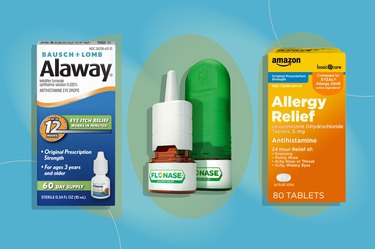
Hay fever sufferers have various other medication options available to them to help lessen their suffering. Corticosteroid nasal sprays, such as Nasonex and Flonase can help reduce sneezing, a runny nose and swelling of the nasal mucus membranes. You can obtain prescriptions for nasal sprays from your doctor. Prescription leukotriene inhibitors, such as Singular, can also help. These drugs reduce inflammation caused by an overactive immune system, which eases the symptoms of hay fever. Over the counter eye drops formulated especially for people with allergies can also help ease red, dry and itchy eyes due to hay fever.
5. Consider Allergy Shots as a Last Resort
If you have trouble controlling your hay fever symptoms using avoidance of allergens, prescription drugs or over the counter medications, immunotherapy or allergy shots can help. Usually used as a last resort to fight the effects of hay fever, allergy shots can take up to several months to a year to work. A patient receiving allergy shots will get a single shot containing a small amount of an allergen at certain time intervals as determined by their doctor. With each subsequent shot, the doctor slightly increases the amount of allergen given. This process reduces the patient's sensitivity to the allergen, thereby lessening or preventing their hay fever symptoms.


Member Comments
by apryce on March 10, 2009 at 8:53 AM
Dandelion tea is good as well
by sirpeacock on March 12, 2009 at 10:43 AM
I'm not sure why allergy shots should be a last resort. Is it better for one's health to take medication (i.e., Claritin and/or Sudafed) on a routine basis for the long term? Why not seek a long-lasting solution that does not require medication? My wife got allergy shots and they have changed her life. Not only does she no longer have to spend the money on claritin, we also don't have to worry about side effects or any undiscovered consequences of long-term use of these medications.