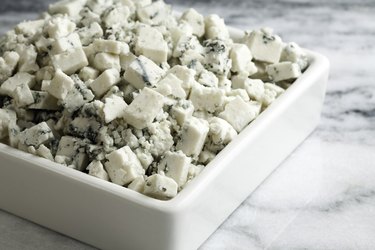
When you're pregnant and searching the internet on how to stay healthy, it's unlikely that your top search will be blue cheese and pregnancy. But a dangerous health risk is involved with the more popular soft cheeses that all potential mothers should know about, and that is the presence of listeria.
Read more: What to Expect With Pregnancy, Week by Week
Video of the Day
Video of the Day
Soft Cheese and Pregnancy
The National Health Service of the United Kingdom explains that soft cheeses can be dangerous to pregnant people, because these cheeses may contain a type of bacteria known as listeria. Soft cheeses are mold ripened, so they naturally contain bacteria. It's usually not dangerous, but this process makes the cheeses more likely to be contaminated with listeria.
Listeria is a particularly dangerous type of bacteria because it can cause an infection known as listeriosis, which pregnant women are especially vulnerable to due to the hormonal changes in the body that cause weakening of the immune system. This means the body has to work harder to resist the infection of listeria, and sometimes is unable to do so.
The National Health Service recommends avoiding a number of soft cheeses during pregnancy, including:
- Brie
- Camembert
- Mold-ripened soft cheeses made with goat's milk
- Danish blue
- Gorgonzola
- Roquefort
The American Pregnancy Association also warns against consuming Mexican style soft cheese that may contain queso blanco or queso franco, unless it is explicitly stated that the soft cheese has been made with pasteurized milk as opposed to unpasteurized.
Tip
The National Health Service says that all of the listed cheeses can be consumed when pregnant if they have been thoroughly cooked, as this will kill off any potential bacteria that could be residing within, including listeria.
Safe soft cheeses following pasteurization include:
- Cottage cheese
- Mozzarella
- Cream cheese
- Paneer
- Halloumi
- Goat cheese
- Processed cheeses (for example, cheese spreads)
Hard Cheese and Pregnancy
Hard cheeses are different from soft cheeses in their structure, and therefore are less vulnerable to bacterial infection, even if they have been mold ripened.
The National Health Service says hard cheeses are safer for consumption than their soft counterparts because they are far less watery, so there is less likelihood of dangerous bacteria growing inside.
It is important to note, however, that though it is much less likely it is not impossible, so if you experience any discomfort following the consumption of hard cheese contact a medical professional for advice.
Additionally, not all mold-ripened cheeses are a health hazard. Stilton during pregnancy is still an acceptable option, despite it being mold ripened; it is a hard cheese, and even if it is made with unpasteurized milk it is still a lot less likely that listeria will be present.
Other safe hard cheeses, as advised by PregnancyBirth&Baby, include cheddar and Parmesan. In addition, soft cheeses that have been made using pasteurized milk are perfectly safe too, because this kills listeria entirely.
Other Foods Listeria Can Infect
It is not just soft cheeses that may potentially contain listeria. A variety of foods and drinks can host the bacteria, so it is important to be aware of them when pregnant.
The American Pregnancy Association lists the following as foods that may contain listeria, and therefore should be avoided during pregnancy:
- Deli meats: If you cannot avoid them, any and all deli meats should be thoroughly cooked until steaming all the way to the center to kill any potential listeria.
- Smoked seafood: Refrigerated, smoked seafood can potentially contain listeria and is often found in the deli section of the supermarket — for example, lox, nova style, kippered or jerky. It is only safe if it is an ingredient of a thoroughly cooked meal (such as casserole) or if it is canned or shelf safe.
- Unpasteurized milk: It may contain listeria, as pasteurization is the process of permanently killing several types of bacteria that can contaminate the product.
- Pate: Another product that also may contain listeria, though, as with smoked seafood, if it is canned or shelf-safe; then it is usually OK for consumption.
Read more: Fruits to Avoid When Pregnant
Listeriosis: Symptoms and Risks
Listeriosis is a condition caused by the consumption of foods that are contaminated with listeria, and it is exceptionally dangerous to pregnant women and their unborn children. The National Health Service explains that ordinarily the infection, while unpleasant, will pass on its own if the individual who is infected is not pregnant or struggling with another condition that may compromise the immune system, such as diabetes.
It ordinarily comes from the consumption of listeria-contaminated foods, but it can also be caused by the consumption of food handled by an individual with a listeria infection. For this reason, it is especially important, particularly around pregnant women, that hands are washed thoroughly prior to food preparation and afterward.
The National Health Service lists a number of symptoms of listeriosis, including:
- A high temperature of 100 Fahrenheit or above
- Aches and pains
- Chills
- Nausea
- Vomiting
- Diarrhea
In addition to these, a more serious case of listeriosis may be present if other symptoms are present, including:
- Severe headache
- Stiff neck
- Discomfort when looking at bright lights
- Fits or seizures
- Sudden confusion
- A red, blotchy rash that does not fade when a glass is rolled over it (this may be a sign of meningitis that has developed from a listeria infection)
Warning
If you have any of the symptoms of listeriosis, the infection will usually pass of its own accord and can be treated at home. However, if you are pregnant, have diabetes or are undergoing treatment that weakens the immune system (for example, chemotherapy), then it is important to contact a medical professional for advice.
Effects of Listeriosis
According to the American College of Obstetricians and Gynecologists, pregnant women are 13 times more likely to get listeriosis than the general population, which is why it is so important that potential mothers are aware of foods to avoid and the severe side effects of this infection.
The vomiting and diarrhea caused by listeriosis can lead to severe dehydration, which can cause miscarriage, stillbirth or preterm labor.
In addition to being severely detrimental to the mother, listeriosis can also be enormously dangerous to the unborn child. Listeria is a type of bacteria that can cross the placenta, so it can damage the baby in the womb and result in serious infections of the blood and brain and lifelong health problems such as intellectual disability, paralysis, seizures, blindness and problems of the brain, heart, kidneys. It may even result in death.
Warning
If you have any concerns regarding potential listeria infection, contact your healthcare professional.
- American Pregnancy Association: "Foods to Avoid During Pregnancy"
- National Health Service: "Why Can't I Eat Soft Cheeses During Pregnancy?"
- PregnancyBirth&Baby: "Foods to Avoid When Pregnant"
- American College of Obstetricians and Gynecologists: "Management of Pregnant Women With Presumptive Exposure to Listeria Monocytogenes"