






































































5 Way to Diagnose Slipping Rib Syndrome

1. Understand What It Is

Slipping rib syndrome, which may also be known as Tietze's syndrome, is considered to be somewhat uncommon. It occurs when the ligaments that hold the ribs in place become weak. This weakness may cause the ribs to slip out of place. Because it is uncommon and several symptoms may mimic other medical conditions, it may be difficult to get a diagnosis at first. It's important to look at all symptoms and medical tests available to help confirm a diagnosis.

2. Pain Is a Major Sign

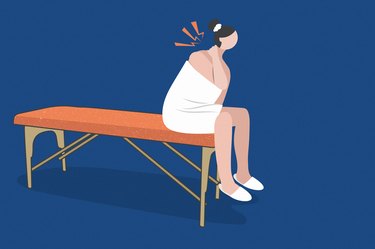
Because there is not one specific test, a diagnosis of slipping rib syndrome is usually made in part from symptoms reported by the patient. Pain may commonly occur in the chest or under the ribcage. Often pain will be in the upper back between the shoulder blades. Pain may be described as dull or sharp and can become more severe with movement. Because the ribs may slip, they can pinch nerves in the back and chest which can lead to severe pain. Because of the pain in the chest, some people also have shortness of breath.

3. Palpate the Ribs

Your doctor will do a physical exam and feel the entire ribcage. He will press down on each rib and may be able to feel a knot or feel a rib out of place if you have slipping rib syndrome. The palpating of the ribs may also cause pain as they are being touched.

4. An MRI Can Spot Trouble

In addition to a physical exam and history, an MRI may be ordered to help your doctor make an accurate diagnosis of slipping rib syndrome. The procedure can provide your physician with detailed images of your chest and ribcage. She can look for inflammation and other indicators of slipping rib syndrome. Some doctors may order a CT scan in place of an MRI.

5. Rule Out Serious Problems

Because symptoms of slipping rib syndrome include chest pain that may radiate towards the back and shortness of breath, it may be confused with a cardiac problem. Conditions such as a heart attack are very serious and may produce similar symptoms. Depending on your age and other risk factors your doctor may want to rule out a cardiac problem. Tests such as an EKG and blood work may be ordered as a precaution.

Last updated on: May 9, 2011

Must see: Photo Galleries