


































































What Is Milk Thistle Seed?

What Is Milk Thistle Seed?
Photo Credit thistle image by Dominic A.K.Alexander from Fotolia.com

Milk Thistle, a member of the sunflower family, probably originated in the Mediterranean. Today it is often found as a weed growing throughout California and other states.
The plant has a purple flowering thistle that produces black seeds containing the active constituents of silibinin and silymarin. It has been used for various health conditions, mostly involving problems with the liver, but other research is forthcoming showing positive results with other illnesses, including cancer.

History

The purple flowering plant was used in ancient times as an herbal remedy by Dioscorides, a first-century Greek physician, who named it Silybum and used it as an antedote for snake bites and poison mushrooms. The leaves of this plant have white splashed on them, hence the name "milk thistle."
In 20th-century Germany, milk thistle seeds were used to treat a variety of liver ailments and was considered so valuable, it was like calling on the Virgin Mary. The herb came to be called holy thistle or Mary thistle, and the white striations on the leaves were thought to be the Virgin Mary's spilt milk while she nursed baby Jesus, as noted by Planet Botanic.
The Latin name for this herb is silybum marianum, the "marianum" for Mary.

Uses

Although the entire thistle had been used through the ages, in more recent times the seeds of the milk thistle have been identified to contain the main active ingredient of silymarin, according to the National Cancer Institute.
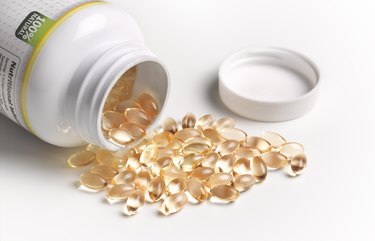
Milk thistle seed is most often prepared in a tablet or capsule form rather than in a tea, due to its lipophilic nature or ability to dissolve in fat rather than water. In Europe, it is administered intravenously as an antidote for Amanita phalloide, a poisonous mushroom that causes severe liver toixicity.
Very little of silymarin is found in the stalks, leaves, roots and thistle, making the seeds the best source of the medicinally active compounds.

Research

Milk thistle seed may have anti-cancer properties, as published in the March 2010 issue of "Anti-cancer Agents in Medicinal Chemistry." Researchers reviewed studies finding that extracts of silymarin and silibinin administered orally have anti-cancer properties for skin, breast, lung, colon, prostate and kidney carcinomas.
A pilot study found the active constituents of milk thistle seed can be a complimentary treatment for patients with chronic liver damage, according to the journal "Digestive Diseases and Sciences."
Milk thistle seed is mostly known for its liver supportive functions. "In laboratory studies, silymarin has been found to stabilize cell membranes, thus preventing toxic chemicals from entering the cell," according to the National Cancer Institute.
It is also being studied for advanced stage prostate cancer with good results, as reported by the journal "Investigational New Drugs."

Dosage

In clinical studies, various dosages are being analyzed, however the common use is 280 to 450 mg silymarin per day, in divided doses. Standardized preparations are preferable to ensure potency. Some preparations contain phosphatidylcholine, an element in cell membranes that helps absorption. This compound should be taken in doses of 100 to 200 mg twice per day, according to the University of Maryland Medical Center.

Safety

How safe is milk thistle seed? Since this herb is being studied and found to have medicinal actions, it is important to talk to a doctor if undergoing any serious treatment for cancer or liver damage.
If you are healthy, milk thistle is considered a relatively safe herb by the American Cancer Society. Any reports of nausea or diarrhea are thought to be due to outside contamination and not the silymarin.
Allergic reactions are also rare, but those allergic to ragweed or chrysanthamums may need to be careful. Any hives or shortness of breath should be reported to a doctor and the herb discontinued.

References

Article reviewed by Helen Holzer Last updated on: May 7, 2010

Must see: Photo Galleries

Member Comments