

































































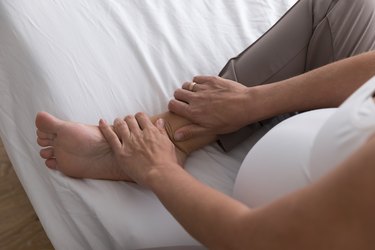
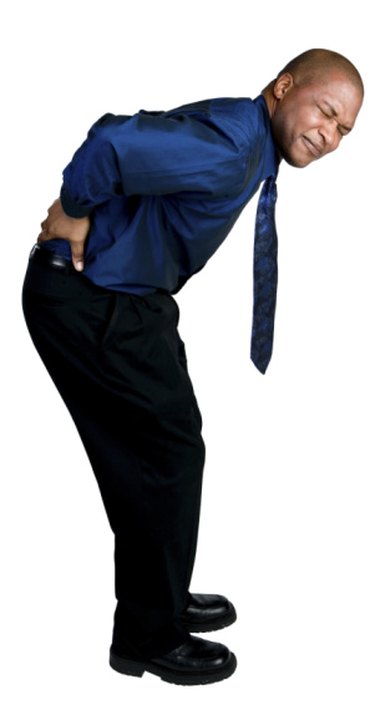


Pain and stiffness in the leg can be caused by injury or disease. According to MayoClinic.com, most pain in the leg is a result of long-term or sudden damage to a ligament, bone, muscle or tendon. If it's difficult to walk or put pressure on the legs, patients should contact a health-care provider.
Delayed Onset Muscle Soreness
Leg pain and stiffness can be a sign of overworked muscles. According to the American College of Sports Medicine, when muscle tissue is torn through eccentric--or muscle-lengthening--movements, typically in the form of weight or resistance training, delayed onset muscle soreness, abbreviated DOMS, can result. The main symptoms of DOMS include pain and stiffness when the muscle is contracted or stretched. DOMS commonly occurs when someone begins a new workout routine, starts exercising after a period of inactivity, or trains at higher than normal intensities. Most athletes at one time or another have experienced this type of soreness. When someone begins a fitness routine that works the leg muscles, it is not uncommon that within 24 to 72 hours he will experience slight to moderate pain and stiffness. Generally, there is no cause for alarm since much of the pain and stiffness will go away on its own within days. Treatment for muscle soreness includes rest and icing the sore area. Adding heat after a few periods of icing can increase blood flow to the affected area, loosening up the muscles.
Bursitis
Bursitis is an inflammation of the bursae--pads near the joints that cushion the bones and tendons. According to MayoClinic.com, bursitis can cause achy or stiff joints in knees, as well as other joints. The affected area usually appears red, swollen and tender to the touch. Bursitis commonly occurs in individuals during middle age. Certain occupations or activities that require repetitive motion or movement may increase your risk of developing bursitis. The presence of diseases such as rheumatoid arthritis and gout may also increase the chances of developing bursitis. Bursitis treatment is fairly simple and involves resting and icing the affected area until swelling goes down. A health-care provider may prescribe pain relievers to help with any discomfort.
Rheumatoid Arthritis
The legs can be affected by rheumatoid arthritis. Rheumatoid arthritis is an illness that affects the joints and is caused when the body's immune system attacks its own joint tissue. The University of Maryland Medical Center notes that symptoms of rheumatoid arthritis include stiffness in the morning, which can last more than an hour. Joints may even feel warm or become tender and stiff when they are not used within as little as one hour. Rheumatoid arthritis can cause joint deformity within one to two years after the disease is diagnosed. There is currently no cure for rheumatoid arthritis, so treatment is directed at lessening the severity of its symptoms and preventing further joint destruction.
References
- "ACSM's Resources for the Personal Trainer"; American College of Sports Medicine; 2010
- MayoClinic.com: Leg Pain
- Mayo Clinic.com: Bursitis
- University of Maryland Medical Center: Rheumatoid Arthritis


