
































































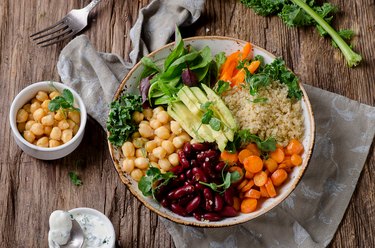
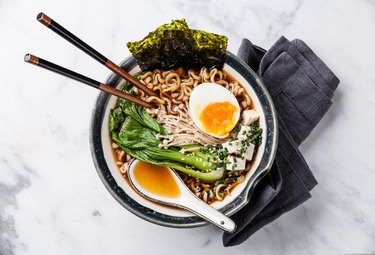

The foods you eat can affect how well you sleep. Heavy, high-fat foods can cause you to feel bloated and might keep you tossing and turning all night. But foods that are rich in carbohydrates, tryptophan or magnesium can help ease you into a peaceful, enduring slumber. Remember, however, that no matter how beneficial certain foods are for sleeping, you should only eat a small serving no less than an hour before bedtime.
Tryptophan and Carbohydrates
Tryptophan-rich foods have a reputation for being the best foods for sleep. Tryptophan is an amino acid that helps makes the sleep-inducing neurotransmitter, serotonin. However, while foods high in tryptophan help you fall asleep, they aren't beneficial for maintaining sleep. The World's Healthiest Foods website notes that tryptophan-rich animal foods may contain other substances, such as adrenalin, that can disrupt sleep.
According to the website, studies have shown that consuming foods high in tryptophan often result in less REM (Rapid Eye Movement) sleep and increase non-REM sleep, which makes for a less restful night. Yet, if you pair tryptophan-loaded foods with carbohydrates, you are likely to sleep better. Dr. Greg Katz of Oprah.com reports that carbohydrates produce a rise in blood insulin, which helps tryptophan in our body enter the brain and produce higher levels of serotonin.
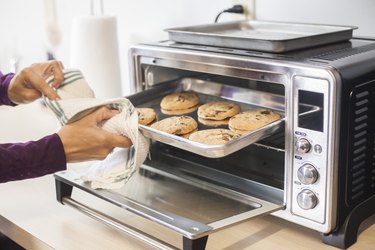
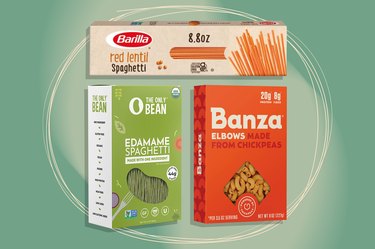
Tryptophan-loaded foods include whole grains, poultry, eggs, milk, cheese, tofu, hazelnuts, peanuts and almonds. Carbohydrates are found in foods such as whole-grain bread, pasta, fruits and vegetables. As a sleep-inducing bedtime snack, try eating a small portion of whole grain-cereal with milk, an oatmeal cookie with milk, an apple slice with peanut butter or almond butter on a slice of toasted whole-grain bread.
Magnesium
Magnesium is regularly used to promote better sleep. Clinical studies, including one conducted in 1998 at the Albert-Ludwigs University in Germany, have shown that magnesium supplementation can reduce the periodic sleep-disrupting limb movements one makes during the night. Other studies have shown magnesium to be particularly helpful for promoting quality sleep in older people. Foods rich in magnesium include bananas, almonds, cashews, and leafy green vegetables, such as spinach, kale and Swiss chard.
Montmorency Cherries
Montmorency cherries, a tart cherry grown in North America and France, have been found to work as a natural sleep aid. According to NaturalNews.com, a study conducted in The University of Texas Health Science Center in San Antonio found that these types of cherries contain significant amounts of melatonin, a substance that triggers sleep. The cherries can be bought fresh but can also be found in concentrated form.


