








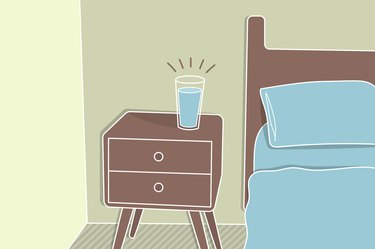























Many people follow the well-known rule that says you must drink eight 8oz. glasses of water each day. Some experts say, however, that this rule is simply a myth rather than scientific fact. Even if you don’t need to drink eight glasses of water each day, you must drink enough water to remain hydrated. Experts offer several methods that will help you remain hydrated.
8x8 Concept
In June 2009, “Scientific American” published an article titled "Fact or Fiction? You Must Drink 8 Glasses of Water Daily." The article describes the 8x8 drinking rule as a common rule of thumb that dictates that you must drink eight 8oz. glasses of water every day. Tea, coffee, soda, juices and sports drinks do not count toward the eight-glass total. This rule does not offer different guidelines for people of different ages, genders or health conditions.
Expert Insight
Several health experts have reviewed the 8x8 myth in scientific publications and asserted that this myth has no basis in scientific fact. In August 2002, Dartmouth Medical School professor, Heinz Valtin, published an article in the "American Journal of Physiology" titled "Is there Scientific Evidence for 8x8?" In the article, Valtin states that no solid evidence supports the 8x8 rule.
The 2009 article in “Scientific American” cites Vatlin’s article as well as research published by Dan Negoianu and Stanley Goldfarb in the April 2008 "Journal of the American Society of Nephrology." In the article titled "Just Add Water," Negoianu and Goldfarb also assert that no hard evidence demonstrates that people must drink eight glasses of water a day. These experts all suggest that healthy adults can remain hydrated with less than eight glasses of water a day. The Mayo Clinic suggests that the amount of water necessary to remain hydrated varies from person to person and according to certain conditions.
Considerations
Though many health experts suggest that healthy adults do not need to drink eight glasses of water a day, you might need to drink more water than other people to compensate for hostile climate conditions or specific health concerns. According to the Mayo Clinic, otherwise healthy people should drink more water to compensate for exercise, extreme heat, dry air or high altitudes. People with health concerns such as kidney stones, urinary tract infections or any illnesses accompanied by fever, nausea or diarrhea, should also drink more water.
Alternative Methods
Health experts offer several alternative water-drinking methods. MayoClinic.com cites the Institute of Medicine’s recommendation that men drink 3 liters or 13 cups of beverages a day and women drink 2.2 liters or 9 cups of beverages a day. This method allows you to count any beverage, including tea, juice or sports drinks, towards your daily beverage total. MayoClinic.com also recommends the replacement method, in which you drink enough water to replace the fluids you lose through urination, sweating and other daily bodily functions.
The site suggests that 2 liters of water should suffice to replace your lost fluids each day. MayoClinic.com also recommends simply drinking enough water to ensure that you rarely feel thirsty. The site recommends checking your urine to see if it remains colorless or only slightly yellow, a good indication of proper hydration. Keep in mind that caffeinated or alcoholic beverages can make it harder for your body to stay hydrated.
Dehydration Symptoms
Dehydration can be highly dangerous. Mild dehydration can cause symptoms such as dry mouth, fatigue, thirst, infrequent urination, weakness, headache and dizziness, according to MayoClinic.com. Extreme dehydration can cause more severe symptoms, including extreme thirst, irritability, lack of urination, shriveled skin, low blood pressure, rapid heartbeat, fever, delirium or unconsciousness. Seek medical attention if you believe you are suffering from extreme dehydration.


Member Comments