


































































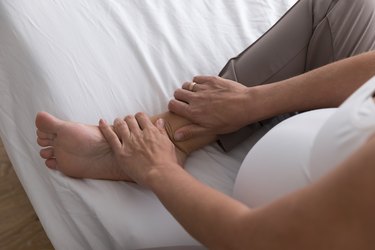



A leg cramp, or charley horse, is the involuntary contraction of one or more leg muscles, including the thigh, hamstring, calf and foot muscles. MayoClinic.com states that the signs of a muscle cramp include a sudden and sharp muscle pain and a hard lump of muscle tissue that you can feel or see beneath the skin. Muscle cramps typically resolve without medical treatment. However, stretching exercises and staying well hydrated can help prevent cramps. A patient should see a doctor if cramps are recurrent and disturbing sleep.
Dehydration
MayoClinic.com states that dehydration can cause a muscle cramp. Muscles need adequate hydration to contract and relax properly. Athletes who become fatigued and dehydrated from participating in warm-weather sports frequently develop muscle cramps in the legs. Thus, an athlete should properly stretch before a sporting event and maintain adequate hydration during the event. Furthermore, an athlete may consider drinking a sports drink to balance electrolytes lost in sweat.
Nerve Compression
A patient with back problems may be at an increased risk of developing leg cramps. Specifically, MayoClinic.com states that compression of nerves in the spine, or lumbar stenosis, can produce cramps in the legs. Leg cramps typically become worse when the patient walks for an extended period of time. To prevent charley horses, patients with lumbar stenosis can walk while slightly leaned forward, reducing nerve compression. A patient should schedule an appointment with his doctor to have an appropriate physical exam and imaging done on his back to determine if nerve compression is the cause of cramps.
Electrolyte Imbalance
Some patients experience cramps from an imbalance in blood electrolytes. Medline Plus states that low levels of magnesium and calcium in the body can cause a charley horse. An electrolyte imbalance can be related to a particular disease or a side effect of medication use. Specifically, some diuretic medications can cause an electrolyte imbalance. Patients taking diuretics who experience leg cramps should discuss this with a doctor. If cramps are unrelated to medications, the doctor will likely run blood tests to determine the cause of leg cramps.


