



























































Hickory Pollen Allergy Symptoms

People who experience breathing problems that come and go, which get worse in April or May, may have developed seasonal allergies to hickory pollen. The hickory trees, including the shagbark and shellbark hickories and subspecies pecan, produce copious wind-transported pollen that travels throughout their territory in the Eastern half of the United States. Due to the airborne quality of tree pollen, people can suffer allergy symptoms even when hickories don't grow nearby. Diagnosing a hickory allergy allows patients to prepare for, and manage, seasonal sensitivities.

Timing of Symptoms

People who suspect allergies to hickory should note when and to what degree their symptoms arise. According to the National Institutes of Health, the highest pollen counts occur in the morning, from 5 a.m. to 10 a.m. Pollen counts also rise on days that are hot, dry and windy, and drop just after a substantial rain. For local information, patients can check the tree pollen levels on weather reports in the springtime, to see if their breathing problems coincide with high local counts when hickory is flowering. This information will help area allergy doctors to correctly identify a patient's problem allergens.

Inflammatory Symptoms

Allergic reactions to hickory pollen cause swelling and itching as the body responds by sending out histamines and other chemicals into the blood. Hickory allergy symptoms may begin with itching in the face, ears, nose, mouth or throat.
The Cleveland Clinic reports that inflammation of the eye conjunctiva, or the thin transparent membrane that covers the white part of the eye, will cause red, weeping eyes and swollen eyelids, with or without itching. This condition is termed allergic conjunctivitis and can be set off by tree allergies.

Breathing Problems

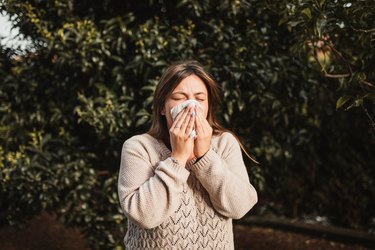
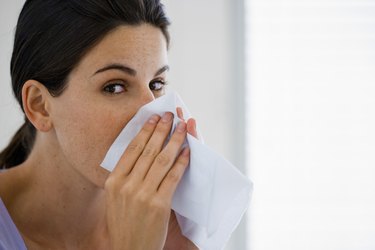
Inhaling pollen affects the sinuses, nasal passages and throats of allergy patients, creating inflammation and an accumulation of fluid. An alternately runny and stuffy nose results, with breathing problems caused by congestion. Frequent sneezing is common, and if left unchecked, can disturb a patient's sleep.
As the University of Maryland Medical Center relates, many allergy sufferers also have asthma, which allergen exposure can set off. High levels of hickory pollen may create greater incidences of asthma attacks in people who already have the condition.

Pain

Exposure to hickory pollen can generate uncomfortable allergy symptoms for an extended period, depending on tree cycles and weather patterns. Patients may develop pain or tenderness from persistent inflammation of the sinuses and mucous membranes. The face and eye areas may become painful to the touch, and the throat sore. The University of Maryland Medical Center adds headaches to this set of hickory allergy symptoms.

References

Article reviewed by Mia Paul Last updated on: Jul 25, 2010

Must see: Photo Galleries