Water is often touted as a necessity for individuals who are interested in maintaining good health and promoting optimal physiological function. However, while the amount of water that you drink is important, its quality is just as crucial. In fact, water that has a pH outside the range of current recommendations may have an unusual taste, making you less likely to drink your fill. Test your water before changing its pH to avoid excessive over-correction.
The Basics About pH
Video of the Day
The pH scale -- which ranges from 0 to 14 -- measures the acidity and alkalinity of various substances. While pure, unadulterated water is generally considered to have a neutral pH of 7, the addition of various compounds can cause it to become more acidic or alkaline. In fact, minerals that are naturally found underground -- including calcium, magnesium and iron, among others -- may affect the pH of water that is used for human consumption. Mechanical problems, such as faulty plumbing,can also change the pH of your drinking water.
Video of the Day
Testing Your Water
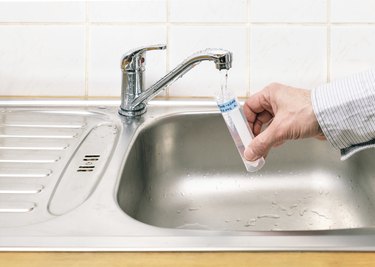
Before increasing the pH of your drinking water, you need to identify its current acid-base level. In fact, failing to measure existing drinking water values may lead to an excessive increase in pH beyond the current recommendation of 6.5 to 8.5. Most state and local health departments can provide a number of resources when it comes to this process, including laboratories that are experienced in testing and interpreting the pH values of drinking water. Be sure to choose a reputable organization with a proven track record to ensure that you get optimal results.
Increasing pH with Water Softeners
Water softeners are often recommended for those who are interested in increasing the pH level of their drinking water. Traditionally, water softeners rely on an ion-exchange system, where low-pH minerals are neutralized through the addition of alkaline-rich compounds, including soda ash, a substance similar to baking soda. Because it can increase the sodium in drinking water, soda ash is not recommended for use by individuals who are on low-sodium diets.
Increasing pH with Neutralizing Filters
Neutralizing filters, which increase pH values through the addition of neutralizing materials, can also be effective for raising the pH of drinking water. These filters typically contain calcium carbonate or similar substances, which dissolve as they interact with untreated water. The addition of these minerals increases drinking water pH values to appropriate ranges, although spikes in the level of water hardness may also occur.