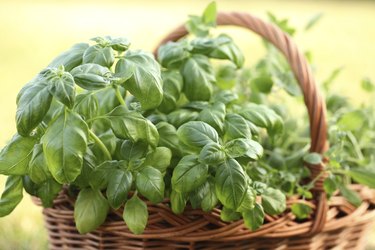
With a rich green hue and delicate aromatic flavor, fresh basil adds instant interest to a range of healthful recipes. It's also virtually calorie-free -- a quarter-cup serving of chopped basil contains just two calories -- and low in sodium. Using fresh basil to flavor your meals makes it easier to skip fatty or salty seasonings. Basil leaves also contain some essential vitamins, so including them in your cooking benefits your health.
Vitamin A
Video of the Day
Fresh basil leaves serve as a generous source of vitamin A. A quarter-cup of chopped basil boasts a vitamin A content of 559 international units. This provides 24 percent of the daily intake for women and 19 percent for men, recommended by the Institute of Medicine. Vitamin A's main role in your body is supporting cellular differentiation, or maturation. It also regulates gene activity, turning on genes that new cells need to contribute to functional tissue. Consuming fresh basil leaves as a source of vitamin A also benefits your eyesight, because low vitamin A levels compromise your ability to see at night.
Video of the Day
Vitamin K
Consuming basil leaves also boosts your intake of vitamin K. The vitamin K in your body activates proteins needed for healthy tissue growth -- including your cartilage, bone, stomach and lung tissue. It also plays a major role in helping your body form blood clots, and works to prevent abnormal bruising, internal bleeding and blood loss. Each serving of fresh basil offers 44 micrograms of vitamin K -- roughly one-third of the daily intake for men and one-half of the daily intake for women.
Lutein and Zeaxanthin
Use fresh basil in your cooking and you'll also increase your intake of lutein and zeaxanthin, two beneficial nutrients. Your eyes contain both lutein and zeaxanthin. They rely on the nutrients to filter light, preventing eye damage caused by harmful light exposure. Your diet should include at least 6 milligrams of lutein and zeaxanthin daily, advises the American Optometric Association. At this level, you'll reduce your risk of age-related macular degeneration. A quarter-cup of fresh basil contains 0.6 milligram, or 10 percent of your 6-milligram goal.
Serving Tips
Add chopped fresh basil leaves to your favorite leafy green salad, or combine it with roasted red peppers, kalamata olives and olive oil for a more decadent side dish. Sprinkle chopped fresh basil on whole-wheat pasta and tomato sauce, or toss your pasta in a mixture of chopped basil, Parmesan, spinach, arugula and olive oil. Top fresh sliced tomatoes with shredded basil and a splash of balsamic vinegar for a nutritious but simple snack. Prepare all-natural flavored water by steeping sliced cucumber and crushed basil in a water bottle, or add a few leaves of basil to your juicer when preparing a fruit or vegetable juice blend.